
In short
Turmeric (haldi, Curcuma longa) is the golden spice at the heart of the Indian kitchen and one of Ayurveda's most trusted herbs — traditionally valued for supporting digestion and metabolic balance. Here we look at how turmeric is used in everyday Ayurvedic life, how to use it safely, and why it works best alongside — not in place of — your medical care.
Introduction
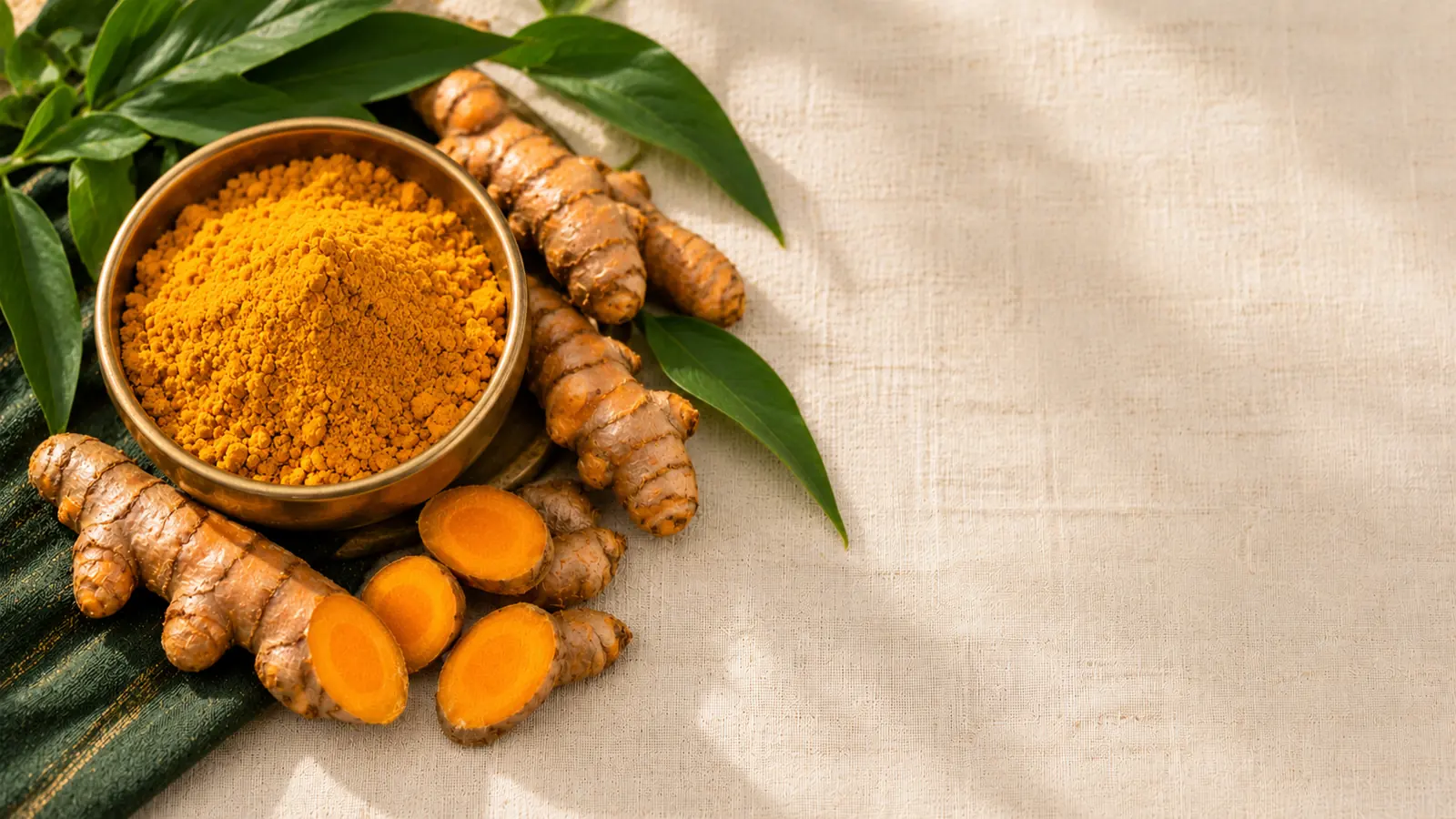
Turmeric needs little introduction. It colours our curries, warms our winter milk and features in celebrations and home remedies across India. In Ayurveda it is known as Haridra, and it has been valued for centuries for supporting digestion, healthy skin and the body's natural balance. Its everyday familiarity is exactly what makes it so easy to weave into a wholesome routine.
Let us keep things grounded and calm, though. Turmeric is a nourishing culinary spice and a respected traditional herb; it is not a medicine that treats or controls diabetes. Within the Ayurvedic understanding of Prameha — the family of metabolic imbalances — turmeric is one of many kitchen herbs traditionally used to support healthy metabolism as part of a wider, sensible lifestyle.
Curious how everyday spices fit a personalised plan? Book a consultation with our Ayurvedic doctor →
Why Ayurveda values turmeric
In Ayurvedic terms, turmeric is bitter (tikta) and astringent (kashaya) with a pungent, warming quality. It is traditionally seen as balancing to all three doshas, with a special reputation for pacifying Kapha and supporting the digestive fire (agni). Because weakened agni and Kapha accumulation are central to how Ayurveda understands metabolic imbalance, a warming, digestion-supporting spice like turmeric has long featured in daily dietary advice for overall balance.
This is a traditional framework built on centuries of observation, not a laboratory measurement. Its practical value is that it encourages home-cooked, freshly spiced meals and steady digestion — habits that support anyone's metabolic wellbeing.
Everyday Ayurvedic use of turmeric
Part of turmeric's charm is how naturally it fits into daily life:
- In cooking — added to dals, vegetables and curries, where it is both flavour and tradition.
- Golden milk (haldi doodh) — warm milk with a pinch of turmeric, a classic evening comfort.
- In classical formulations — combined with other herbs by a physician for specific supportive purposes.
- Paired with black pepper and a little healthy fat, as tradition suggests, when used in cooking.
For most people, the simplest and safest way to enjoy turmeric is exactly the way our grandmothers did — as a modest, everyday culinary spice.
How to use it safely
"Natural" does not automatically mean "safe for everyone," and this is true even for a familiar spice like turmeric.
- Culinary amounts in cooking are part of normal eating — this is turmeric at its gentlest and most time-tested.
- Do not self-prescribe high-dose turmeric or curcumin supplements to manage blood sugar.
- Herbs can interact with medicines. Concentrated turmeric supplements may interact with blood thinners, blood-sugar-lowering medicines, or affect people with gallstones, so they need care.
- Use concentrated preparations only under a qualified physician's guidance.
- Never treat turmeric as a replacement for prescribed medication or your regular blood-sugar monitoring.
- If you are pregnant, elderly, scheduled for surgery, or managing other conditions, speak to your doctor before using turmeric supplements.
Want a spice-and-diet plan matched to your constitution? Book a consultation with our doctor →
How it fits alongside your care
At Guduchi, our physicians love turmeric precisely because it makes wholesome, home-cooked eating so effortless — a supportive thread within a larger pattern of diet, daily routine (dinacharya) and stress care. The medical management of your diabetes — diagnosis, medicines and monitoring — remains firmly with your treating doctor. Ayurveda works around that treatment, helping you build steady, sustainable habits.
A pinch of haldi in tonight's dal will not do the work alone, but as part of a balanced daily rhythm it is a small, wholesome tradition worth keeping.
Key takeaways
- Turmeric (haldi) is traditionally valued in Ayurveda for supporting digestion and metabolic balance.
- Everyday culinary use — in cooking and golden milk — is its gentlest, most time-tested form.
- "Natural" is not automatically safe; concentrated supplements can interact with medicines, so use only under guidance.
- Turmeric supports a wholesome lifestyle; it does not replace medication, medical advice, or blood-sugar monitoring.
Frequently asked questions
Q. Does turmeric lower blood sugar? A. Turmeric is traditionally valued for supporting digestion and metabolic balance, but it is best thought of as a wholesome spice rather than a treatment. Any effect on your individual health should be assessed with your doctor.
Q. Can I stop my diabetes medicines if I take turmeric? A. No. You should never stop or change prescribed medication. Turmeric is used here as a supportive spice alongside your medical treatment, never as a replacement.
Q. Is it safe to take turmeric or curcumin supplements on my own? A. Culinary turmeric in food is part of normal eating, but high-dose supplements can interact with medicines like blood thinners and are best used only under a qualified physician's guidance.
Next steps with Guduchi
Terms in this article
Explore the Ayurveda glossary or try our free diabetes risk score.
Ayurvedic diabetes care near you
Guduchi Ayurveda runs BAMS-led clinics in eight Indian cities. Reading is a start — a physician who sees your reports can tailor it to you.
- Ayurvedic Diabetes Clinic, AhmedabadSola, Ahmedabad
- Ayurvedic Diabetes Clinic, BangaloreBanaswadi, Bangalore
- Ayurvedic Diabetes Clinic, ChennaiAnna Nagar West, Chennai
- Ayurvedic Diabetes Clinic, DavangereDavangere
- Ayurvedic Diabetes Clinic, HubballiVidya Nagar, Hubballi
- Ayurvedic Diabetes Clinic, HyderabadJubilee Hills, Hyderabad
- Ayurvedic Diabetes Clinic, KalaburagiShastri Nagar, Kalaburagi
- Ayurvedic Diabetes Clinic, KolkataNewtown, Kolkata
- Ayurvedic Diabetes Clinic, MangaluruUrwa, Mangaluru
- Ayurvedic Diabetes Clinic, MysuruKuvempunagar, Mysuru
- Ayurvedic Diabetes Clinic, UdupiBrahmagiri, Udupi
See all Guduchi diabetes clinics · Book an online consultation
DY
Written by
Dr. Yamuna B SBAMS — Senior Ayurvedic Physician · Bengaluru, Karnataka · Reg. No. 22157
Dr. Yamuna B S is a Senior Ayurvedic Physician at Guduchi Ayurveda in Bengaluru, with a deep focus on Madhumeha (the Ayurvedic understanding of diabetes) and lifestyle-led metabolic care. She works closely with each patient to combine classical Ayurvedic principles with practical, day-to-day guidance on diet, routine and stress — always alongside, not in place of, their regular medical care.
Medical disclaimer: This article is for general education and is not a substitute for professional medical advice, diagnosis, or treatment. Ayurveda is described here as a supportive, complementary system. Do not stop or change any prescribed medication without consulting your treating physician. Always speak with a qualified doctor about your individual health, especially if you are pregnant, elderly, or managing other conditions.