
In short
Triphala is one of Ayurveda's most well-known formulations — a blend of three fruits traditionally valued for supporting digestion, gentle cleansing and metabolic balance. This article explains what triphala is, how it is traditionally used, and how to use it safely. It is a complementary support that works alongside — never in place of — your prescribed medicines and blood-sugar monitoring.
Introduction
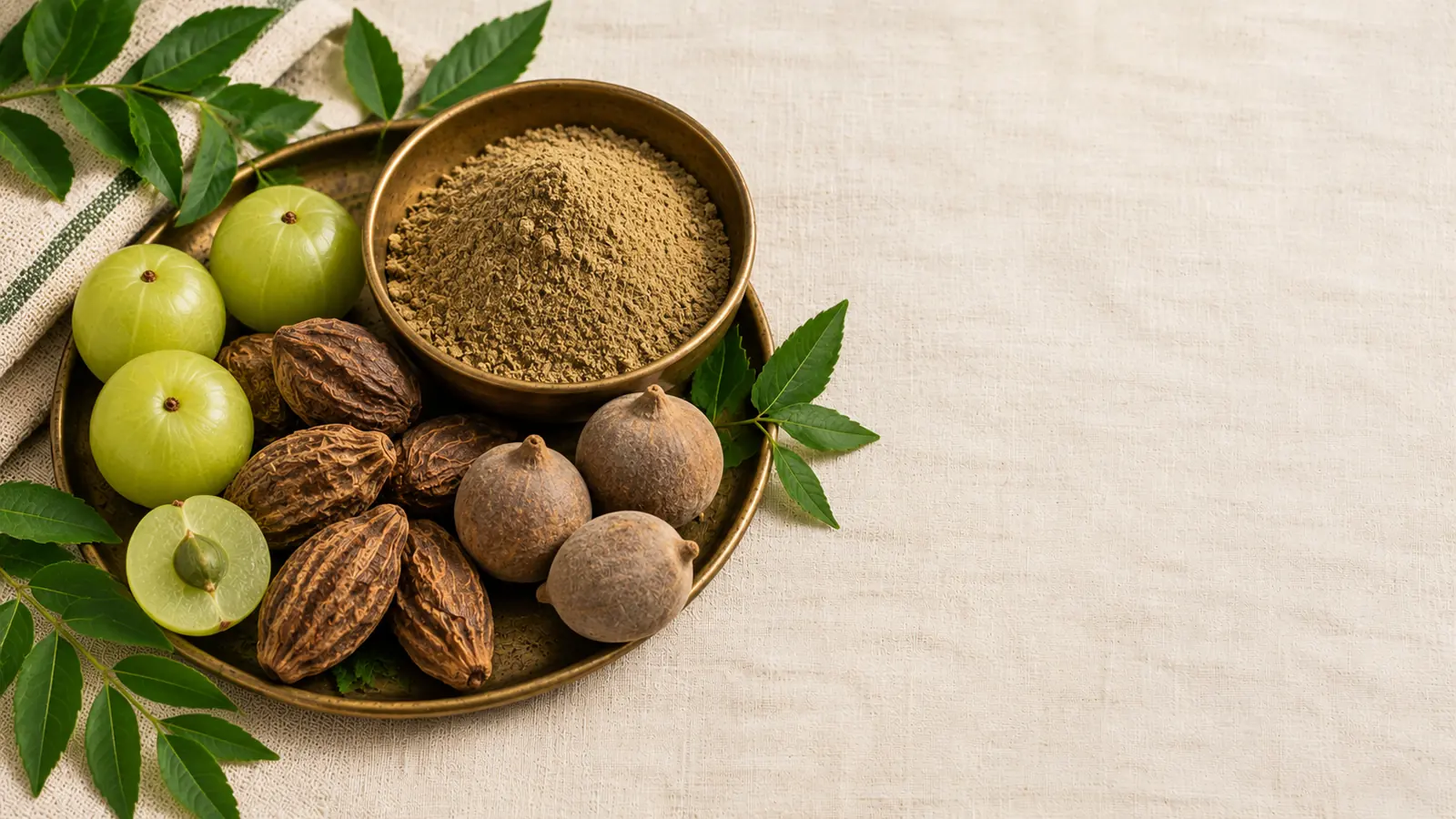
If you have spent any time around Ayurveda, you have almost certainly heard of triphala. The name means "three fruits" — amalaki (amla), bibhitaki and haritaki — combined into a single classical blend that Ayurvedic physicians have relied on for centuries.
Triphala is prized precisely because it is gentle and broadly supportive rather than dramatic. In the Ayurvedic view, steady digestion and elimination are foundations of overall balance, which is why triphala has traditionally been valued as part of a supportive routine. As with any herb, "natural" is not the same as "risk-free," so it is best used thoughtfully and under guidance.
Wondering how triphala might fit your routine? Book a consultation with our Ayurvedic doctor →
What triphala is and how Ayurveda views it
Triphala brings together three fruits, each contributing different qualities and tastes. Together they are said to cover five of the six tastes (rasa) recognised in Ayurveda, which is part of why the blend is considered so balanced and versatile.
Traditionally, triphala is valued for:
- Supporting healthy digestion and regular elimination.
- Acting as a gentle internal cleanser (rasayana-like, rejuvenating quality).
- Contributing to overall metabolic balance as part of a wider routine.
Because Ayurveda connects strong digestion (agni) to metabolic wellbeing, triphala is often woven into supportive daily care. Note the framing: it is traditionally valued for metabolic balance, not a treatment that acts on blood sugar in a guaranteed, measurable way.
Traditional ways triphala is used
- As a powder (churna) steeped in warm water, often taken in the evening.
- In tablet or classical formulation form, prepared and dispensed by physicians.
- As part of a larger tailored regimen designed by an Ayurvedic doctor.
This article intentionally avoids giving amounts. The suitable form and quantity depend on your individual constitution and health, which is a conversation for your physician.
Prefer a ready-made starting point? Try our 5-day Ayurvedic sample →
How to use it safely
Please read this section carefully:
- Natural is not automatically safe. Triphala is an active herbal blend, not simply a food.
- Mind the digestive effect. Because triphala can have a mild laxative action, it may not suit everyone, and overuse can cause loose stools or cramping.
- Watch for interactions. Herbs can interact with medicines, including some that affect blood sugar. If you take diabetes or other prescriptions, discuss triphala with your treating doctor first.
- Take special care if pregnant, breastfeeding, elderly, or managing other conditions — check with a qualified doctor before use.
- Keep monitoring. Continue prescribed medicines and blood-sugar checks exactly as advised.
- Use under guidance and never as a replacement for medication.
Where triphala fits in the bigger picture
Ayurveda does not treat any single blend as a solution on its own. Triphala is most useful as one supportive element within a rounded routine — balanced meals, daily movement, good sleep and stress care — all coordinated with the medical treatment you are already receiving.
Key takeaways
- Triphala is a classic three-fruit Ayurvedic blend traditionally valued for digestion and metabolic balance.
- It is used as a powder, in tablets, or within a physician-designed regimen.
- "Natural" is not automatically safe — triphala can interact with medicines and may not suit everyone.
- It is a complementary support alongside — never a replacement for — your prescribed care.
Frequently asked questions
Q. Does triphala work on blood sugar directly? A. Triphala is traditionally valued for supporting digestion and metabolic balance, but it is not a standalone treatment and should not be relied on to change your numbers. It is one small supportive habit within a broader, doctor-coordinated routine.
Q. Is triphala safe to take with my medicines? A. It can interact with certain medications and may affect digestion, so check with your treating physician before combining it with your prescriptions. Do not assume it is automatically safe.
Q. Can I replace my diabetes medication with triphala? A. No. Triphala does not replace medication. Never stop or change prescribed medicines without your treating doctor's guidance, and continue your regular monitoring.
Next steps with Guduchi
Terms in this article
Explore the Ayurveda glossary or try our free diabetes risk score.
Ayurvedic diabetes care near you
Guduchi Ayurveda runs BAMS-led clinics in eight Indian cities. Reading is a start — a physician who sees your reports can tailor it to you.
- Ayurvedic Diabetes Clinic, AhmedabadSola, Ahmedabad
- Ayurvedic Diabetes Clinic, BangaloreBanaswadi, Bangalore
- Ayurvedic Diabetes Clinic, ChennaiAnna Nagar West, Chennai
- Ayurvedic Diabetes Clinic, DavangereDavangere
- Ayurvedic Diabetes Clinic, HubballiVidya Nagar, Hubballi
- Ayurvedic Diabetes Clinic, HyderabadJubilee Hills, Hyderabad
- Ayurvedic Diabetes Clinic, KalaburagiShastri Nagar, Kalaburagi
- Ayurvedic Diabetes Clinic, KolkataNewtown, Kolkata
- Ayurvedic Diabetes Clinic, MangaluruUrwa, Mangaluru
- Ayurvedic Diabetes Clinic, MysuruKuvempunagar, Mysuru
- Ayurvedic Diabetes Clinic, UdupiBrahmagiri, Udupi
See all Guduchi diabetes clinics · Book an online consultation
DY
Written by
Dr. Yamuna B SBAMS — Senior Ayurvedic Physician · Bengaluru, Karnataka · Reg. No. 22157
Dr. Yamuna B S is a Senior Ayurvedic Physician at Guduchi Ayurveda in Bengaluru, with a deep focus on Madhumeha (the Ayurvedic understanding of diabetes) and lifestyle-led metabolic care. She works closely with each patient to combine classical Ayurvedic principles with practical, day-to-day guidance on diet, routine and stress — always alongside, not in place of, their regular medical care.
Medical disclaimer: This article is for general education and is not a substitute for professional medical advice, diagnosis, or treatment. Ayurveda is described here as a supportive, complementary system. Do not stop or change any prescribed medication without consulting your treating physician. Always speak with a qualified doctor about your individual health, especially if you are pregnant, elderly, or managing other conditions.