
In short
Karela (bitter gourd) and jamun (Indian black plum) are two of the most popular ingredients in Ayurvedic kitchens, traditionally valued for metabolic balance. Combined as a juice, they pair bitterness with astringency — tastes Ayurveda links to balancing sluggish metabolism. It is a supportive food-based habit, not a treatment, and works alongside — never in place of — your prescribed care and monitoring.
Introduction
Walk into almost any conversation about Ayurveda and blood sugar in India, and karela–jamun juice will come up. It is one of the most recognisable home preparations, sold in bottles and blended fresh in kitchens across the country. Its popularity is not accidental — both ingredients have a long, respected place in traditional practice.
What makes the pairing interesting is the logic behind it. Ayurveda thinks in terms of tastes (rasa) and qualities, and this combination brings together two of the tastes most associated with balancing metabolism. This article explains why the two are paired, how to use the juice sensibly, and where it honestly fits.
Wondering if this popular juice suits you? Book a consultation with our Ayurvedic doctor →
Why karela and jamun are paired
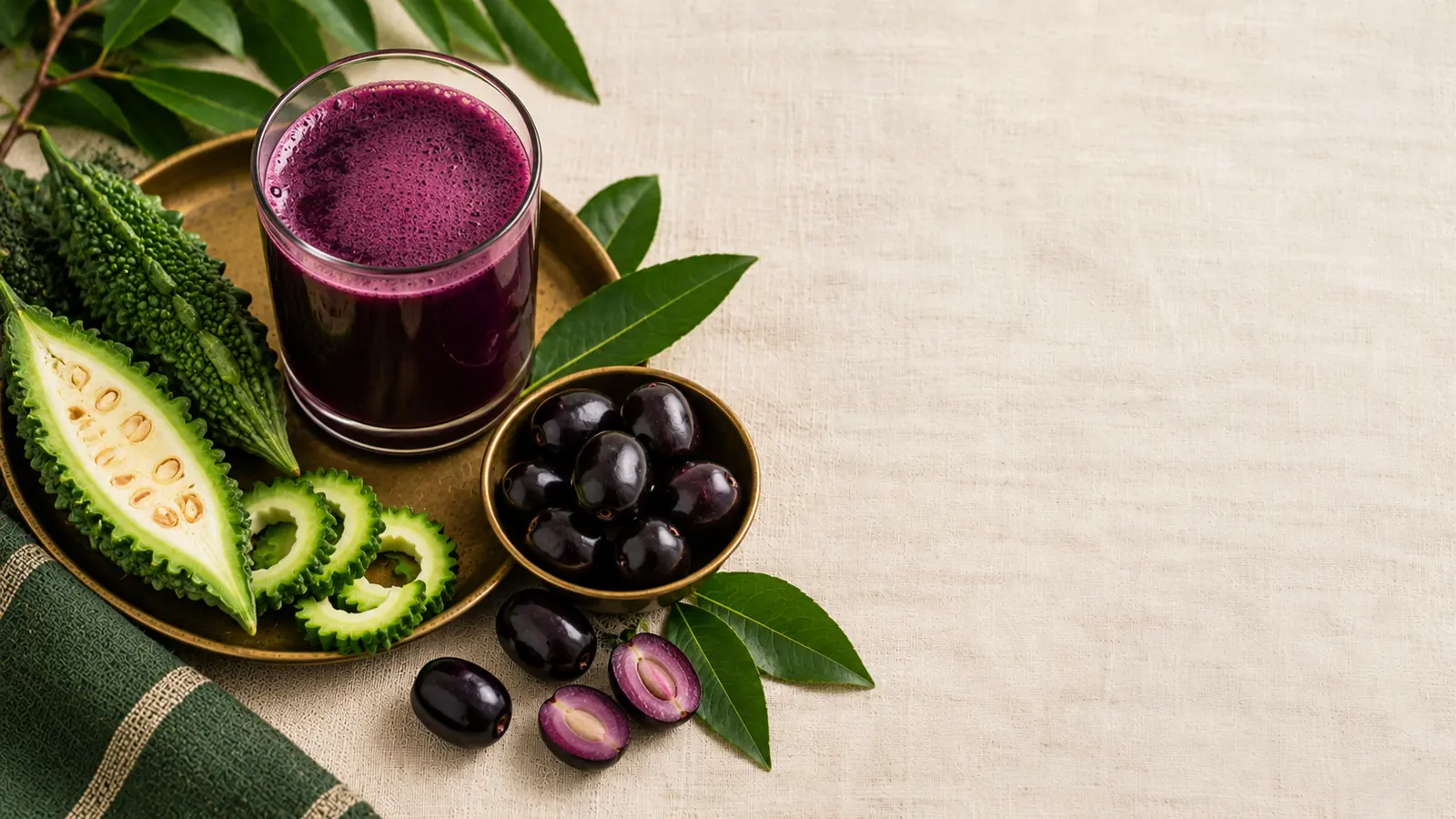
The pairing is really a pairing of tastes. Karela is intensely bitter (tikta), while jamun is astringent and slightly sour. In Ayurvedic thinking:
- Bitter (karela) is light, drying and cleansing — traditionally used to balance heavy, damp Kapha linked with sluggish metabolism.
- Astringent (jamun) is cooling and toning, traditionally valued for supporting healthy fluid metabolism, a theme central to Prameha.
Together they offer a broader, complementary character than either alone. This is a classic Ayurvedic idea: combining ingredients so their qualities support one another. It is why the two are so often blended rather than taken separately.
Karela and jamun in tradition
Both ingredients are foods first. Karela is a familiar vegetable, eaten as sabzi and stuffed dishes long before it ever became a juice. Jamun is a beloved seasonal fruit, and its seed powder is a well-known traditional preparation valued for metabolic balance. Because they come from the kitchen, they feel approachable — but that is also why people sometimes forget to treat them thoughtfully.
The juice simply concentrates these two ingredients into a single morning drink. Concentration is convenient, but it also means the qualities are more intense than eating the whole foods, which is worth keeping in mind.
How to use it safely
A homemade juice can feel harmless, but a few sensible principles matter:
- "Natural" is not automatically safe or unlimited. Karela in particular is strongly bitter and cooling, and large amounts do not suit everyone.
- Mind interactions. If you already take sugar-lowering medicines, bitter-astringent foods taken in concentrated form should be used with a physician's awareness.
- Freshness and hygiene matter. Fresh, well-washed produce and clean preparation protect against tummy upsets; bottled products vary widely in quality.
- Go gently. A small amount as part of a balanced routine is more in keeping with Ayurveda than large quantities on an empty, sensitive stomach.
- Take special care in pregnancy, for children, the elderly, and anyone managing other conditions — and use it under a qualified physician's guidance.
Want a routine matched to you rather than a one-size drink? Book a consultation with our doctor →
Where the juice honestly fits
Karela–jamun juice is a supportive habit, not a solution on its own. Ayurveda would always place it within a bigger picture — steady meals, daily movement, good sleep and calm. A morning glass can be one small, pleasant thread in that routine, but the everyday habits do the real, lasting work. At Guduchi, we treat food-based practices like this as complementary support that sits alongside your existing medical care.
Key takeaways
- Karela and jamun pair bitterness with astringency — tastes Ayurveda traditionally links to metabolic balance.
- The juice is a concentrated, convenient form of two familiar kitchen ingredients.
- It is a supportive food habit, not a treatment, and concentrated juice is stronger than the whole foods.
- Use it gently, mind interactions with medicines, and keep it alongside — never instead of — your medical care.
Frequently asked questions
Q. How much karela–jamun juice should I drink? A. Ayurveda favours gentle, individualised use rather than fixed large doses. Because the juice is concentrated and bitter, the right amount for you is best decided with an Ayurvedic physician, especially if you take medicines.
Q. Can karela–jamun juice replace my diabetes medication? A. No. It is a supportive food-based habit, not a replacement for medicine. Never stop or change prescribed medication without your treating doctor's guidance.
Q. Is it safe to drink every day on an empty stomach? A. Many people enjoy it in the morning, but karela is strongly bitter and cooling and can be harsh for sensitive stomachs. Check with a physician about what suits your constitution and any conditions you have.
Next steps with Guduchi
Terms in this article
Explore the Ayurveda glossary or try our free diabetes risk score.
Ayurvedic diabetes care near you
Guduchi Ayurveda runs BAMS-led clinics in eight Indian cities. Reading is a start — a physician who sees your reports can tailor it to you.
- Ayurvedic Diabetes Clinic, AhmedabadSola, Ahmedabad
- Ayurvedic Diabetes Clinic, BangaloreBanaswadi, Bangalore
- Ayurvedic Diabetes Clinic, ChennaiAnna Nagar West, Chennai
- Ayurvedic Diabetes Clinic, DavangereDavangere
- Ayurvedic Diabetes Clinic, HubballiVidya Nagar, Hubballi
- Ayurvedic Diabetes Clinic, HyderabadJubilee Hills, Hyderabad
- Ayurvedic Diabetes Clinic, KalaburagiShastri Nagar, Kalaburagi
- Ayurvedic Diabetes Clinic, KolkataNewtown, Kolkata
- Ayurvedic Diabetes Clinic, MangaluruUrwa, Mangaluru
- Ayurvedic Diabetes Clinic, MysuruKuvempunagar, Mysuru
- Ayurvedic Diabetes Clinic, UdupiBrahmagiri, Udupi
See all Guduchi diabetes clinics · Book an online consultation
DY
Written by
Dr. Yamuna B SBAMS — Senior Ayurvedic Physician · Bengaluru, Karnataka · Reg. No. 22157
Dr. Yamuna B S is a Senior Ayurvedic Physician at Guduchi Ayurveda in Bengaluru, with a deep focus on Madhumeha (the Ayurvedic understanding of diabetes) and lifestyle-led metabolic care. She works closely with each patient to combine classical Ayurvedic principles with practical, day-to-day guidance on diet, routine and stress — always alongside, not in place of, their regular medical care.
Medical disclaimer: This article is for general education and is not a substitute for professional medical advice, diagnosis, or treatment. Ayurveda is described here as a supportive, complementary system. Do not stop or change any prescribed medication without consulting your treating physician. Always speak with a qualified doctor about your individual health, especially if you are pregnant, elderly, or managing other conditions.