
In short
Kadha, a warm decoction of kitchen spices, can be a comforting winter drink for people living with diabetes when made without jaggery, honey or sugar. Ginger, tulsi, cinnamon, black pepper, ajwain and cumin are traditional choices. Keep it mild, have a cup or two a day, and check with your doctor if you take medicines.
Introduction
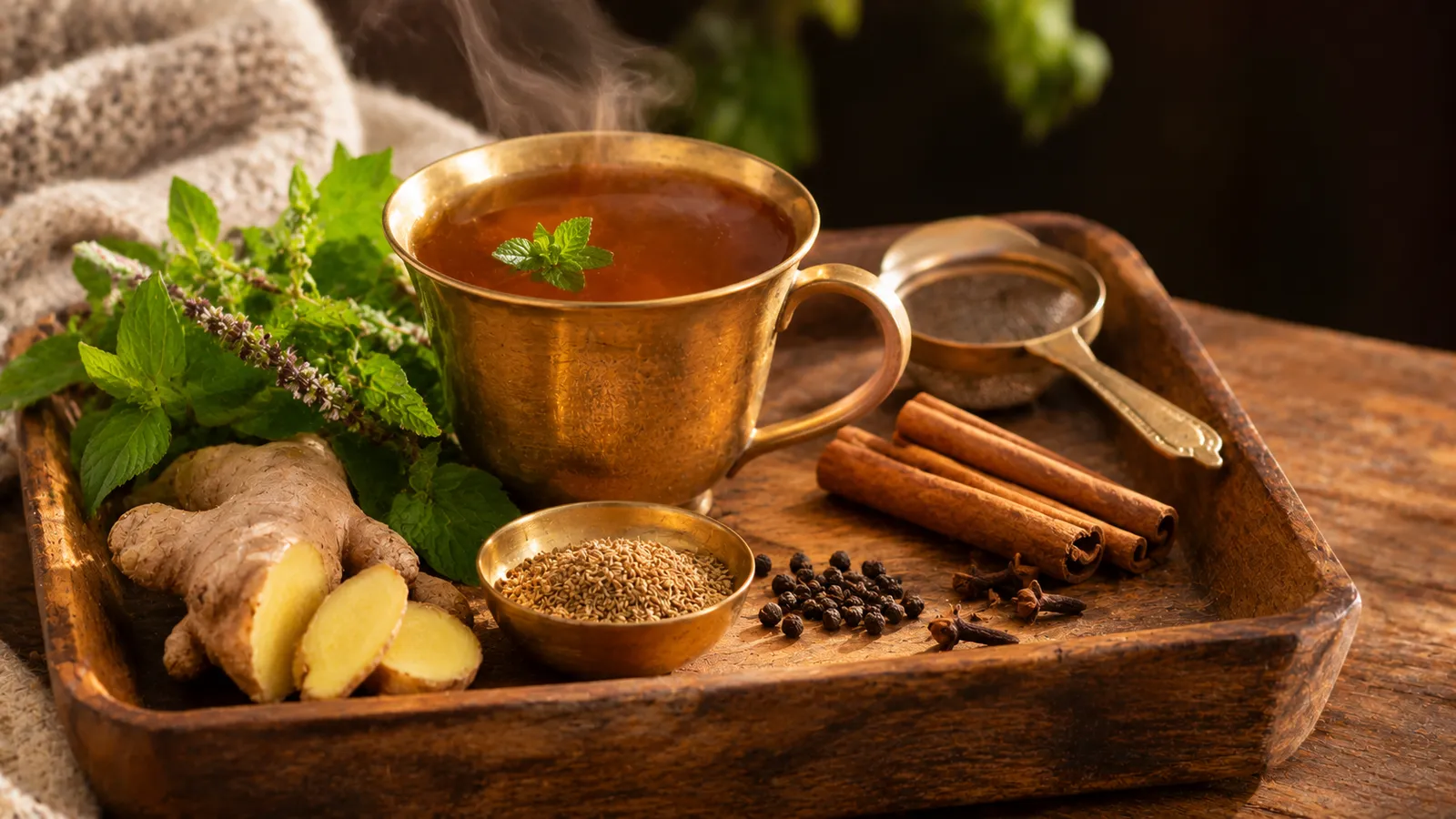
When the weather turns cold, many Indian kitchens start simmering kadha: a pot of water with ginger, tulsi, pepper and cinnamon, often sweetened with jaggery or honey and taken for a scratchy throat or simply for warmth. During the pandemic years it became a daily ritual for millions.
For someone living with diabetes, the sweetener is the main concern, and very strong decoctions taken many times a day can also upset digestion. Made thoughtfully, kadha can be a pleasant, warming part of a winter routine. It is supportive and comforting, not a remedy, and works alongside your medical care.
Want to know which herbs suit your constitution? Book a consultation with our Ayurvedic doctor →
What is kadha in Ayurveda?
Kadha comes from kwatha, the Ayurvedic term for a decoction made by simmering herbs in water until it reduces. Classical decoctions are prepared precisely by physicians; the household kadha is a gentler, kitchen-spice version.
Common kadha ingredients and their traditional roles
| Ingredient | Traditional Ayurvedic view | Keep in mind |
|---|---|---|
| Ginger (fresh or dry) | Warming; traditionally used to support digestion | Can cause acidity in some people |
| Tulsi (holy basil) | Valued for the respiratory system and balance | See our tulsi guide |
| Cinnamon (dalchini) | Warming, sweet-pungent spice | Use a small piece; see our cinnamon guide |
| Black pepper | Pungent; traditionally used to kindle agni | A few crushed peppercorns are enough |
| Ajwain, cumin | Traditionally used for digestion and bloating | Mild and kitchen-friendly |
| Turmeric | Warming, traditionally valued | A pinch of fresh or powder |
| Clove, cardamom | Aromatic | Small amounts for flavour |
| Mulethi (liquorice) | Traditional for the throat | Can raise blood pressure; avoid without guidance |
A simple sugar-free kadha
Makes about two small cups.
- 2 cups water
- A small piece of fresh ginger, crushed
- 6–8 tulsi leaves
- A small piece of cinnamon
- 3–4 black peppercorns, crushed
- A pinch of ajwain or cumin
- Optional: a pinch of turmeric, one clove
Simmer everything on low heat for about 8–10 minutes until it reduces slightly. Strain, let it cool to a comfortable warmth, and add a squeeze of lemon if you like. No jaggery, honey or sugar is needed; the spices give plenty of flavour.
Looking for a guided way to start a balanced routine? Try our 5-day Ayurvedic sample →
How often should you drink it?
For most people, a cup or two a day in cold weather is plenty. More is not better: very strong or frequent kadha can cause acidity, heartburn or stomach upset, especially on an empty stomach. Take it warm, not scalding, and between meals or after a light snack.
How to use it safely
- Skip the sweeteners. Jaggery and honey are sugars and can raise blood sugar.
- Keep it to kitchen spices. Don't add herbal powders or "immunity" mixes without guidance.
- Avoid mulethi if you have high blood pressure, unless your doctor approves.
- Pregnant or breastfeeding? Ask your doctor before regular use.
- See a doctor for a fever, cough or sore throat that doesn't settle; kadha is comfort, not treatment.
Other warm winter drinks
- Warm water with a slice of ginger through the day.
- Jeera (cumin) water after meals.
- Unsweetened tulsi or ginger tea instead of sweet chai.
- A cup of warm turmeric milk without sugar, if milk suits you and your doctor agrees.
Key takeaways
- Kadha is a warm decoction of kitchen spices — enjoy it sugar-free, without jaggery or honey.
- Ginger, tulsi, cinnamon, black pepper, ajwain and cumin are traditional, kitchen-friendly choices.
- A cup or two a day is plenty; very strong kadha can cause acidity.
- Check with your doctor if you take medicines or have stomach, kidney or liver concerns.
Frequently asked questions
Q. Can diabetics drink kadha? A. Many people can enjoy a mild, sugar-free kadha made from kitchen spices. Skip jaggery and honey, keep to one or two cups a day, and ask your doctor if you take medicines.
Q. Can I add honey or jaggery to kadha if I have diabetes? A. It is better not to. Both are sugars and can raise blood sugar. The spices give the drink plenty of flavour on their own.
Q. Does kadha lower blood sugar? A. Kadha is a comforting traditional drink, not a medicine, and should not be relied on to lower blood sugar. Keep up your prescribed treatment and monitoring.
Q. Can kadha replace my diabetes medicines in winter? A. No. Never stop or change prescribed medicines. Kadha is supportive and comforting, alongside your treatment.
Next steps with Guduchi
Terms in this article
Explore the Ayurveda glossary or try our free diabetes risk score.
Ayurvedic diabetes care near you
Guduchi Ayurveda runs BAMS-led clinics in eight Indian cities. Reading is a start — a physician who sees your reports can tailor it to you.
- Ayurvedic Diabetes Clinic, AhmedabadSola, Ahmedabad
- Ayurvedic Diabetes Clinic, BangaloreBanaswadi, Bangalore
- Ayurvedic Diabetes Clinic, ChennaiAnna Nagar West, Chennai
- Ayurvedic Diabetes Clinic, DavangereDavangere
- Ayurvedic Diabetes Clinic, HubballiVidya Nagar, Hubballi
- Ayurvedic Diabetes Clinic, HyderabadJubilee Hills, Hyderabad
- Ayurvedic Diabetes Clinic, KalaburagiShastri Nagar, Kalaburagi
- Ayurvedic Diabetes Clinic, KolkataNewtown, Kolkata
- Ayurvedic Diabetes Clinic, MangaluruUrwa, Mangaluru
- Ayurvedic Diabetes Clinic, MysuruKuvempunagar, Mysuru
- Ayurvedic Diabetes Clinic, UdupiBrahmagiri, Udupi
See all Guduchi diabetes clinics · Book an online consultation
DY
Written by
Dr. Yamuna B SBAMS — Senior Ayurvedic Physician · Bengaluru, Karnataka · Reg. No. 22157
Dr. Yamuna B S is a Senior Ayurvedic Physician at Guduchi Ayurveda in Bengaluru, with a deep focus on Madhumeha (the Ayurvedic understanding of diabetes) and lifestyle-led metabolic care. She works closely with each patient to combine classical Ayurvedic principles with practical, day-to-day guidance on diet, routine and stress — always alongside, not in place of, their regular medical care.
Medical disclaimer: This article is for general education and is not a substitute for professional medical advice, diagnosis, or treatment. Ayurveda is described here as a supportive, complementary system. Do not stop or change any prescribed medication without consulting your treating physician. Always speak with a qualified doctor about your individual health, especially if you are pregnant, elderly, or managing other conditions.