
In short
Tulsi (holy basil) is one of the most revered herbs in Ayurveda, traditionally valued for supporting metabolic balance and overall wellbeing. This article explains the Ayurvedic view of tulsi, how it is traditionally used, and how to enjoy it safely. Tulsi is a complementary support that works alongside — never in place of — your prescribed medicines and blood-sugar monitoring.
Introduction
Few plants hold the place tulsi does in Indian homes. Grown in courtyards and offered in daily prayer, holy basil is woven into everyday life. Beyond its cultural importance, Ayurveda has long regarded tulsi as a rasayana — a rejuvenating herb valued for supporting the body's balance and resilience.
For anyone mindful of their metabolic health, tulsi is a gentle, familiar herb worth understanding. But "natural" does not automatically mean "safe for everyone," and tulsi is best used thoughtfully, under guidance, and always alongside your regular care.
Wondering how tulsi might fit your own routine? Book a consultation with our Ayurvedic doctor →
How Ayurveda views tulsi
In classical Ayurveda, tulsi is described as warming, light and pungent-bitter in taste. It is traditionally considered supportive of agni (digestive fire) and helpful in balancing Kapha — the quality associated with sluggish metabolism. Because Ayurveda links steady digestion and metabolism to overall balance, tulsi has traditionally been valued as part of a broader supportive routine.
It is important to frame this carefully: tulsi is not a treatment that acts on blood sugar in a measurable, guaranteed way. It is a traditionally valued herb used within a wider system of diet, routine and lifestyle.
Traditional ways tulsi is used
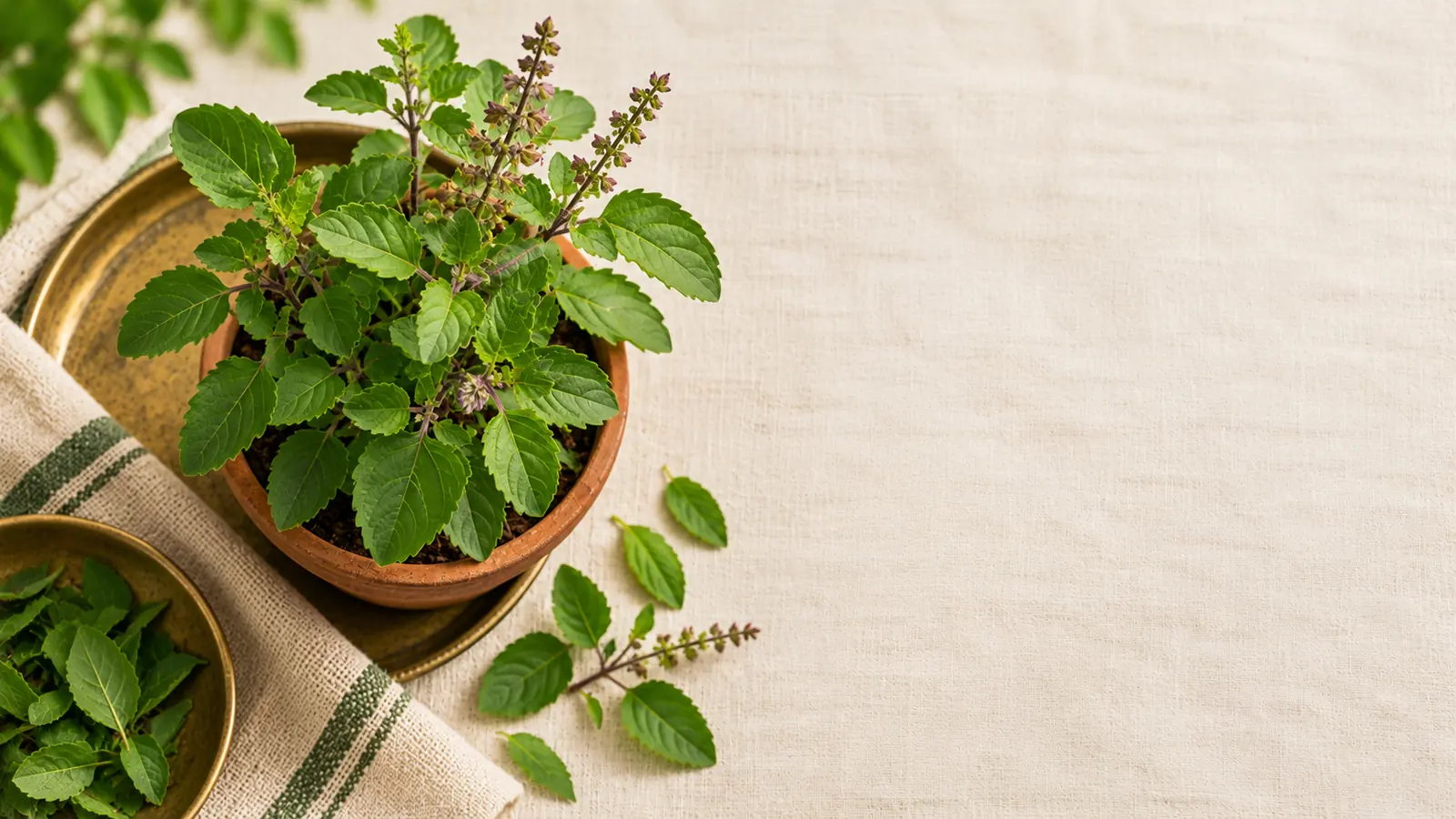
- Fresh leaves: A few washed leaves chewed in the morning is a long-standing household practice.
- Tulsi tea or kadha: Leaves steeped in hot water, sometimes with ginger, cardamom or a little black pepper.
- In classical preparations: Tulsi appears in various traditional Ayurvedic formulations, prepared by physicians.
These are culinary and household traditions. This article deliberately avoids prescribing amounts — the right approach depends on you as an individual, and that is a conversation for your physician.
Want a simple, structured way to begin? Try our 5-day Ayurvedic sample →
How to use it safely
This is the most important section. A few principles:
- Natural is not automatically safe. Herbs are active substances and can interact with medicines.
- Mind interactions. Tulsi may interact with certain medications, including some that affect blood sugar or blood clotting. If you take diabetes medicines, this matters — please discuss it with your treating doctor.
- Use under guidance. An Ayurvedic physician can advise on whether tulsi suits your constitution and current health.
- Take special care if pregnant, planning pregnancy, breastfeeding, elderly, or before surgery. In these situations, always check with a qualified doctor first.
- Keep monitoring. Continue your prescribed medicines and regular blood-sugar checks exactly as advised.
- Never as a replacement. Tulsi supports a healthy routine; it does not replace medication.
Where tulsi fits in a bigger picture
Tulsi is at its best as one small, pleasant part of a balanced daily routine — good food, regular movement, steady sleep and stress management. Ayurveda never leans on a single herb as a solution. It sees wellbeing as the sum of many consistent, supportive habits, coordinated with your medical care.
Key takeaways
- Tulsi (holy basil) is a revered Ayurvedic rasayana, traditionally valued for metabolic balance.
- It is traditionally used as fresh leaves, as tea, and in classical preparations.
- "Natural" is not automatically safe — tulsi can interact with medicines and should be used under guidance.
- It is a complementary support alongside — never a replacement for — your prescribed care.
Frequently asked questions
Q. Can tulsi lower my blood sugar on its own? A. Tulsi is traditionally valued for supporting metabolic balance, but it is not a standalone treatment and should not be relied on to change your numbers. Think of it as a small supportive habit within a broader routine, coordinated with your doctor.
Q. Is it safe to take tulsi with my diabetes medicines? A. It may interact with certain medications, so this must be checked with your treating physician before you combine them. Do not assume it is automatically safe alongside your prescriptions.
Q. Can I stop my medicines if I take tulsi regularly? A. No. Tulsi does not replace medication. Never stop or change prescribed medicines without your treating doctor's guidance; continue your regular monitoring throughout.
Next steps with Guduchi
Terms in this article
Explore the Ayurveda glossary or try our free diabetes risk score.
Ayurvedic diabetes care near you
Guduchi Ayurveda runs BAMS-led clinics in eight Indian cities. Reading is a start — a physician who sees your reports can tailor it to you.
- Ayurvedic Diabetes Clinic, AhmedabadSola, Ahmedabad
- Ayurvedic Diabetes Clinic, BangaloreBanaswadi, Bangalore
- Ayurvedic Diabetes Clinic, ChennaiAnna Nagar West, Chennai
- Ayurvedic Diabetes Clinic, DavangereDavangere
- Ayurvedic Diabetes Clinic, HubballiVidya Nagar, Hubballi
- Ayurvedic Diabetes Clinic, HyderabadJubilee Hills, Hyderabad
- Ayurvedic Diabetes Clinic, KalaburagiShastri Nagar, Kalaburagi
- Ayurvedic Diabetes Clinic, KolkataNewtown, Kolkata
- Ayurvedic Diabetes Clinic, MangaluruUrwa, Mangaluru
- Ayurvedic Diabetes Clinic, MysuruKuvempunagar, Mysuru
- Ayurvedic Diabetes Clinic, UdupiBrahmagiri, Udupi
See all Guduchi diabetes clinics · Book an online consultation
DY
Written by
Dr. Yamuna B SBAMS — Senior Ayurvedic Physician · Bengaluru, Karnataka · Reg. No. 22157
Dr. Yamuna B S is a Senior Ayurvedic Physician at Guduchi Ayurveda in Bengaluru, with a deep focus on Madhumeha (the Ayurvedic understanding of diabetes) and lifestyle-led metabolic care. She works closely with each patient to combine classical Ayurvedic principles with practical, day-to-day guidance on diet, routine and stress — always alongside, not in place of, their regular medical care.
Medical disclaimer: This article is for general education and is not a substitute for professional medical advice, diagnosis, or treatment. Ayurveda is described here as a supportive, complementary system. Do not stop or change any prescribed medication without consulting your treating physician. Always speak with a qualified doctor about your individual health, especially if you are pregnant, elderly, or managing other conditions.