
In short
Cinnamon (dalchini) is a warming, aromatic kitchen spice traditionally valued in Ayurveda for kindling digestion (agni) and supporting metabolic balance. A simple cup of cinnamon water is a gentle daily habit some people enjoy, but it is not a treatment and not automatically safe in large amounts. It works as supportive care alongside — never in place of — your prescribed medicines and monitoring.
Introduction
Cinnamon is one of those spices that lives in almost every Indian kitchen — in chai, in garam masala, in festive sweets. Its warmth and fragrance make it easy to recognise, and it has a long place in Ayurvedic tradition well beyond the kitchen. For anyone thinking about metabolic health, dalchini often comes up as a gentle, everyday habit.
In Ayurveda, cinnamon is valued for its warming, pungent-sweet character and its traditional association with healthy digestion. Because Ayurveda places digestion (agni) at the centre of metabolism, warming spices like dalchini are traditionally valued for supporting that inner fire. This article explains the simple habit of cinnamon water and how to approach it safely.
Curious whether a warming spice like dalchini suits you? Book a consultation with our Ayurvedic doctor →
Why Ayurveda values dalchini
Ayurveda understands cinnamon as a warming spice that supports agni, the digestive fire. When agni is steady, Ayurveda considers that nutrients are metabolised well; when it is sluggish, imbalances are thought to accumulate. Cinnamon's warming, drying qualities are traditionally used to balance heavy, cold, damp Kapha — the quality most linked to slow metabolism.
- It is warming and gently stimulating to digestion.
- It carries a pleasant sweet-pungent taste that makes it easy to include daily.
- It is often combined with other spices in classical and home preparations.
These are traditional descriptions of the spice's qualities, not a promise about any blood-sugar number.
The simple cinnamon water habit
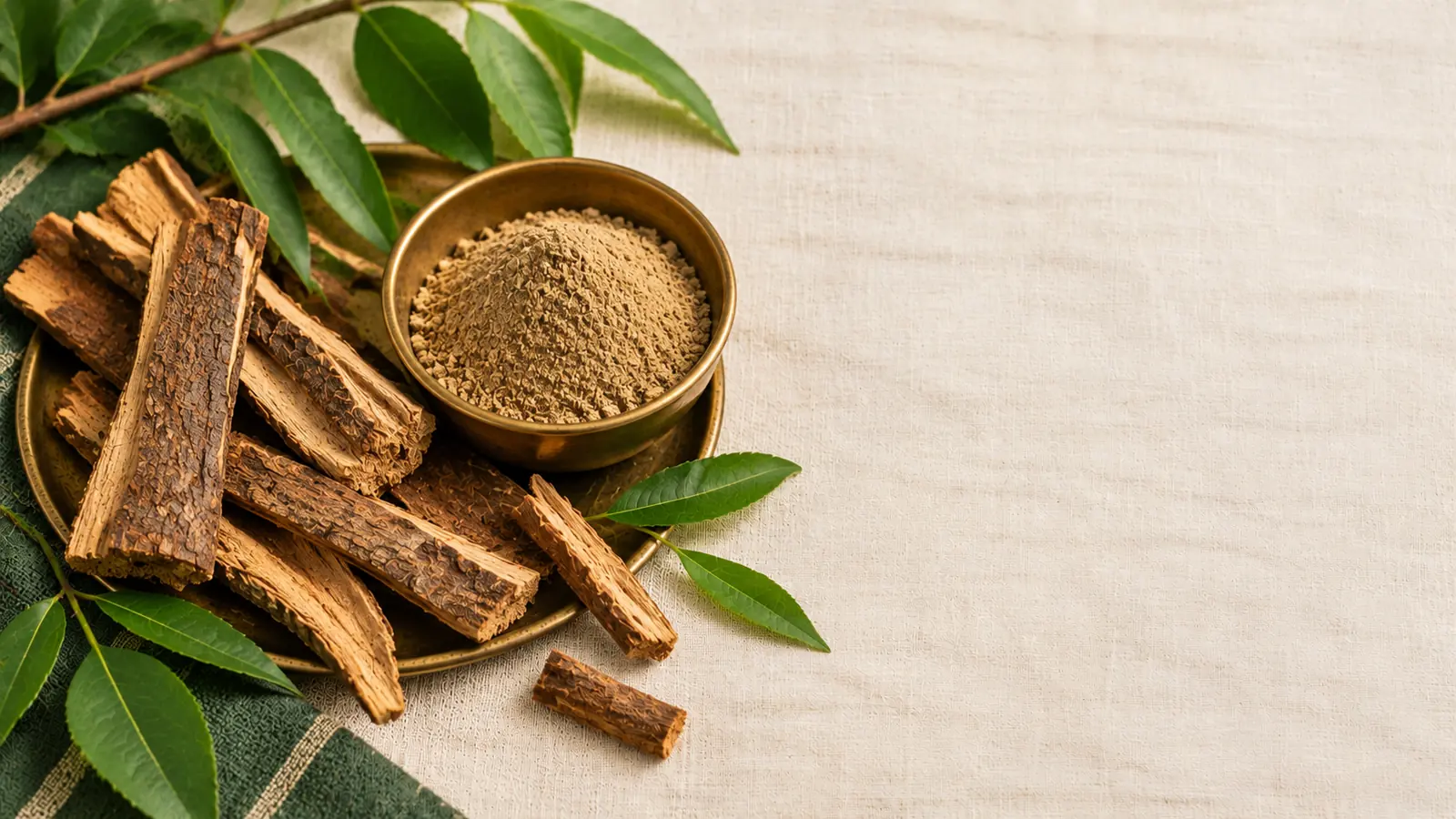
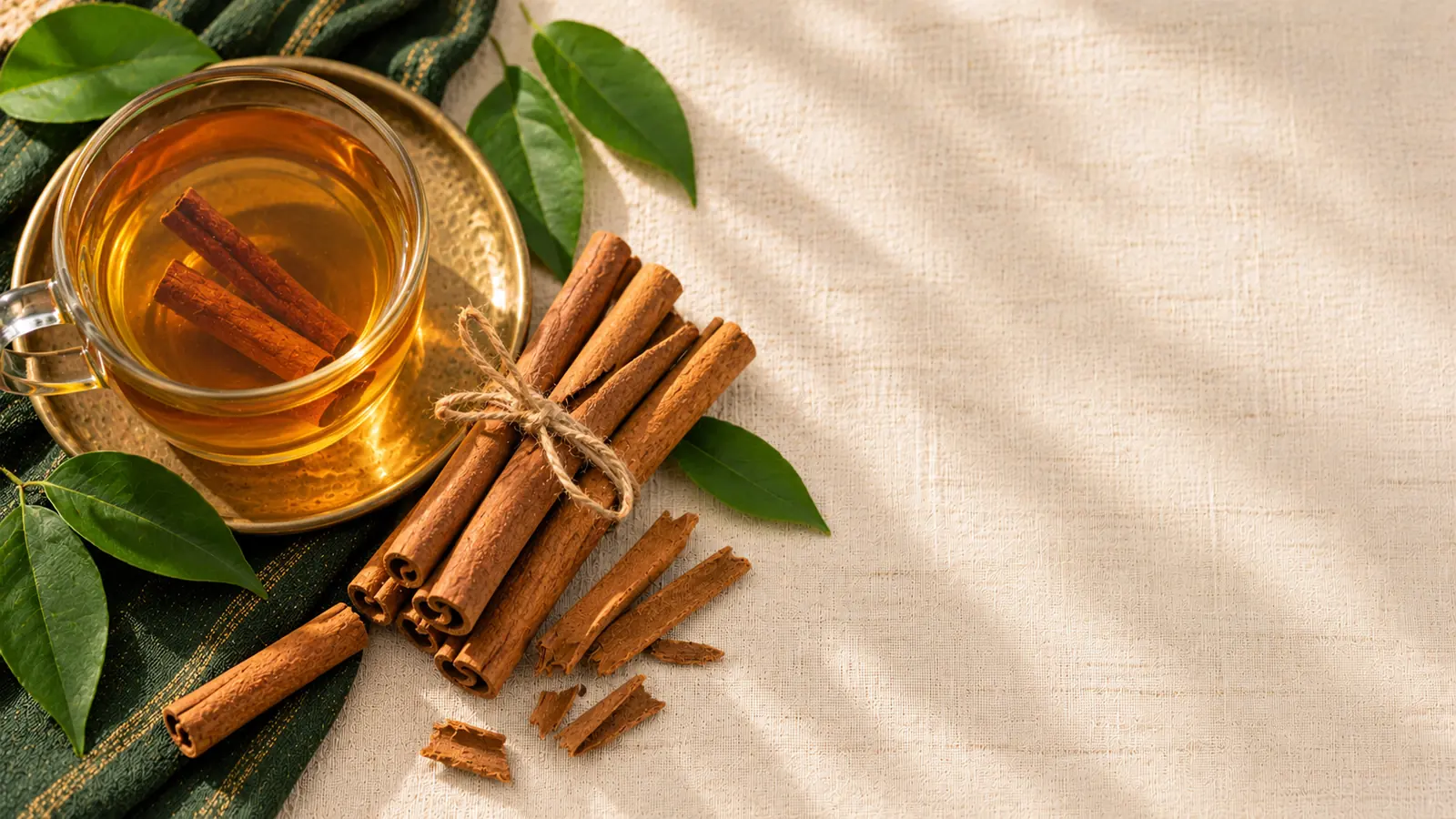
Cinnamon water is about as gentle as home routines get. A small piece of true cinnamon bark, or a modest pinch of powder, is steeped or simmered in warm water and sipped — often in the morning as part of one's dinacharya (daily routine). Warm water itself is valued in Ayurveda for supporting digestion, so the two suit each other.
The appeal is its simplicity: it costs almost nothing, fits easily into a morning, and feels comforting. But simple does not mean limitless — a warming spice used in excess can be unbalancing, which is why moderation is the whole point.
How to use it safely
A pinch of a kitchen spice feels harmless, and used gently it usually is — but sensible care still applies:
- "Natural" does not mean unlimited. Cinnamon is warming and, in large amounts, can be irritating; more is not better.
- Know your cinnamon. True (Ceylon) cinnamon and the more common cassia differ; large amounts of cassia in particular are not advisable, so keep quantities modest.
- Mind interactions. If you take sugar-lowering medication or blood thinners, using concentrated cinnamon regularly should be done with a physician's awareness.
- Warming spices suit some constitutions more than others. People who run hot, have acidity, or are pregnant should be especially moderate.
- Use it gently and under a qualified physician's guidance, never as a replacement for prescribed medicines or monitoring.
Prefer a routine tuned to your constitution? Book a consultation with our doctor →
Where the habit honestly fits
Cinnamon water is a small, pleasant support — not a plan. Ayurveda would always set it within a bigger routine of mindful meals, daily movement, restful sleep and calm. A warm morning cup can be one gentle thread in that fabric, but the everyday habits carry the real weight. At Guduchi, we treat simple practices like this as complementary support that sits alongside your existing medical care.
Key takeaways
- Cinnamon (dalchini) is a warming spice traditionally valued in Ayurveda for supporting agni and metabolic balance.
- Cinnamon water is a gentle, low-cost daily habit some people enjoy in their morning routine.
- It is not a treatment and not unlimited — moderation matters, and more is not better.
- Keep quantities modest, mind interactions with medicines, and use it alongside, never instead of, your medical care.
Frequently asked questions
Q. How much cinnamon water is good for blood sugar? A. Ayurveda favours gentle, modest use rather than large fixed amounts, and cinnamon is warming enough that excess can be unbalancing. The right amount for you is best decided with a physician, particularly if you take medicines.
Q. Can cinnamon water replace my diabetes medicine? A. No. It is a supportive daily habit, not a replacement for medication. Never stop or change prescribed medicines without your treating doctor's guidance.
Q. Is it safe to drink cinnamon water every day? A. In modest amounts many people do, but cinnamon is warming and the common cassia type should be kept in small quantities. If you are pregnant, take blood thinners or sugar-lowering medicines, or run hot by nature, check with an Ayurvedic physician first.
Next steps with Guduchi
Terms in this article
Explore the Ayurveda glossary or try our free diabetes risk score.
Ayurvedic diabetes care near you
Guduchi Ayurveda runs BAMS-led clinics in eight Indian cities. Reading is a start — a physician who sees your reports can tailor it to you.
- Ayurvedic Diabetes Clinic, AhmedabadSola, Ahmedabad
- Ayurvedic Diabetes Clinic, BangaloreBanaswadi, Bangalore
- Ayurvedic Diabetes Clinic, ChennaiAnna Nagar West, Chennai
- Ayurvedic Diabetes Clinic, DavangereDavangere
- Ayurvedic Diabetes Clinic, HubballiVidya Nagar, Hubballi
- Ayurvedic Diabetes Clinic, HyderabadJubilee Hills, Hyderabad
- Ayurvedic Diabetes Clinic, KalaburagiShastri Nagar, Kalaburagi
- Ayurvedic Diabetes Clinic, KolkataNewtown, Kolkata
- Ayurvedic Diabetes Clinic, MangaluruUrwa, Mangaluru
- Ayurvedic Diabetes Clinic, MysuruKuvempunagar, Mysuru
- Ayurvedic Diabetes Clinic, UdupiBrahmagiri, Udupi
See all Guduchi diabetes clinics · Book an online consultation
DY
Written by
Dr. Yamuna B SBAMS — Senior Ayurvedic Physician · Bengaluru, Karnataka · Reg. No. 22157
Dr. Yamuna B S is a Senior Ayurvedic Physician at Guduchi Ayurveda in Bengaluru, with a deep focus on Madhumeha (the Ayurvedic understanding of diabetes) and lifestyle-led metabolic care. She works closely with each patient to combine classical Ayurvedic principles with practical, day-to-day guidance on diet, routine and stress — always alongside, not in place of, their regular medical care.
Medical disclaimer: This article is for general education and is not a substitute for professional medical advice, diagnosis, or treatment. Ayurveda is described here as a supportive, complementary system. Do not stop or change any prescribed medication without consulting your treating physician. Always speak with a qualified doctor about your individual health, especially if you are pregnant, elderly, or managing other conditions.