
In short
Ayurvedic herbs and diabetes medicines can sometimes be used together, but only under a qualified physician's guidance and with your treating doctor informed. The main concerns are additive effects that may push blood sugar too low, interactions with other medicines, and the quality of over-the-counter products. Never self-prescribe, never stop prescribed medicines, and monitor more closely whenever anything changes.
Introduction
Many people living with diabetes in India take metformin or other prescribed medicines and also want to try karela juice, methi seeds, gurmar or a "sugar powder" a relative recommended. It is one of the most common questions we hear: Is it safe to take both?
The careful answer is: it can be, when a physician who knows your full medicine list chooses the herb, the form and the timing, and when your monitoring continues. This guide explains why that care matters.
Already taking herbs alongside your tablets? Book a consultation so our doctor can review them →
Why can herbs and diabetes medicines interact?
Several herbs traditionally valued in Ayurveda for metabolic balance — such as karela, gurmar, methi, jamun and vijaysar — are used precisely because they are thought to influence how the body handles sugar. Combined with medicines that also lower blood sugar, the effects may add up.
- Low blood sugar (hypoglycaemia): the most important risk, especially with insulin or sulfonylurea tablets.
- Interactions with other medicines: for blood pressure, blood thinning, thyroid or cholesterol.
- Effects on the liver or kidneys: relevant if you already have liver or kidney concerns.
- Unpredictable dosing: home-made juices and powders vary widely in strength.
Common herbs people combine with medicines
| Herb | Traditional Ayurvedic role | Key caution with medicines |
|---|---|---|
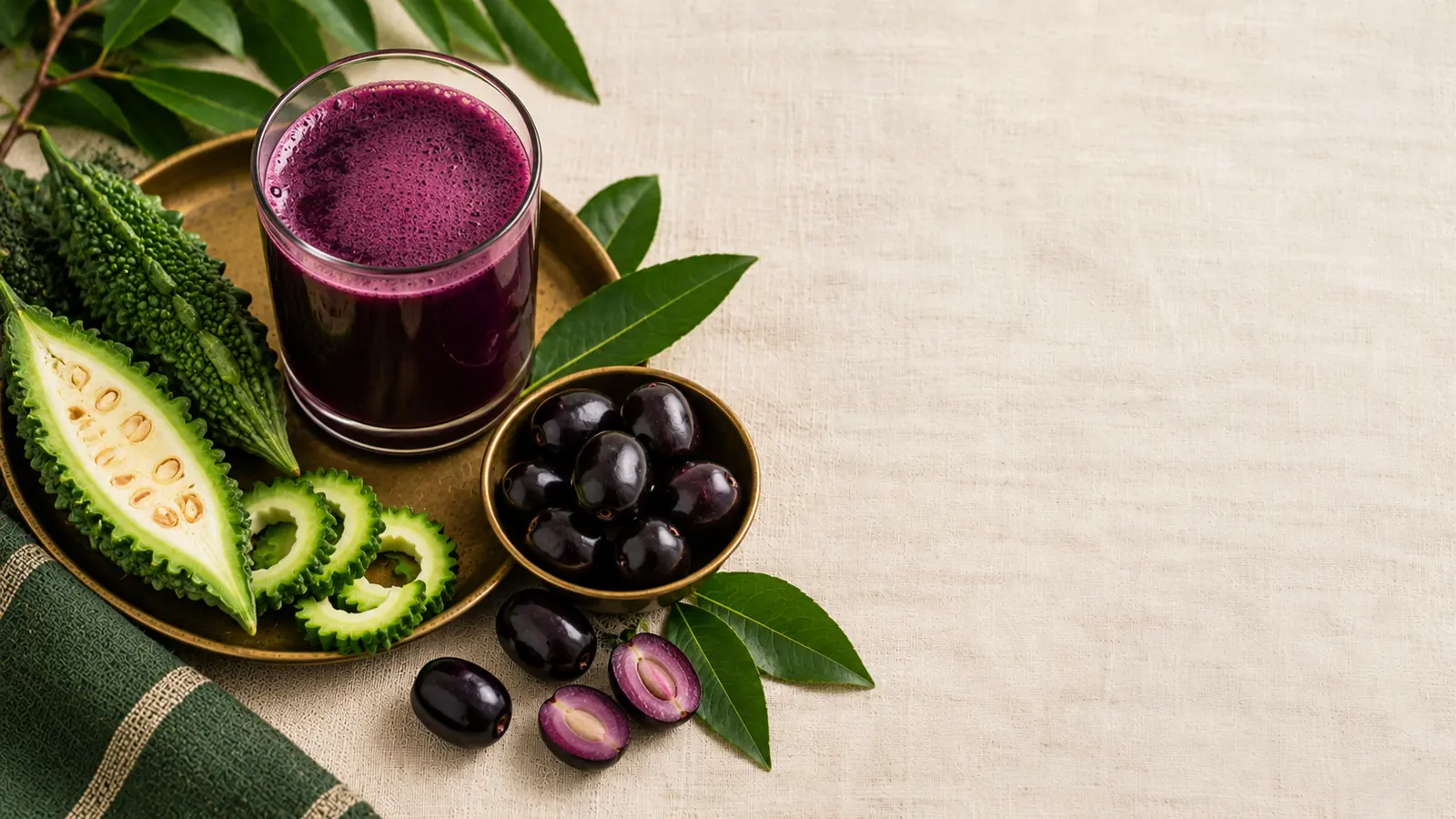
| Karela (bitter gourd) | Bitter taste, balances Kapha | Concentrated juice may add to blood-sugar-lowering effects |
| Gurmar (gymnema) | Classical Prameha herb | Possible additive effect; physician guidance needed |
| Methi (fenugreek) seeds | Kitchen spice and traditional remedy | May add to medicine effects; can affect digestion |
| Jamun seed powder | Traditionally used for Prameha | Strength varies by product |
| Giloy (Guduchi) | Rasayana herb for vitality | Avoid self-use with liver or autoimmune concerns |
| Vijaysar | Heartwood used in classical care | Use only under physician guidance |
You can read more in our individual guides to gurmar and karela, and our giloy vs gurmar comparison.
Culinary amounts in everyday cooking — methi in a sabzi, karela as a vegetable — are different from concentrated juices, powders and capsules taken daily. It is the concentrated forms that most need a physician's input.
How to use herbs safely: a checklist
- Tell your treating doctor about every herb, juice, powder or supplement you take.
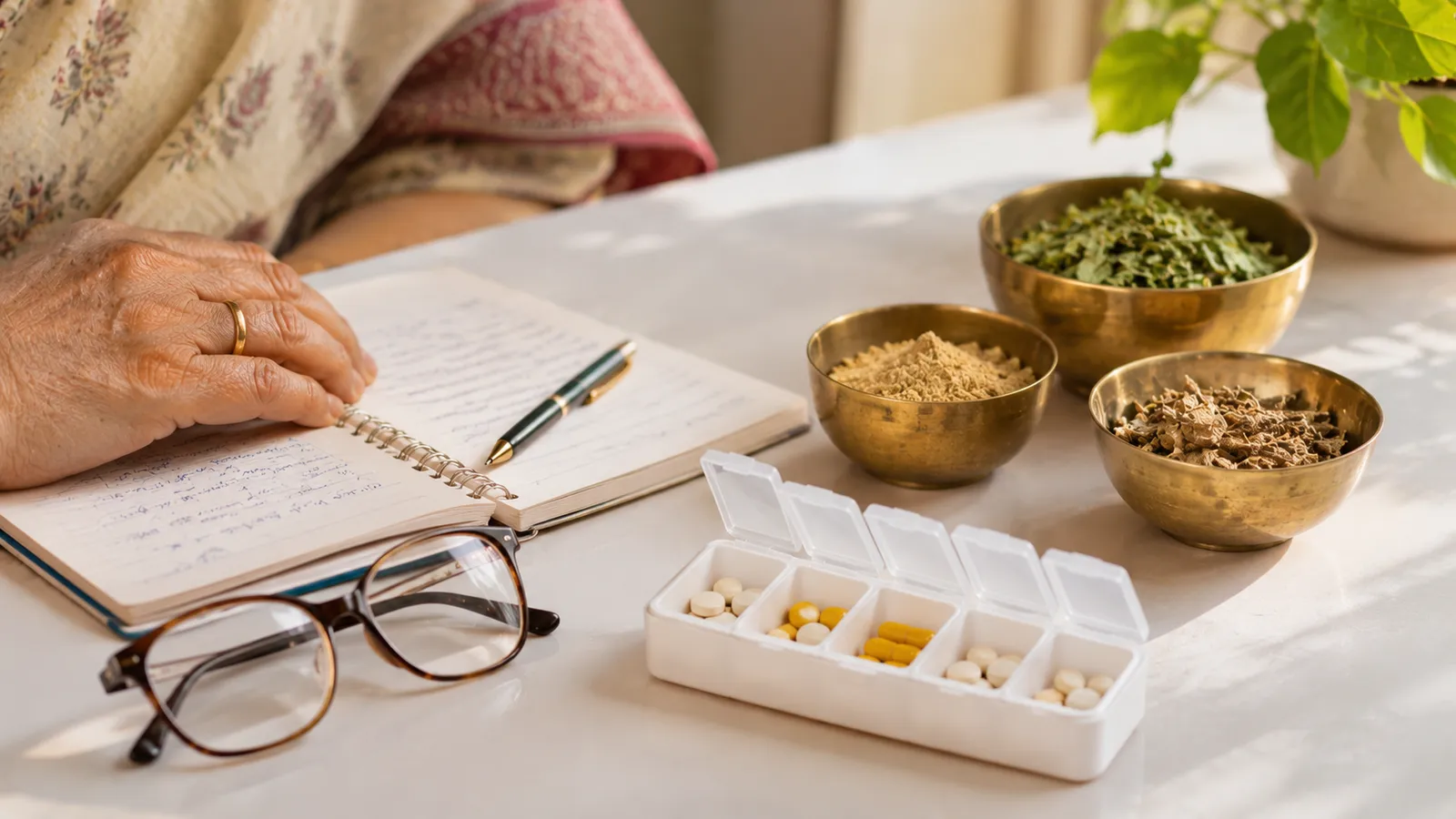
- Give your Ayurvedic doctor your full medicine list, including doses and timings.
- Start nothing new on your own. Let a physician choose the herb, form and timing.
- Monitor more closely when anything new begins, as your doctor advises.
- Choose quality products from licensed manufacturers with clear labels and batch numbers.
- Avoid unlabelled powders or products sold as secret formulas.
- Never stop or reduce prescribed medicines because you feel better on herbs.
Want to try a physician-designed, structured approach? Get the 5-day Ayurvedic sample →
Who needs extra caution?
Speak to your doctor before using any herbal preparation if you are pregnant or breastfeeding, elderly, on insulin, have kidney or liver concerns, take blood thinners, or are managing several conditions at once.
Key takeaways
- Herbs and diabetes medicines can sometimes be combined, but only under a qualified physician's guidance.
- The main risk is additive blood-sugar lowering; know the signs of a low.
- Concentrated juices, powders and capsules need more care than culinary use in food.
- Tell both doctors everything, choose quality products and never stop prescribed medicines.
Frequently asked questions
Q. Can I take Ayurvedic medicine with metformin? A. Some people do, under the guidance of a qualified physician and with their treating doctor informed. Don't start herbal preparations on your own, and keep up your monitoring.
Q. Is karela juice safe with diabetes tablets? A. Concentrated karela juice may add to the effect of blood-sugar-lowering medicines. Eating karela as a vegetable is different from daily juice; ask your doctor before taking the juice regularly.
Q. How long should I keep a gap between herbs and my medicines? A. There is no single rule. Timing depends on the herb and the medicine, so this should be decided by your physician.
Q. Can Ayurvedic herbs replace my diabetes medicine? A. No. Never stop or reduce prescribed medicines without your treating doctor's advice. Herbs are supportive care alongside treatment.
Q. Are Ayurvedic products always safe because they are natural? A. No. "Natural" does not mean safe for everyone. Quality, dose and interactions all matter, which is why physician guidance is essential.
Next steps with Guduchi
Terms in this article
Explore the Ayurveda glossary or try our free diabetes risk score.
Ayurvedic diabetes care near you
Guduchi Ayurveda runs BAMS-led clinics in eight Indian cities. Reading is a start — a physician who sees your reports can tailor it to you.
- Ayurvedic Diabetes Clinic, AhmedabadSola, Ahmedabad
- Ayurvedic Diabetes Clinic, BangaloreBanaswadi, Bangalore
- Ayurvedic Diabetes Clinic, ChennaiAnna Nagar West, Chennai
- Ayurvedic Diabetes Clinic, DavangereDavangere
- Ayurvedic Diabetes Clinic, HubballiVidya Nagar, Hubballi
- Ayurvedic Diabetes Clinic, HyderabadJubilee Hills, Hyderabad
- Ayurvedic Diabetes Clinic, KalaburagiShastri Nagar, Kalaburagi
- Ayurvedic Diabetes Clinic, KolkataNewtown, Kolkata
- Ayurvedic Diabetes Clinic, MangaluruUrwa, Mangaluru
- Ayurvedic Diabetes Clinic, MysuruKuvempunagar, Mysuru
- Ayurvedic Diabetes Clinic, UdupiBrahmagiri, Udupi
See all Guduchi diabetes clinics · Book an online consultation
DY
Written by
Dr. Yamuna B SBAMS — Senior Ayurvedic Physician · Bengaluru, Karnataka · Reg. No. 22157
Dr. Yamuna B S is a Senior Ayurvedic Physician at Guduchi Ayurveda in Bengaluru, with a deep focus on Madhumeha (the Ayurvedic understanding of diabetes) and lifestyle-led metabolic care. She works closely with each patient to combine classical Ayurvedic principles with practical, day-to-day guidance on diet, routine and stress — always alongside, not in place of, their regular medical care.
Medical disclaimer: This article is for general education and is not a substitute for professional medical advice, diagnosis, or treatment. Ayurveda is described here as a supportive, complementary system. Do not stop or change any prescribed medication without consulting your treating physician. Always speak with a qualified doctor about your individual health, especially if you are pregnant, elderly, or managing other conditions.