
In short
Ashwagandha (Withania somnifera) is a classical Ayurvedic rasayana herb, traditionally valued for strength, restful sleep and resilience to stress, which all matter for blood-sugar wellbeing. It is not a diabetes medicine, may interact with some medicines and is not right for everyone, so use it only under a physician's guidance.
Introduction
Ashwagandha has become one of the most searched Ayurvedic herbs worldwide, sold as powders, capsules, gummies and teas. Its name is often translated as "smell of a horse", a reference both to the root's aroma and to the strength it is traditionally associated with.
For someone living with diabetes, the interest usually comes from two directions: managing stress and sleep, and wondering whether it influences blood sugar directly. Here is what Ayurveda says, and how to approach it safely, alongside, not in place of, your prescribed care.
Thinking of adding ashwagandha to your routine? Book a consultation to check if it suits you →
Why does Ayurveda value ashwagandha?
| Name | Details |
|---|---|
| Sanskrit | Ashwagandha |
| Botanical | Withania somnifera |
| Common names | Indian ginseng, winter cherry |
| Part used | Mainly the root |
| Traditional category | Rasayana (rejuvenating), balya (strength-giving) |
| Traditional uses | Strength, vitality, restful sleep, calming the mind |
In Ayurvedic terms, ashwagandha is warming and grounding, traditionally used to pacify Vata and support the nervous system. It is classed as a rasayana, a herb used to support resilience and healthy ageing.
Stress, sleep and blood sugar
Ongoing stress and poor sleep tend to unsettle eating habits, energy and motivation for activity, and modern research links both with blood-sugar regulation. That is why Ayurveda sees mind and metabolism as connected, as we explain in sleep, stress and blood sugar.
Ashwagandha's traditional role in calming the mind and supporting sleep is the main reason it is sometimes considered in a wider plan for people with diabetes. Some studies have also looked at its effects on blood sugar, but evidence is limited, so it should not be seen as a way to manage diabetes itself.
How is ashwagandha traditionally used?
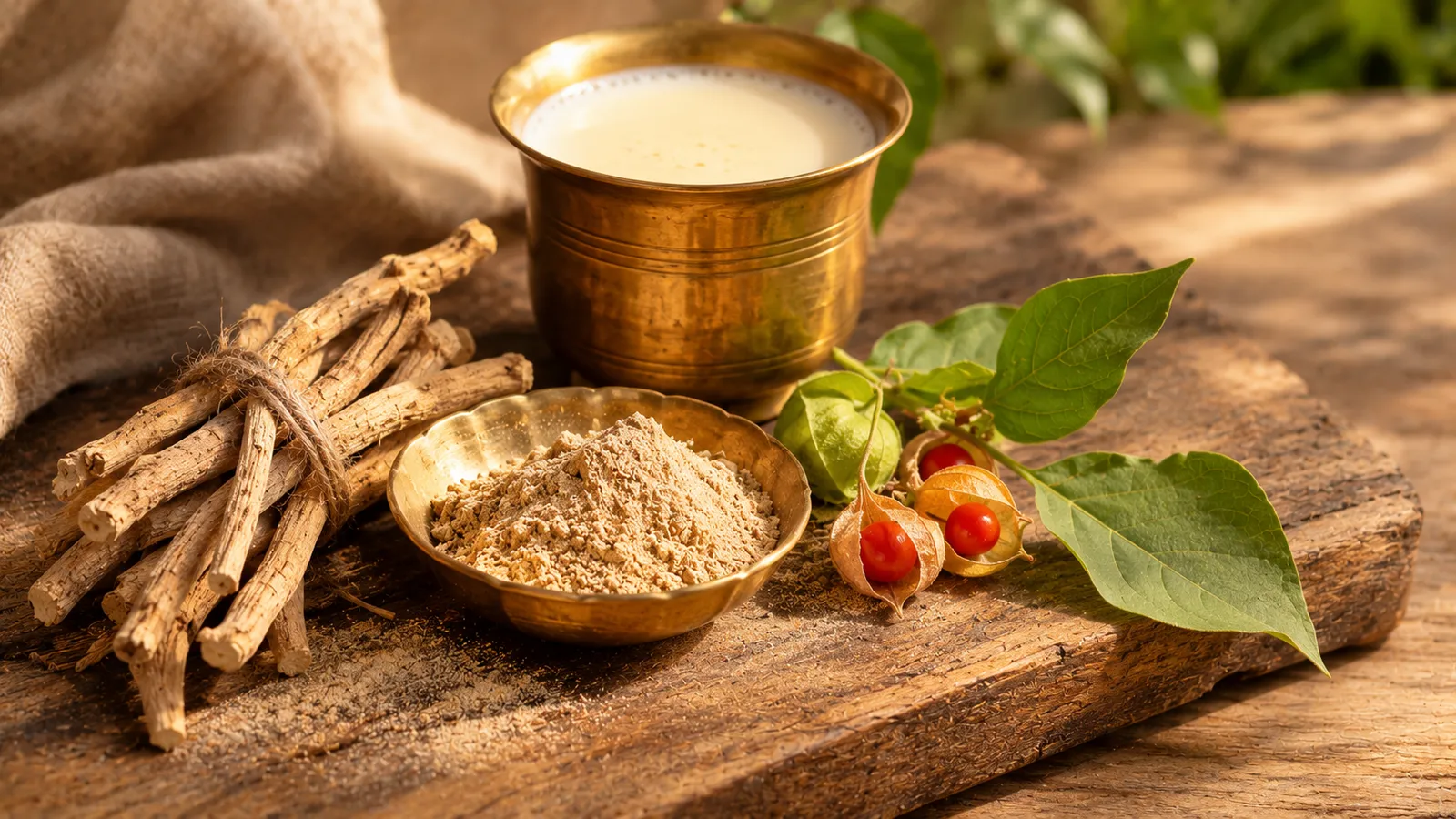
Classically, ashwagandha root powder is often taken with warm milk or water, and it is included in several traditional formulations. In an Ayurvedic clinic, whether to use it, in which form, and how it fits with your other herbs and medicines is decided individually.
Want to experience a physician-designed approach first? Get the 5-day Ayurvedic sample →
How to use it safely
- It is not a diabetes medicine. Never use it in place of prescribed treatment.
- Possible interactions: it may add to the effects of blood-sugar-lowering, blood-pressure, sedative or thyroid medicines.
- Not for everyone: avoid self-use if you are pregnant or breastfeeding, have a thyroid condition, an autoimmune condition, liver concerns, or are scheduled for surgery.
- Rare liver reactions have been reported with ashwagandha supplements; stop and seek advice if you notice yellowing of the eyes, dark urine or unusual tiredness.
- Quality matters: choose licensed products with clear labels; avoid unlabelled powders.
- Tell your treating doctor if you start it, and keep up your monitoring.
Lifestyle comes first
Even if ashwagandha suits you, the foundations of stress and sleep care are daily habits: regular sleep and wake times, an early, light dinner, a calming evening routine, gentle movement and pranayama. A herb works best, if at all, on top of those foundations.
Key takeaways
- Ashwagandha is a classical rasayana herb, traditionally valued for strength, sleep and calm.
- Its main relevance for diabetes is supporting stress and sleep care; evidence on blood sugar is limited.
- It can interact with medicines and is unsuitable for some people, including in pregnancy and thyroid conditions.
- Use only under a physician's guidance and never as a replacement for prescribed treatment.
Frequently asked questions
Q. Is ashwagandha good for diabetes? A. Ashwagandha is traditionally valued for stress, sleep and vitality, which matter for overall wellbeing. Evidence on blood sugar is limited, and it is not a diabetes medicine. Use it only under a physician's guidance.
Q. Can I take ashwagandha with metformin? A. Don't combine them on your own. Ashwagandha may interact with some medicines, so a physician who knows your full medicine list should decide.
Q. Who should not take ashwagandha? A. People who are pregnant or breastfeeding, have thyroid, autoimmune or liver conditions, or are due for surgery should avoid self-use and speak to their doctor first.
Q. Can ashwagandha replace my diabetes medicines? A. No. Never stop or change prescribed medicines. Ashwagandha, if used at all, is supportive care alongside your treatment.
Next steps with Guduchi
Terms in this article
Explore the Ayurveda glossary or try our free diabetes risk score.
Ayurvedic diabetes care near you
Guduchi Ayurveda runs BAMS-led clinics in eight Indian cities. Reading is a start — a physician who sees your reports can tailor it to you.
- Ayurvedic Diabetes Clinic, AhmedabadSola, Ahmedabad
- Ayurvedic Diabetes Clinic, BangaloreBanaswadi, Bangalore
- Ayurvedic Diabetes Clinic, ChennaiAnna Nagar West, Chennai
- Ayurvedic Diabetes Clinic, DavangereDavangere
- Ayurvedic Diabetes Clinic, HubballiVidya Nagar, Hubballi
- Ayurvedic Diabetes Clinic, HyderabadJubilee Hills, Hyderabad
- Ayurvedic Diabetes Clinic, KalaburagiShastri Nagar, Kalaburagi
- Ayurvedic Diabetes Clinic, KolkataNewtown, Kolkata
- Ayurvedic Diabetes Clinic, MangaluruUrwa, Mangaluru
- Ayurvedic Diabetes Clinic, MysuruKuvempunagar, Mysuru
- Ayurvedic Diabetes Clinic, UdupiBrahmagiri, Udupi
See all Guduchi diabetes clinics · Book an online consultation
DY
Written by
Dr. Yamuna B SBAMS — Senior Ayurvedic Physician · Bengaluru, Karnataka · Reg. No. 22157
Dr. Yamuna B S is a Senior Ayurvedic Physician at Guduchi Ayurveda in Bengaluru, with a deep focus on Madhumeha (the Ayurvedic understanding of diabetes) and lifestyle-led metabolic care. She works closely with each patient to combine classical Ayurvedic principles with practical, day-to-day guidance on diet, routine and stress — always alongside, not in place of, their regular medical care.
Medical disclaimer: This article is for general education and is not a substitute for professional medical advice, diagnosis, or treatment. Ayurveda is described here as a supportive, complementary system. Do not stop or change any prescribed medication without consulting your treating physician. Always speak with a qualified doctor about your individual health, especially if you are pregnant, elderly, or managing other conditions.