
In short
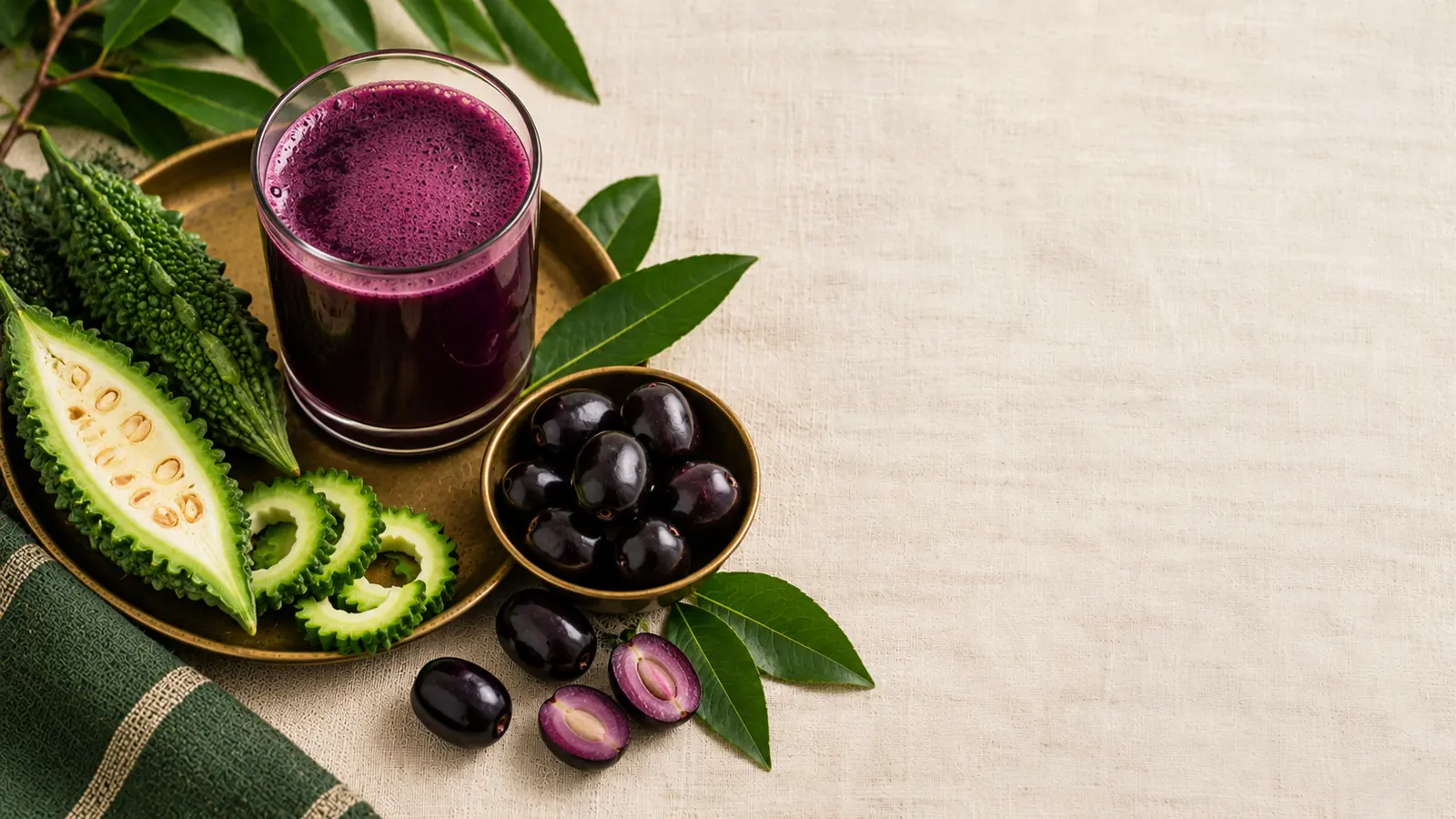
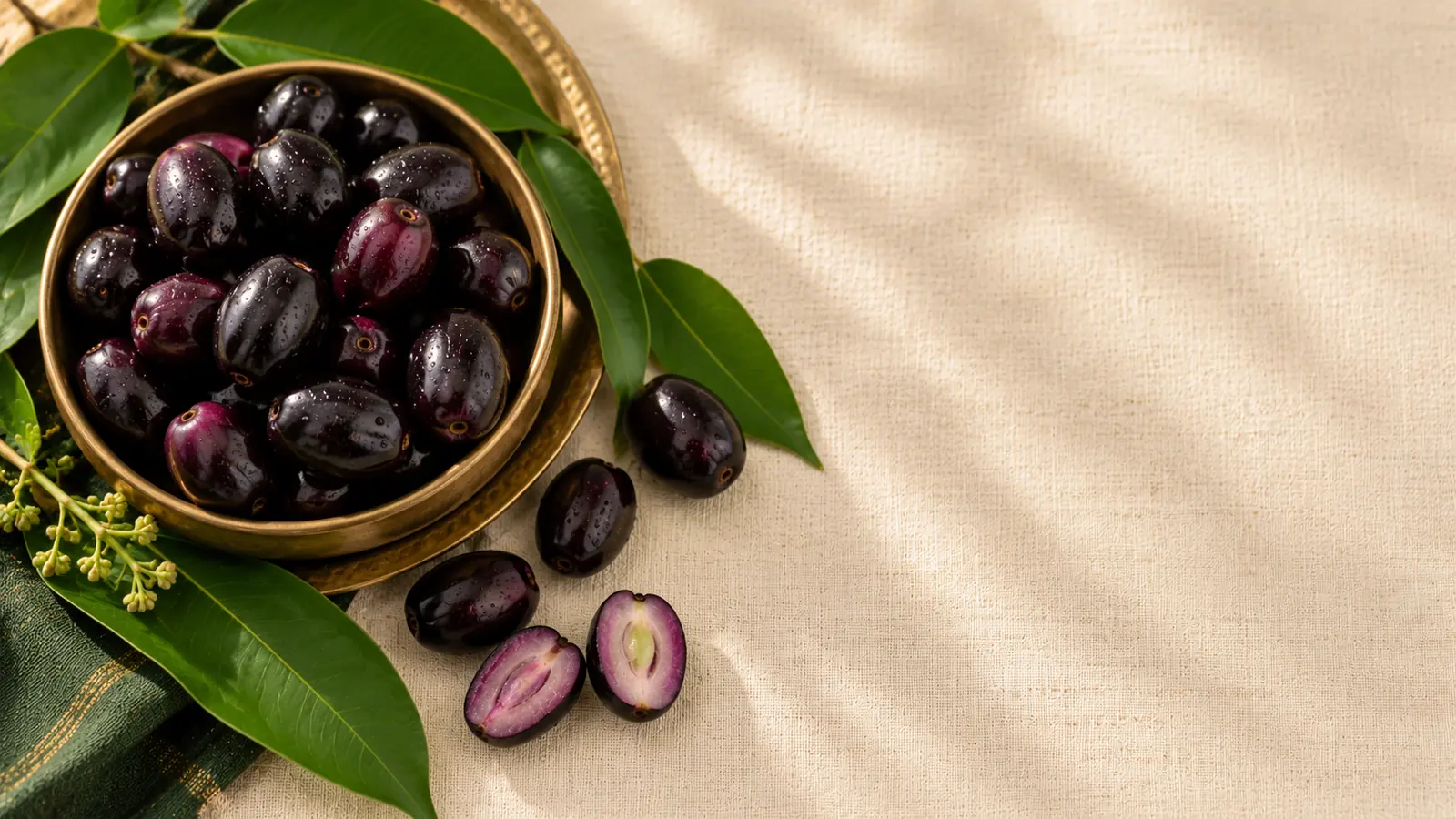
Jamun (Indian blackberry, Syzygium cumini) is a deep-purple summer fruit long valued in Ayurvedic tradition for supporting metabolic balance. Both the fruit and its seed are described in classical texts. Here we look at how Jamun is traditionally used, how to enjoy it safely, and why it works best alongside — not in place of — your medical care.
Introduction
Anyone who has grown up in India knows Jamun as the fruit that stains your tongue purple in the peak of summer. Beyond being a seasonal treat, it holds a respected place in Ayurvedic tradition, where it is known as Jambu. Classical texts speak of it in the context of Prameha — the broad family of metabolic and urinary imbalances that includes what we now call diabetes.
It is important to be calm and clear from the start: Jamun is a food and a traditional herb, not a medicine that treats or controls diabetes. What Ayurveda offers is a gentle, food-first way of thinking about metabolic balance, where a fruit like Jamun can be part of a supportive daily pattern that sits comfortably beside your regular treatment.
Curious how a food-first approach could fit your routine? Book a consultation with our Ayurvedic doctor →
Why Ayurveda values Jamun
In Ayurvedic terms, Jamun is described as having an astringent (kashaya) and sweet-sour taste, with a cooling quality. It is traditionally seen as Kapha- and Pitta-pacifying. Because impaired digestion (agni) and Kapha accumulation are central to how Ayurveda understands metabolic imbalance, an astringent, drying fruit like Jamun has long been included in supportive dietary advice for Prameha.
This is a traditional framework built on centuries of observation, not a laboratory claim. Its value today is that it points us toward wholesome, seasonal, minimally processed foods — an idea that fits well with any sensible approach to metabolic wellbeing.
The fruit and the seed
Two parts of the plant are traditionally used:
- The fresh fruit — enjoyed in season as a whole food, valued for its astringent, refreshing quality.
- The seed (kernel) — dried and powdered in classical preparations, it is the part most often referenced in traditional formulations for metabolic support.
In Ayurvedic kitchens and pharmacies, Jamun seed powder appears in several classical blends. These are prepared and advised by physicians rather than measured out at home, because the right form and quantity depend on the individual.
How to use it safely
"Natural" does not automatically mean "safe for everyone," and this is important to remember with Jamun as with any herb.
- Enjoy the fruit as a seasonal food, in sensible amounts, the way you would any fruit — not as a substitute for a meal or a medicine.
- Do not self-prescribe seed powder or concentrated extracts. Herbal preparations can interact with prescribed medicines, and combining them with blood-sugar-lowering medication without supervision may push your levels too low.
- Use only under a qualified physician's guidance if you are considering any Jamun preparation as part of your care.
- Never treat Jamun as a replacement for medication or for your regular blood-sugar monitoring.
- If you are pregnant, elderly, or managing other health conditions, speak to your doctor before adding any herbal preparation.
Want to know which foods and herbs suit your constitution? Book a consultation with our doctor →
How it fits alongside your care
At Guduchi, our physicians see Jamun as one small, pleasant thread in a much larger cloth — a supportive food within a wider pattern of diet, daily routine (dinacharya) and stress care. The medical side of your diabetes — diagnosis, medicines and monitoring — stays firmly with your treating doctor. Ayurveda simply helps you build steady, sustainable habits around that treatment.
Think of a seasonal fruit like Jamun as an easy, enjoyable way to lean into wholesome eating, rather than as something that does the heavy lifting on its own.
Key takeaways
- Jamun is traditionally valued in Ayurveda for metabolic balance, thanks to its astringent, cooling quality.
- Both the fruit and the powdered seed are used, but seed preparations should come from a physician, not the home kitchen.
- "Natural" is not automatically safe — herbs can interact with medicines, so use only under guidance.
- Jamun supports a wholesome lifestyle; it does not replace medication, medical advice, or blood-sugar monitoring.
Frequently asked questions
Q. Does eating Jamun lower blood sugar? A. Jamun is traditionally valued for supporting metabolic balance, but it is best thought of as a wholesome seasonal food rather than a treatment. Any effect on your individual health should be assessed with your doctor, not assumed.
Q. Can I stop my diabetes medicines and rely on Jamun instead? A. No. You should never stop or change prescribed medication. Jamun is used here as a supportive food alongside your medical treatment, never as a replacement.
Q. Is Jamun seed powder safe to buy and take on my own? A. It is best not to self-prescribe. Concentrated preparations can interact with medicines and affect your blood sugar, so use them only under a qualified physician's guidance.
Next steps with Guduchi
Terms in this article
Explore the Ayurveda glossary or try our free diabetes risk score.
Ayurvedic diabetes care near you
Guduchi Ayurveda runs BAMS-led clinics in eight Indian cities. Reading is a start — a physician who sees your reports can tailor it to you.
- Ayurvedic Diabetes Clinic, AhmedabadSola, Ahmedabad
- Ayurvedic Diabetes Clinic, BangaloreBanaswadi, Bangalore
- Ayurvedic Diabetes Clinic, ChennaiAnna Nagar West, Chennai
- Ayurvedic Diabetes Clinic, DavangereDavangere
- Ayurvedic Diabetes Clinic, HubballiVidya Nagar, Hubballi
- Ayurvedic Diabetes Clinic, HyderabadJubilee Hills, Hyderabad
- Ayurvedic Diabetes Clinic, KalaburagiShastri Nagar, Kalaburagi
- Ayurvedic Diabetes Clinic, KolkataNewtown, Kolkata
- Ayurvedic Diabetes Clinic, MangaluruUrwa, Mangaluru
- Ayurvedic Diabetes Clinic, MysuruKuvempunagar, Mysuru
- Ayurvedic Diabetes Clinic, UdupiBrahmagiri, Udupi
See all Guduchi diabetes clinics · Book an online consultation
DY
Written by
Dr. Yamuna B SBAMS — Senior Ayurvedic Physician · Bengaluru, Karnataka · Reg. No. 22157
Dr. Yamuna B S is a Senior Ayurvedic Physician at Guduchi Ayurveda in Bengaluru, with a deep focus on Madhumeha (the Ayurvedic understanding of diabetes) and lifestyle-led metabolic care. She works closely with each patient to combine classical Ayurvedic principles with practical, day-to-day guidance on diet, routine and stress — always alongside, not in place of, their regular medical care.
Medical disclaimer: This article is for general education and is not a substitute for professional medical advice, diagnosis, or treatment. Ayurveda is described here as a supportive, complementary system. Do not stop or change any prescribed medication without consulting your treating physician. Always speak with a qualified doctor about your individual health, especially if you are pregnant, elderly, or managing other conditions.