
In short
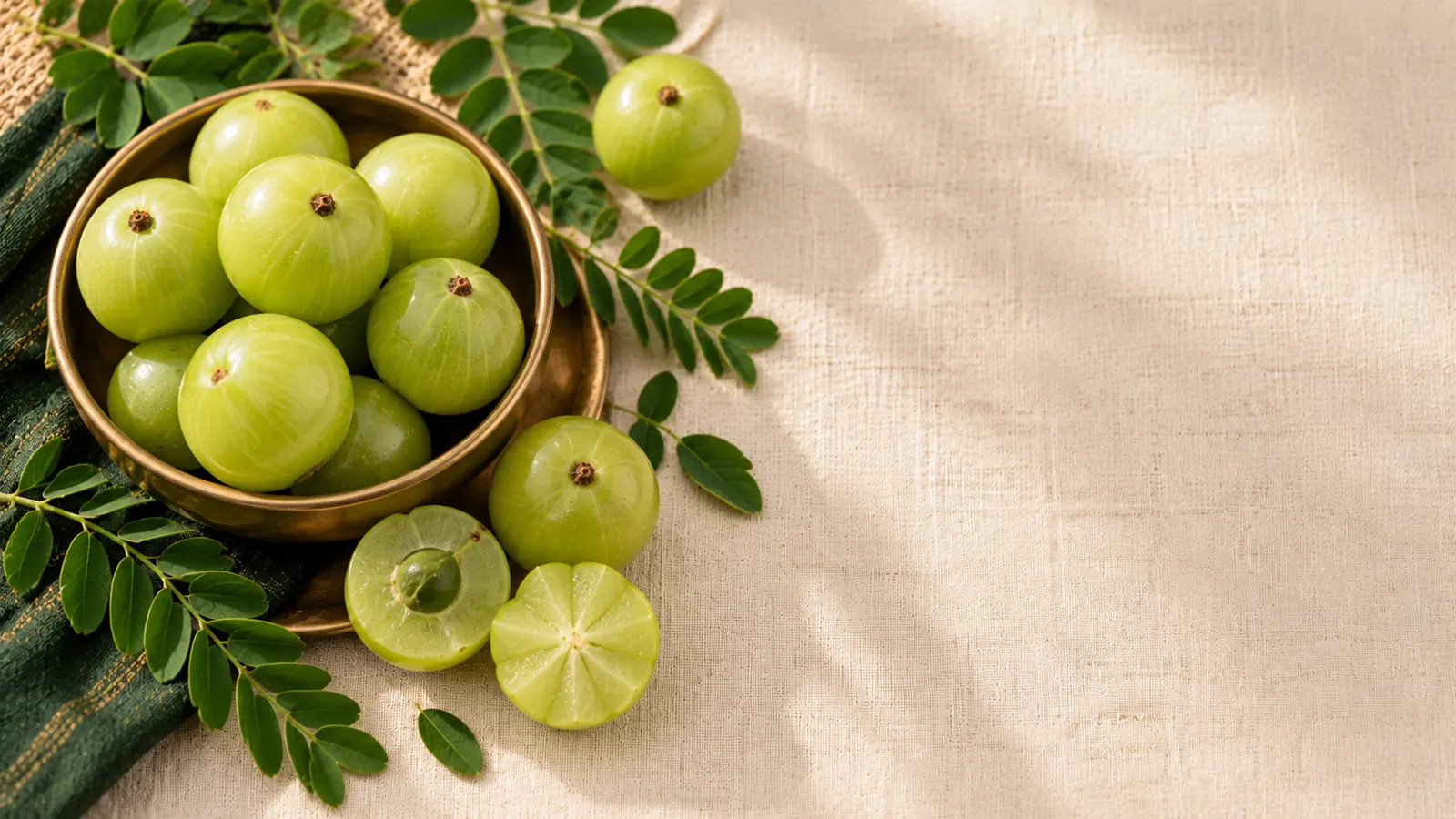
Amla (Indian gooseberry, Emblica officinalis) is one of Ayurveda's most cherished fruits — a rasayana traditionally valued for metabolic balance and all-round wellbeing. Here we look at why Ayurveda holds Amla in such high regard, how it is traditionally used, how to enjoy it safely, and why it belongs alongside — not in place of — your medical care.
Introduction
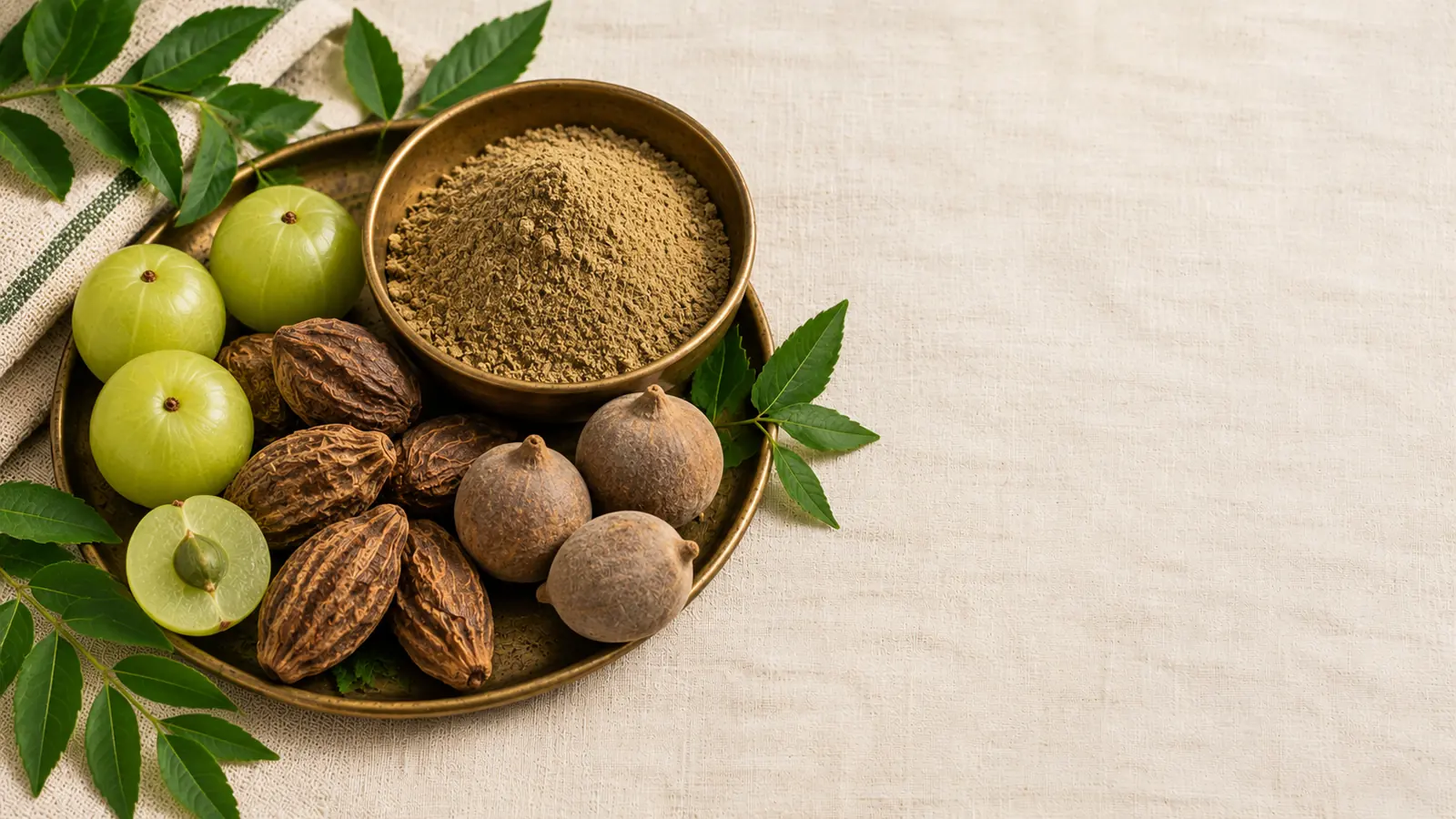
If Ayurveda had a single fruit close to its heart, many physicians would name Amla. This small, sour, green gooseberry appears again and again in classical texts and famous formulations — it is one of the three fruits in Triphala and the core of the well-loved tonic Chyawanprash. Generations have valued it for supporting digestion, vitality and graceful ageing.
Let us keep expectations grounded and calm. Amla is a nourishing food and a respected traditional herb; it is not a medicine that treats or controls diabetes. Within the Ayurvedic understanding of Prameha — the family of metabolic imbalances — Amla is one of several ingredients traditionally used to support healthy metabolism as part of a wider, sensible lifestyle.
Wondering how everyday foods can support your routine? Book a consultation with our Ayurvedic doctor →
Why Ayurveda values Amla
Amla is unusual in that it carries five of the six tastes (its dominant one being sour, amla, which gives it its name) while being cooling in effect. Ayurveda describes it as gently balancing to all three doshas — Vata, Pitta and Kapha — which is rare and part of why it is so widely used. As a rasayana, it is traditionally valued for nourishing the tissues and supporting steady agni, the digestive fire at the centre of Ayurvedic metabolic thinking.
This is a traditional framework built on long observation, not a laboratory measurement. Its lasting value is that it steers us toward wholesome, minimally processed foods and balanced digestion — foundations that matter to anyone's metabolic wellbeing.
How Amla is traditionally used
Amla is remarkably versatile and appears in many everyday and classical forms:
- The fresh fruit, eaten in season, valued for its bracing sour taste.
- Dried Amla or powder, used in cooking and in formulations.
- Classical preparations such as Triphala and Chyawanprash, where it is a key ingredient.
- Traditional home preparations like Amla in honey, pickles or juice, enjoyed as part of daily food.
In a clinic, the form and combination are chosen by a physician to suit the individual; at home, Amla is best enjoyed simply as a wholesome food.
How to use it safely
"Natural" does not automatically mean "safe for everyone," and Amla is no exception, however gentle its reputation.
- Enjoy the fruit as a wholesome food in sensible amounts — not as a substitute for a meal or a medicine.
- Do not self-prescribe concentrated Amla extracts or supplements to manage blood sugar.
- Herbs can interact with medicines. Taken alongside blood-sugar-lowering medication or blood thinners without supervision, some preparations may affect you unexpectedly.
- Use concentrated preparations only under a qualified physician's guidance.
- Never treat Amla as a replacement for prescribed medication or your regular blood-sugar monitoring.
- If you are pregnant, elderly, or managing other conditions, speak to your doctor before adding any herbal preparation.
Want a food-and-herb plan matched to your constitution? Book a consultation with our doctor →
How it fits alongside your care
At Guduchi, our physicians see Amla as one of the most pleasant ways to lean into wholesome eating — a supportive thread within a larger cloth of diet, daily routine (dinacharya) and stress care. The medical management of your diabetes — diagnosis, medicines and monitoring — stays with your treating doctor. Ayurveda works around that treatment, helping you build steady, sustainable habits.
A sour little gooseberry will not do the heavy lifting alone, but as part of a balanced daily pattern it is a small, wholesome pleasure worth keeping.
Key takeaways
- Amla is a beloved rasayana, traditionally valued in Ayurveda for metabolic balance and overall wellbeing.
- It is used as fresh fruit, powder, and in classical preparations like Triphala and Chyawanprash.
- "Natural" is not automatically safe; concentrated preparations can interact with medicines, so use only under guidance.
- Amla supports a wholesome lifestyle; it does not replace medication, medical advice, or blood-sugar monitoring.
Frequently asked questions
Q. Does eating Amla lower blood sugar? A. Amla is traditionally valued for supporting metabolic balance, but it is best thought of as a nourishing food rather than a treatment. Any effect on your individual health should be assessed with your doctor.
Q. Can I stop my diabetes medicines and rely on Amla instead? A. No. You should never stop or change prescribed medication. Amla is used here as a supportive food alongside your medical treatment, never as a replacement.
Q. Is Amla juice or extract safe to take every day on my own? A. Fresh Amla as a food is generally enjoyed widely, but concentrated juices and extracts are best used under a physician's guidance, as they can interact with medicines. When in doubt, ask your doctor.
Next steps with Guduchi
Terms in this article
Explore the Ayurveda glossary or try our free diabetes risk score.
Ayurvedic diabetes care near you
Guduchi Ayurveda runs BAMS-led clinics in eight Indian cities. Reading is a start — a physician who sees your reports can tailor it to you.
- Ayurvedic Diabetes Clinic, AhmedabadSola, Ahmedabad
- Ayurvedic Diabetes Clinic, BangaloreBanaswadi, Bangalore
- Ayurvedic Diabetes Clinic, ChennaiAnna Nagar West, Chennai
- Ayurvedic Diabetes Clinic, DavangereDavangere
- Ayurvedic Diabetes Clinic, HubballiVidya Nagar, Hubballi
- Ayurvedic Diabetes Clinic, HyderabadJubilee Hills, Hyderabad
- Ayurvedic Diabetes Clinic, KalaburagiShastri Nagar, Kalaburagi
- Ayurvedic Diabetes Clinic, KolkataNewtown, Kolkata
- Ayurvedic Diabetes Clinic, MangaluruUrwa, Mangaluru
- Ayurvedic Diabetes Clinic, MysuruKuvempunagar, Mysuru
- Ayurvedic Diabetes Clinic, UdupiBrahmagiri, Udupi
See all Guduchi diabetes clinics · Book an online consultation
DY
Written by
Dr. Yamuna B SBAMS — Senior Ayurvedic Physician · Bengaluru, Karnataka · Reg. No. 22157
Dr. Yamuna B S is a Senior Ayurvedic Physician at Guduchi Ayurveda in Bengaluru, with a deep focus on Madhumeha (the Ayurvedic understanding of diabetes) and lifestyle-led metabolic care. She works closely with each patient to combine classical Ayurvedic principles with practical, day-to-day guidance on diet, routine and stress — always alongside, not in place of, their regular medical care.
Medical disclaimer: This article is for general education and is not a substitute for professional medical advice, diagnosis, or treatment. Ayurveda is described here as a supportive, complementary system. Do not stop or change any prescribed medication without consulting your treating physician. Always speak with a qualified doctor about your individual health, especially if you are pregnant, elderly, or managing other conditions.