
In short
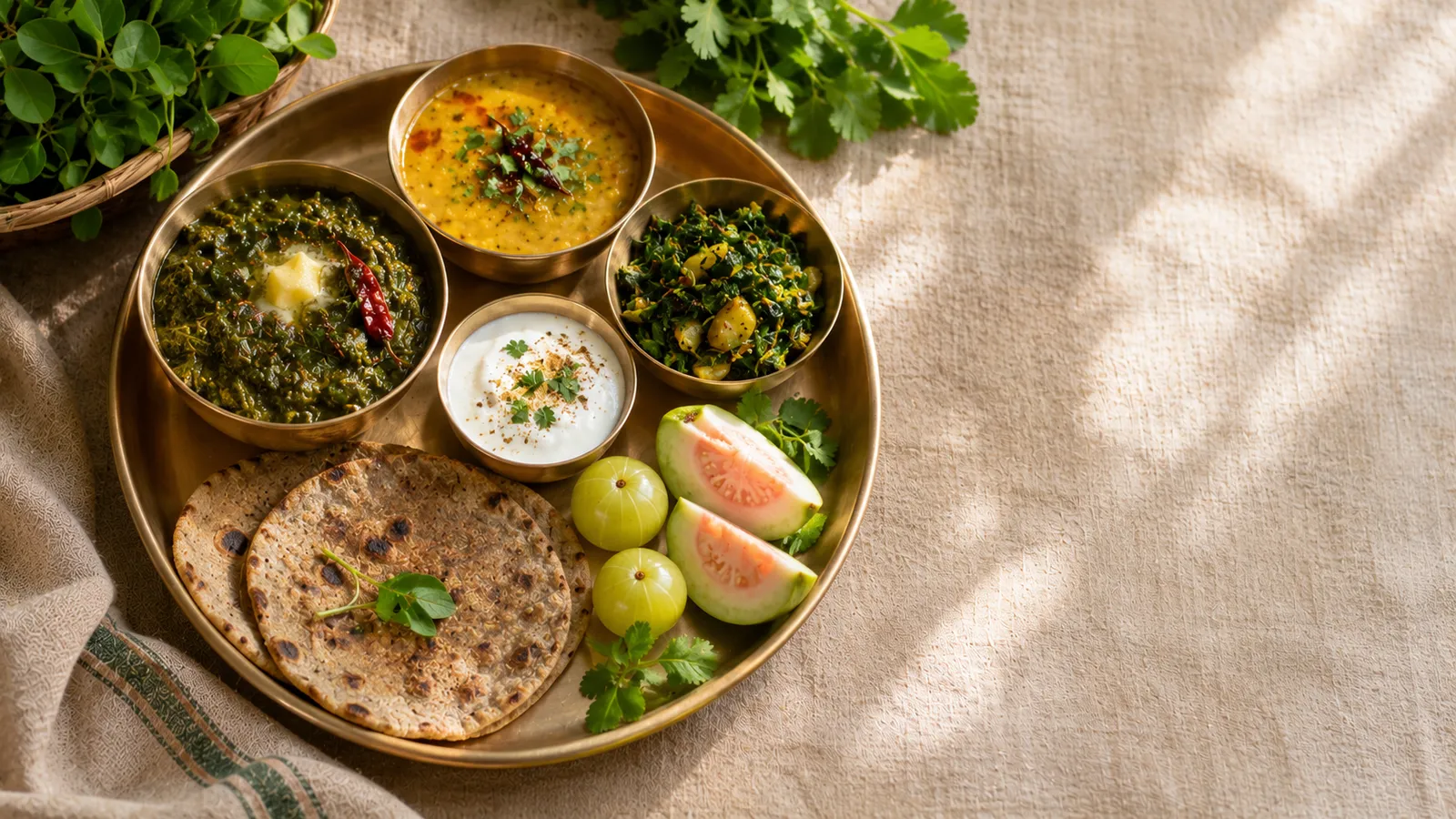
A good winter plate for someone living with diabetes is built on seasonal greens (methi, sarson, palak, bathua), warming millets like bajra and ragi, a protein such as dal or paneer, amla or guava, and warming spices. Ayurveda welcomes nourishing winter food, but keep sweets, fried snacks and jaggery treats small.
Introduction
Winter brings some of India's best produce: fresh methi and sarson in the north, green peas and carrots everywhere, amla and guava in the markets, and bajra and ragi coming into their own. It also brings gajar halwa, til-gur laddoos and parathas dripping in ghee.
Ayurveda describes early winter as a season when digestion (agni) is naturally strong, and so it recommends warm, nourishing meals. The art for someone with diabetes is choosing the nourishing foods that also keep the plate balanced. This guide is supportive dietary information that works alongside your prescribed care.
Want a winter diet plan matched to your own readings? Book a consultation with our Ayurvedic doctor →
What does Ayurveda recommend eating in winter?
Classical seasonal guidance for winter favours warm, freshly cooked, mildly unctuous meals and warming spices, and cautions against cold, dry or stale food. For Madhumeha, it also leans towards bitter, pungent and astringent tastes, which help balance the heaviness of sweet foods. Our guide to the six tastes on a blood-sugar-friendly plate explains this idea.
The best winter foods for a balanced plate
| Food group | Winter options | Why it suits a blood-sugar-aware plate |
|---|---|---|
| Leafy greens | Methi, sarson, palak, bathua, amaranth | Fibre-rich; bitter and astringent tastes balance heavier foods |
| Other vegetables | Cauliflower, cabbage, beans, peas, carrot, radish | Add volume and fibre; carrots and peas in sensible portions |
| Millets | Bajra, ragi, jowar | Whole grains Ayurveda values; bajra is traditionally a winter grain |
| Proteins | Moong, masoor, chana, rajma, paneer, curd at lunch | Help make meals more satisfying |
| Fruits | Amla, guava, orange, apple, pear | Whole fruit with fibre; one portion at a time |
| Spices | Ginger, garlic, black pepper, cinnamon, methi seeds, turmeric | Warming spices traditionally used to support digestion |
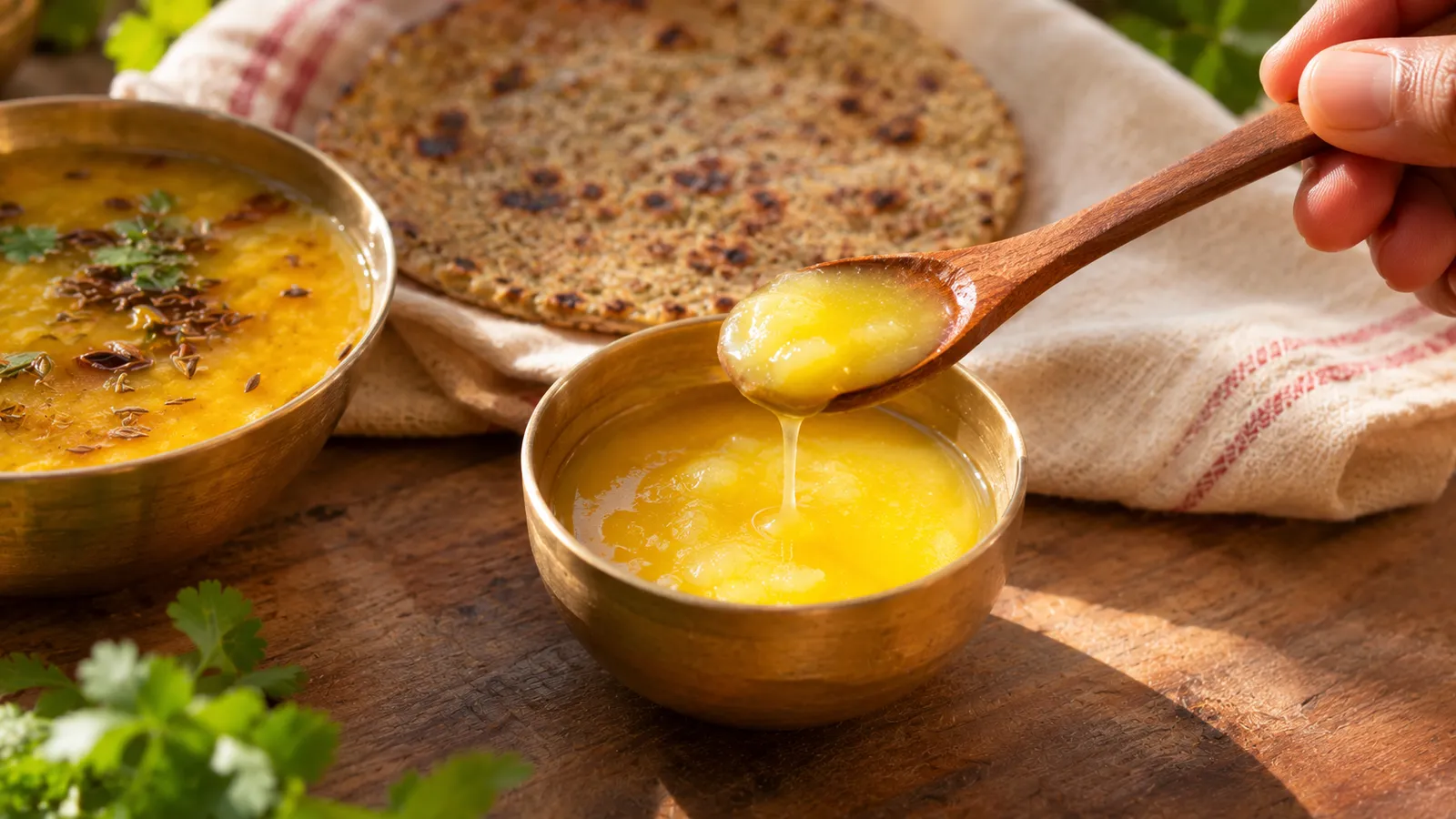
| Fats | A little ghee or cold-pressed oil, a few nuts and seeds | Small amounts help satiety and taste |
For herb-specific background, see our posts on amla and methi seeds.
A sample winter day
This is a general example, not a prescription — your doctor or dietitian can tailor it.
- Early morning: warm water; a short walk once the sun is up.
- Breakfast: methi thepla made with whole wheat and besan, with curd; or a vegetable ragi dosa.
- Mid-morning: a guava or an amla.
- Lunch: sarson or palak saag with one bajra roti, dal, a cucumber-radish salad and a glass of buttermilk.
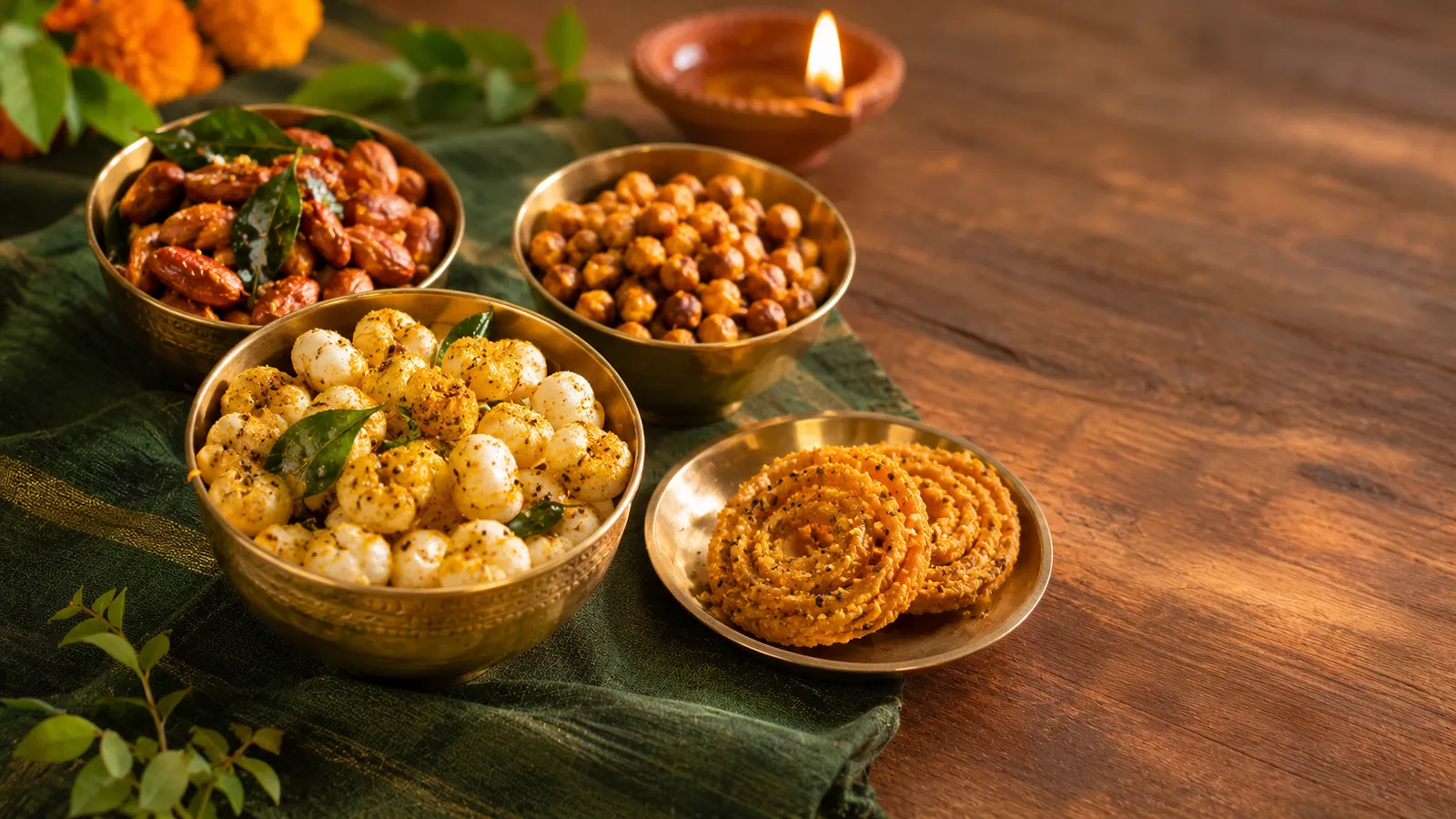
- Evening: unsweetened ginger-tulsi tea with roasted chana.
- Dinner (early and lighter): vegetable soup and a moong dal cheela, or a small portion of khichdi.
Want a gentle, guided way to try this style of eating? Get the 5-day Ayurvedic sample →
Winter favourites to keep small
| Winter treat | Why to be careful | Lighter approach |
|---|---|---|
| Gajar halwa | Sugar, khoa and ghee | A few spoons, occasionally, after lunch |
| Til-gur or gond laddoos | Jaggery is still a sugar | Very small portions; ask your doctor |
| Ghee-laden parathas | Heavy and calorie-dense | Stuffed with vegetables, lightly cooked, one at a time |
| Fried pakoras | Deep-fried besan | Baked or pan-roasted versions |
| Sweet chai, many times a day | Sugar adds up | Unsweetened ginger or tulsi tea |
A note on sweet winter vegetables
Sweet potato, root vegetables and green peas are wholesome foods, but they are starchier than leafy greens. Many people enjoy them in moderate portions as part of a meal rather than as the main item. Your doctor or dietitian can help you judge portions using your readings.
Key takeaways
- Ayurveda welcomes warm, freshly cooked, nourishing food in winter — the key is a balanced plate.
- Build meals on leafy greens, millets like bajra and ragi, a protein and warming spices.
- Amla and guava are good winter fruits; keep portions to one at a time.
- Keep gajar halwa, til-gur laddoos, fried snacks and sweet chai small and occasional.
Frequently asked questions
Q. Is bajra good for diabetics in winter? A. Bajra is a whole-grain millet traditionally eaten in winter, and many people find it a satisfying swap for refined flours. Portions still matter, so pair it with plenty of vegetables and protein.
Q. Can people with diabetes eat sarson ka saag? A. Sarson and other leafy greens are excellent winter vegetables. Go easy on the butter or ghee on top, and pair the saag with a millet roti in a sensible portion.
Q. Is jaggery better than sugar for diabetics in winter? A. Jaggery is still a sugar and can raise blood sugar. Treat til-gur and jaggery sweets as occasional treats in small portions, and discuss them with your doctor.
Q. Are sweet potatoes okay in winter? A. They are wholesome but starchy. Many people enjoy a modest portion as part of a balanced meal. Your doctor or dietitian can help you judge the right amount.
Q. Can winter foods replace my diabetes medicines? A. No. Food is supportive care. Never stop or change prescribed medicines without your treating doctor's advice.
Next steps with Guduchi
Terms in this article
Explore the Ayurveda glossary or try our free diabetes risk score.
Ayurvedic diabetes care near you
Guduchi Ayurveda runs BAMS-led clinics in eight Indian cities. Reading is a start — a physician who sees your reports can tailor it to you.
- Ayurvedic Diabetes Clinic, AhmedabadSola, Ahmedabad
- Ayurvedic Diabetes Clinic, BangaloreBanaswadi, Bangalore
- Ayurvedic Diabetes Clinic, ChennaiAnna Nagar West, Chennai
- Ayurvedic Diabetes Clinic, DavangereDavangere
- Ayurvedic Diabetes Clinic, HubballiVidya Nagar, Hubballi
- Ayurvedic Diabetes Clinic, HyderabadJubilee Hills, Hyderabad
- Ayurvedic Diabetes Clinic, KalaburagiShastri Nagar, Kalaburagi
- Ayurvedic Diabetes Clinic, KolkataNewtown, Kolkata
- Ayurvedic Diabetes Clinic, MangaluruUrwa, Mangaluru
- Ayurvedic Diabetes Clinic, MysuruKuvempunagar, Mysuru
- Ayurvedic Diabetes Clinic, UdupiBrahmagiri, Udupi
See all Guduchi diabetes clinics · Book an online consultation
DY
Written by
Dr. Yamuna B SBAMS — Senior Ayurvedic Physician · Bengaluru, Karnataka · Reg. No. 22157
Dr. Yamuna B S is a Senior Ayurvedic Physician at Guduchi Ayurveda in Bengaluru, with a deep focus on Madhumeha (the Ayurvedic understanding of diabetes) and lifestyle-led metabolic care. She works closely with each patient to combine classical Ayurvedic principles with practical, day-to-day guidance on diet, routine and stress — always alongside, not in place of, their regular medical care.
Medical disclaimer: This article is for general education and is not a substitute for professional medical advice, diagnosis, or treatment. Ayurveda is described here as a supportive, complementary system. Do not stop or change any prescribed medication without consulting your treating physician. Always speak with a qualified doctor about your individual health, especially if you are pregnant, elderly, or managing other conditions.