
In short
Ghee can be part of a diabetes-aware diet in small amounts. Ayurveda values it for supporting digestion and making meals satisfying, and a teaspoon on dal or a millet roti helps a meal feel complete. But ghee is calorie-dense, so portions matter, especially with weight, cholesterol or heart concerns. Agree your amount with your doctor.
Introduction
Few foods divide opinion in Indian homes like ghee. One relative says it is essential; another says anyone with diabetes should avoid it altogether. Both views miss the middle ground that Ayurveda has always taken: ghee is valuable, in the right amount, for the right person.
This article explains the Ayurvedic view of ghee, how it fits into a blood-sugar-aware plate, and when extra caution is wise. It is supportive dietary guidance that works alongside your medical care.
Not sure how much fat suits your plan? Book a consultation with our Ayurvedic doctor →
How does Ayurveda view ghee?
In Ayurveda, ghee (ghrita) is considered one of the most valuable foods. It is described as nourishing, supportive of digestion (agni) in small amounts, and a carrier that helps herbs reach the tissues — which is why many classical preparations are ghee-based.
At the same time, Ayurveda describes ghee as heavy and unctuous. In Madhumeha, where accumulated Kapha and meda (fat tissue) are part of the traditional picture, classical guidance leans towards lighter foods and careful use of heavy, oily ones. So Ayurveda itself counsels moderation for people with this pattern.
Can ghee help blood-sugar balance?
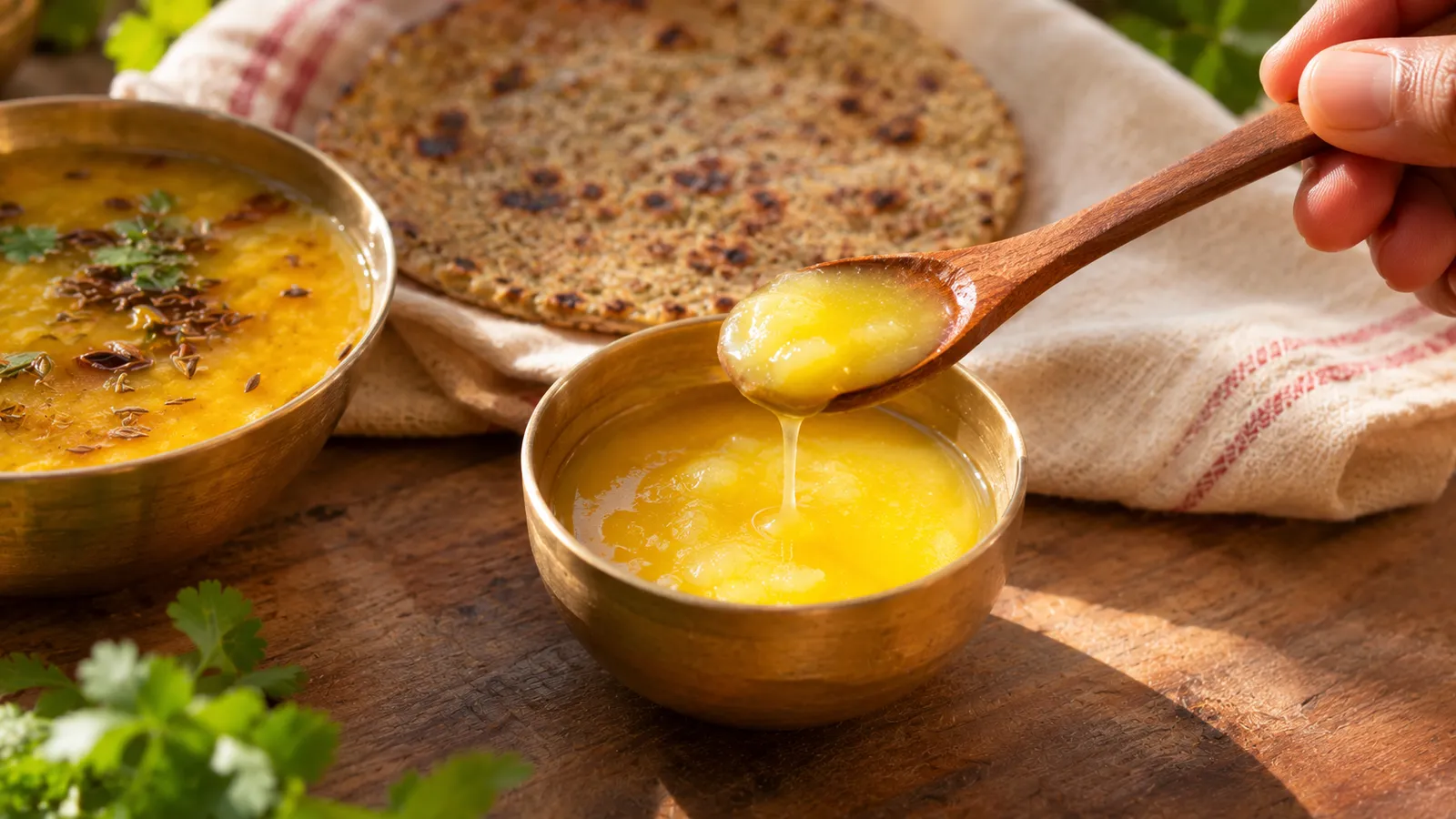
Adding a little fat to a carbohydrate-rich meal can make it more satisfying and may help it feel less "quick". That is one reason a small spoon of ghee on dal-rice or a roti is a long-standing habit. But ghee itself is not a remedy, and more ghee is not better. Its benefit is in making simple, wholesome meals enjoyable and filling, so you are less likely to reach for snacks.
How much ghee is sensible?
There is no single number for everyone. Your needs depend on your weight, activity, cholesterol, heart health and the rest of your diet. As a general approach:
| Situation | Ayurvedic-minded approach |
|---|---|
| Healthy weight, active, normal lipids | A small amount daily, often a teaspoon or so per main meal, as your doctor agrees |
| Overweight or less active | Smaller amounts; prefer it on one meal rather than all |
| High cholesterol or heart disease | Follow your cardiologist's advice; ghee may need to be limited |
| Kidney or other conditions | Ask your treating doctor before changing fats in your diet |
Want a balanced daily plan with fats in the right place? Try our 5-day Ayurvedic sample →
Ghee vs oil: which is better?
Both are fats and both add calories. Many people use a mix: a little ghee for flavour on dal or roti, and a small amount of cold-pressed oil (groundnut, mustard, sesame or coconut, depending on region) for cooking. Variety and modest quantities matter more than choosing a single "best" fat. Avoid re-using frying oil and keep deep-fried foods occasional.
Using ghee in winter
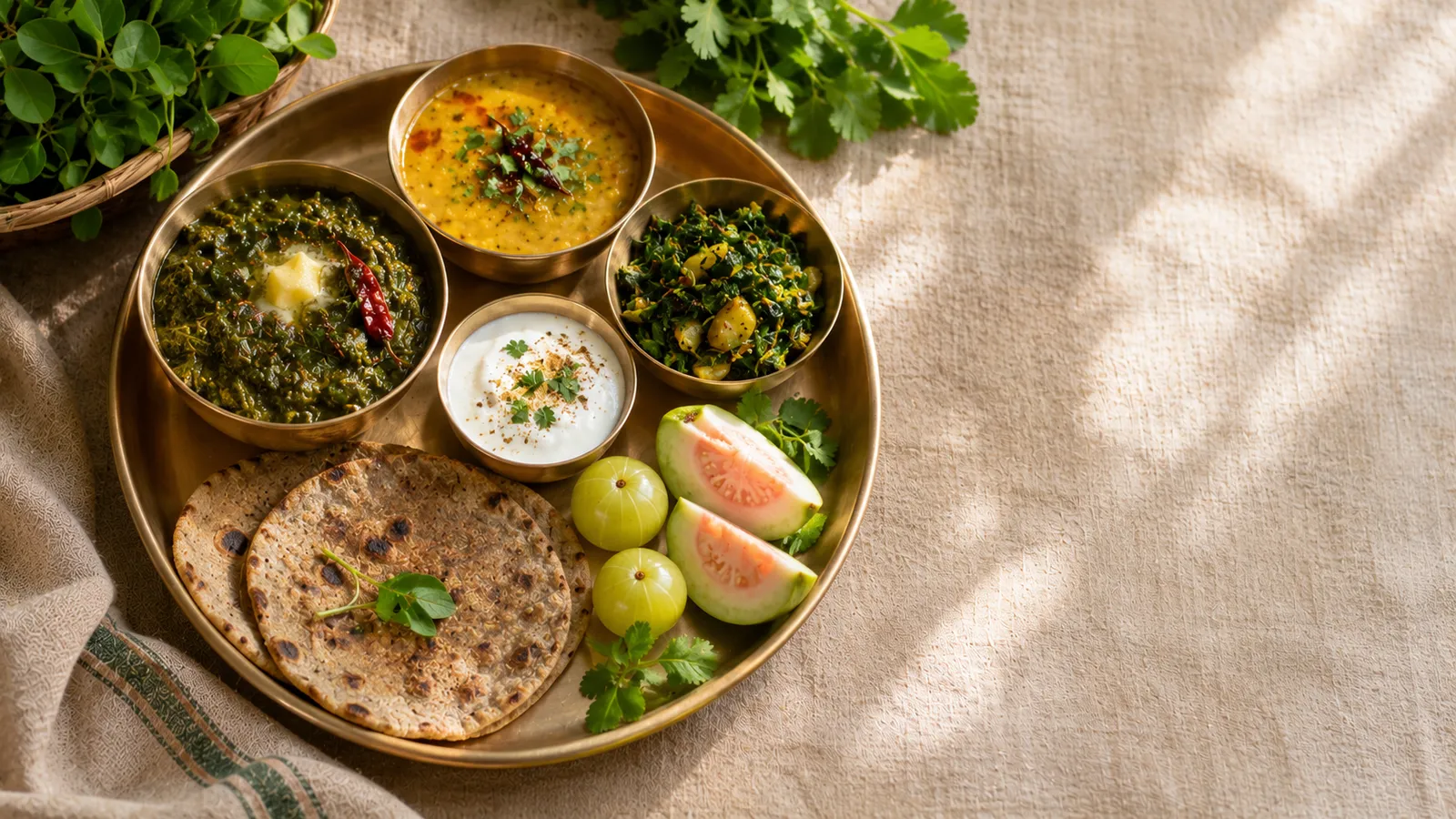
Ayurveda describes winter as a season when digestion is naturally strong and the body benefits from some unctuousness to counter cold and dryness. That is the traditional reason behind winter ghee habits. For someone with diabetes, the same moderation still applies: a teaspoon on a warm bajra roti or in a dal tadka fits the season; ghee-soaked parathas and halwa do not.
Our winter care guide and diet chart show how fats fit into a full day.
Choosing good-quality ghee
- Prefer ghee from a trusted source with clear labelling.
- Store it in a clean, dry jar with a dry spoon.
- Use it fresh; don't re-heat it repeatedly for frying.
Key takeaways
- Ayurveda values ghee, but describes it as heavy, so it counsels moderation for Madhumeha.
- A small amount can make wholesome meals satisfying; more ghee is not better.
- The right amount depends on your weight, activity, cholesterol and heart health — agree it with your doctor.
- Use a mix of ghee and cold-pressed oils in modest amounts, and keep fried and ghee-rich sweets occasional.
Frequently asked questions
Q. Is desi ghee good for diabetics? A. In small amounts, ghee can be part of a balanced diabetes-aware diet. It is calorie-dense, so portions matter, especially if you are watching your weight or cholesterol.
Q. How much ghee can a diabetic eat per day? A. It depends on your health, weight and the rest of your diet. Many people use around a teaspoon with a main meal, but your doctor should advise what suits you.
Q. Is ghee better than oil for diabetes? A. Neither is a remedy. A modest mix of ghee for flavour and cold-pressed oil for cooking, in small quantities, works for many people.
Q. Should I avoid ghee if I have high cholesterol and diabetes? A. Follow your cardiologist's or treating doctor's advice. You may need to limit ghee and other saturated fats.
Q. Can ghee with herbs replace my diabetes medicine? A. No. Ghee-based classical preparations are used only under physician guidance and never replace prescribed medicines.
Next steps with Guduchi
Terms in this article
Explore the Ayurveda glossary or try our free diabetes risk score.
Ayurvedic diabetes care near you
Guduchi Ayurveda runs BAMS-led clinics in eight Indian cities. Reading is a start — a physician who sees your reports can tailor it to you.
- Ayurvedic Diabetes Clinic, AhmedabadSola, Ahmedabad
- Ayurvedic Diabetes Clinic, BangaloreBanaswadi, Bangalore
- Ayurvedic Diabetes Clinic, ChennaiAnna Nagar West, Chennai
- Ayurvedic Diabetes Clinic, DavangereDavangere
- Ayurvedic Diabetes Clinic, HubballiVidya Nagar, Hubballi
- Ayurvedic Diabetes Clinic, HyderabadJubilee Hills, Hyderabad
- Ayurvedic Diabetes Clinic, KalaburagiShastri Nagar, Kalaburagi
- Ayurvedic Diabetes Clinic, KolkataNewtown, Kolkata
- Ayurvedic Diabetes Clinic, MangaluruUrwa, Mangaluru
- Ayurvedic Diabetes Clinic, MysuruKuvempunagar, Mysuru
- Ayurvedic Diabetes Clinic, UdupiBrahmagiri, Udupi
See all Guduchi diabetes clinics · Book an online consultation
DY
Written by
Dr. Yamuna B SBAMS — Senior Ayurvedic Physician · Bengaluru, Karnataka · Reg. No. 22157
Dr. Yamuna B S is a Senior Ayurvedic Physician at Guduchi Ayurveda in Bengaluru, with a deep focus on Madhumeha (the Ayurvedic understanding of diabetes) and lifestyle-led metabolic care. She works closely with each patient to combine classical Ayurvedic principles with practical, day-to-day guidance on diet, routine and stress — always alongside, not in place of, their regular medical care.
Medical disclaimer: This article is for general education and is not a substitute for professional medical advice, diagnosis, or treatment. Ayurveda is described here as a supportive, complementary system. Do not stop or change any prescribed medication without consulting your treating physician. Always speak with a qualified doctor about your individual health, especially if you are pregnant, elderly, or managing other conditions.