
In short
Methi (fenugreek) seeds are a humble kitchen staple that Ayurveda traditionally values for supporting healthy digestion and metabolic balance. There are a few simple, time-honoured ways to use them at home. Methi is a supportive food, not a medicine — it works alongside, never in place of, your prescribed care and blood-sugar monitoring.
Introduction
Methi seeds sit in almost every Indian spice box, quietly earning their place through generations of home cooking. Their slightly bitter, warming character is exactly why Ayurveda has long valued them as part of a metabolism-friendly kitchen.
This article walks through practical, everyday ways people traditionally use methi — and, just as importantly, how to do so safely. It is educational, not a claim that any seed can treat diabetes. Methi belongs within a broader, physician-guided routine, not as a stand-alone remedy.
Want to know what actually fits your routine? Book a consultation with our Ayurvedic doctor →
Why Ayurveda values methi
In Ayurvedic terms, methi carries a bitter (tikta) and pungent (katu) taste with a warming quality. These are traditionally associated with:
- Supporting digestive fire (agni).
- Helping balance Kapha, the heavier functional energy often linked with sluggish metabolism.
- A gentle, warming effect that many find comforting on digestion.
This is why methi appears both as a cooking spice and, in soaked or powdered form, as a traditional home practice.
Simple traditional ways to use methi
Here are the common, gentle methods passed down in Indian households:
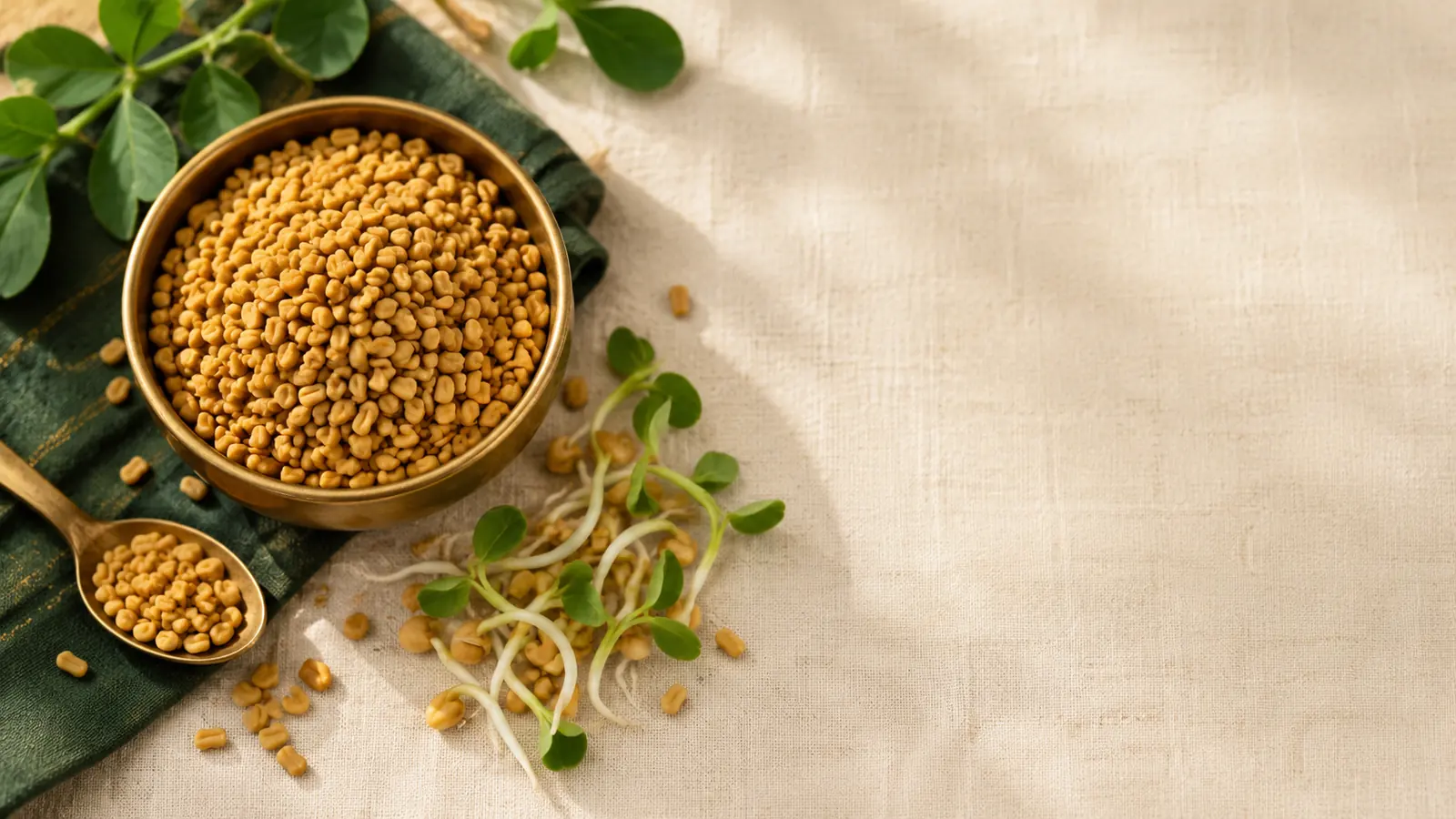
- Soaked seeds: A small spoon of seeds soaked overnight in water, taken in the morning. Some people drink the water; others chew the softened seeds.
- Methi water: The strained water from soaked seeds, sipped warm.
- Roasted and ground: Lightly roasted methi ground into a fine powder and added to buttermilk, dals or vegetables.
- In cooking: A pinch of seeds tempered in oil at the start of a dish, or fresh methi leaves cooked as a vegetable.
Soaking or light roasting softens the bitterness and is traditionally thought to make the seeds easier to digest.
How to use it safely
Because methi is often used in more concentrated soaked or powdered forms, a careful approach matters — especially with diabetes medication:
- Natural does not mean automatically safe. Methi can interact with the way some blood-sugar and other medicines are absorbed, so keep a gap between methi and your medicine times and tell your doctor you are using it.
- Start small and go slow. Begin with a modest culinary amount rather than large quantities, and notice how your body responds.
- Watch for low blood sugar. If you take medicines that lower blood sugar, be alert to shakiness, sweating or dizziness, and follow your doctor's guidance.
- Mind the digestion. Large amounts can cause bloating or loose stools in some people; ease back if that happens.
- Certain groups should be cautious, including those who are pregnant, as methi can be stimulating to the uterus. Always check with a qualified physician first.
Prefer a ready-made, guided way to begin? Get the 5-day Ayurvedic sample →
Fitting methi into a real routine
Methi is at its best as one small, consistent habit within a balanced day — regular warm meals, daily walking, steady sleep and manageable stress. No single seed carries the weight of your health. Used thoughtfully and under guidance, methi can play a modest, supportive role.
Key takeaways
- Methi is traditionally valued in Ayurveda for its bitter, warming quality and metabolic support.
- Common home methods include soaked seeds, methi water, and roasted powder.
- It is a supportive food, not a medicine, and does not treat or replace medical care.
- Start small, keep a gap from medicine times, and tell your doctor, especially if you are pregnant or on blood-sugar medication.
Frequently asked questions
Q. How much methi should I take each day? A. Traditional use points to a small culinary amount — roughly a teaspoon of soaked seeds — rather than large medicinal quantities. Because responses vary and methi can interact with medicines, confirm the right amount for you with your treating physician.
Q. Can methi replace my diabetes medication? A. No. Methi is a supportive food, not a substitute for medicine. Never reduce or stop prescribed medication on your own; any change must come from your treating doctor based on your monitoring.
Q. When is the best time to take soaked methi? A. Many people take it in the morning, but the more important point is keeping a sensible gap from your medicine times so absorption is not affected. Your physician can advise the best timing for your situation.
Next steps with Guduchi
Terms in this article
Explore the Ayurveda glossary or try our free diabetes risk score.
Ayurvedic diabetes care near you
Guduchi Ayurveda runs BAMS-led clinics in eight Indian cities. Reading is a start — a physician who sees your reports can tailor it to you.
- Ayurvedic Diabetes Clinic, AhmedabadSola, Ahmedabad
- Ayurvedic Diabetes Clinic, BangaloreBanaswadi, Bangalore
- Ayurvedic Diabetes Clinic, ChennaiAnna Nagar West, Chennai
- Ayurvedic Diabetes Clinic, DavangereDavangere
- Ayurvedic Diabetes Clinic, HubballiVidya Nagar, Hubballi
- Ayurvedic Diabetes Clinic, HyderabadJubilee Hills, Hyderabad
- Ayurvedic Diabetes Clinic, KalaburagiShastri Nagar, Kalaburagi
- Ayurvedic Diabetes Clinic, KolkataNewtown, Kolkata
- Ayurvedic Diabetes Clinic, MangaluruUrwa, Mangaluru
- Ayurvedic Diabetes Clinic, MysuruKuvempunagar, Mysuru
- Ayurvedic Diabetes Clinic, UdupiBrahmagiri, Udupi
See all Guduchi diabetes clinics · Book an online consultation
DY
Written by
Dr. Yamuna B SBAMS — Senior Ayurvedic Physician · Bengaluru, Karnataka · Reg. No. 22157
Dr. Yamuna B S is a Senior Ayurvedic Physician at Guduchi Ayurveda in Bengaluru, with a deep focus on Madhumeha (the Ayurvedic understanding of diabetes) and lifestyle-led metabolic care. She works closely with each patient to combine classical Ayurvedic principles with practical, day-to-day guidance on diet, routine and stress — always alongside, not in place of, their regular medical care.
Medical disclaimer: This article is for general education and is not a substitute for professional medical advice, diagnosis, or treatment. Ayurveda is described here as a supportive, complementary system. Do not stop or change any prescribed medication without consulting your treating physician. Always speak with a qualified doctor about your individual health, especially if you are pregnant, elderly, or managing other conditions.