
In short
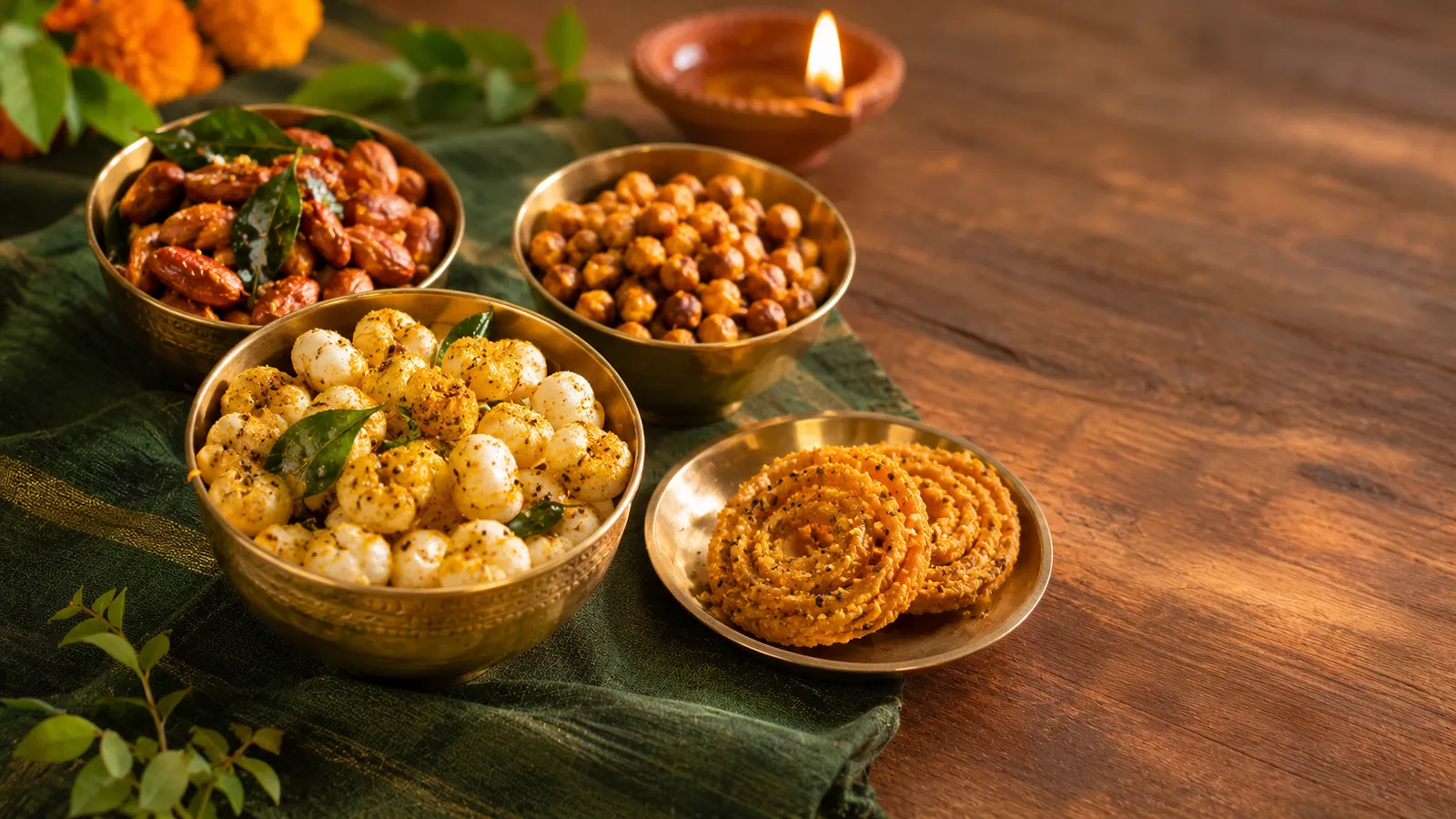
Diwali snacks can be lighter for people with diabetes when you favour roasted over deep-fried, whole grains and pulses over maida, and small bowls over open packets. Roasted makhana, roasted chana, spiced peanuts, baked millet chakli and sprout chaat are good swaps. Ayurveda adds warm spices for digestion and suggests snacking earlier in the day, not late at night.
Introduction
In many homes, the days before Diwali smell of hot oil: chaklis, murukku, mathri, shakarpara, chivda and sev, made in big batches and kept in steel tins for guests. They are delicious, and because they are savoury, they often feel "safer" than sweets for someone managing their blood sugar.
In reality, most traditional namkeen is deep-fried and made from refined flour or rice flour, which Ayurveda would describe as heavy (guru) and Kapha-increasing. The good news is that small changes in method and ingredients make a big difference, without taking the festival out of the snack bowl.
Want help planning festive meals around your own readings? Book a consultation with our Ayurvedic doctor →
Why are fried Diwali snacks heavy on blood-sugar balance?
Three things make typical namkeen hard to balance:
- Refined base flours. Maida, rice flour and besan-maida blends are quick to digest into sugar and low in fibre.
- Deep-frying. Oil adds a lot of energy in a small handful, and re-used oil is considered especially heavy in Ayurveda.
- Mindless portions. Snacks are eaten standing, chatting, between meals — it is easy to have several handfuls without noticing.
Ayurveda also notes that eating between meals, before the previous meal is digested, weakens agni over time. That is why festive "grazing" can leave you feeling sluggish.
Smart swaps for classic Diwali namkeen
| Traditional snack | Lighter swap | Why it helps |
|---|---|---|
| Fried chakli / murukku | Baked or air-fried chakli with millet or besan | Less oil; more fibre with whole flours |
| Maida mathri | Baked whole-wheat or bajra mathri with ajwain | Whole grain; ajwain is traditionally used for digestion |
| Fried poha chivda | Roasted poha or makhana chivda with peanuts and curry leaves | Roasted, lighter, still festive |
| Sev and bhujia | Roasted chana or spiced roasted peanuts | Protein and crunch with less refined flour |
| Fried samosa / kachori | Sprout chaat or a small moong dal cheela | Protein-rich and freshly made |
| Packaged chips | Roasted makhana with turmeric and pepper | Light, crunchy, easy to portion |
Using millets in snacks is one of the easiest upgrades — see our millets guide for ragi, jowar and bajra ideas.
How much and when should you snack?
- Use a small bowl, not the tin. Serve a fixed portion and close the container.
- Pair snacks with protein or vegetables. Roasted chana or a cucumber-carrot side makes a small serving more satisfying.
- Snack earlier in the day. Ayurveda considers digestion stronger around midday and weaker at night. A small snack in the afternoon is gentler than one after a late dinner.
- Don't snack on top of a full meal. If you have just eaten, say yes to a cup of warm water or tea without sugar instead.
- Watch the salt. Many namkeens are very salty, which matters if your doctor is also watching your blood pressure.
Our guide to meal timing and portions explains why steady eating rhythms matter more than any single snack.
Want a gentle, structured way to rebalance your eating? Try our 5-day Ayurvedic sample →
Making festive snacks at home: a simple checklist
Home-made snacks give you control. Before you begin, run through this list:
- Choose a whole-grain or pulse base: besan, moong, bajra, jowar or ragi.
- Roast, bake or air-fry wherever the recipe allows.
- If you must fry, use fresh oil and don't re-use it.
- Add warming spices: ajwain, cumin, pepper, hing, curry leaves.
- Skip added sugar and sweet coatings, including in chivda.
- Store in small jars so portions stay small.
What about guests and visits?
When you are a guest, you have less control — and that's fine. Accept a small portion, eat it slowly, and fill up on the fruit or salad if it is offered. If you are hosting, put a bowl of roasted makhana or chana next to the fried snacks; you will be surprised how many guests choose it.
Key takeaways
- Most traditional namkeen is deep-fried and made from refined flour — heavy, in Ayurvedic terms.
- Roasted makhana, roasted chana, spiced peanuts, baked millet chakli and sprout chaat are good swaps.
- Serve small portions, pair with protein or vegetables and snack earlier in the day.
- Warming spices like ajwain, cumin and pepper are traditionally used to support digestion.
Frequently asked questions
Q. Is namkeen better than sweets for diabetics? A. Not necessarily. Most namkeen is fried and made from refined flours, so it can also be heavy for blood-sugar balance. Small portions of roasted, whole-grain snacks are a better choice.
Q. Is makhana good for people with diabetes? A. Roasted plain or spiced makhana is a light, easy-to-portion snack that many people enjoy. Keep it unsweetened and the portion modest, as with any snack.
Q. Can I eat chakli or murukku during Diwali? A. A small piece now and then can fit into a balanced day for many people. Baked or air-fried versions made with millet or besan are lighter options.
Q. Should I change my medicines if I snack more during the festival? A. No. Never change prescribed medicines on your own. If your eating pattern will change a lot during the festival, ask your treating doctor for guidance.
Next steps with Guduchi
Terms in this article
Explore the Ayurveda glossary or try our free diabetes risk score.
Ayurvedic diabetes care near you
Guduchi Ayurveda runs BAMS-led clinics in eight Indian cities. Reading is a start — a physician who sees your reports can tailor it to you.
- Ayurvedic Diabetes Clinic, AhmedabadSola, Ahmedabad
- Ayurvedic Diabetes Clinic, BangaloreBanaswadi, Bangalore
- Ayurvedic Diabetes Clinic, ChennaiAnna Nagar West, Chennai
- Ayurvedic Diabetes Clinic, DavangereDavangere
- Ayurvedic Diabetes Clinic, HubballiVidya Nagar, Hubballi
- Ayurvedic Diabetes Clinic, HyderabadJubilee Hills, Hyderabad
- Ayurvedic Diabetes Clinic, KalaburagiShastri Nagar, Kalaburagi
- Ayurvedic Diabetes Clinic, KolkataNewtown, Kolkata
- Ayurvedic Diabetes Clinic, MangaluruUrwa, Mangaluru
- Ayurvedic Diabetes Clinic, MysuruKuvempunagar, Mysuru
- Ayurvedic Diabetes Clinic, UdupiBrahmagiri, Udupi
See all Guduchi diabetes clinics · Book an online consultation
DY
Written by
Dr. Yamuna B SBAMS — Senior Ayurvedic Physician · Bengaluru, Karnataka · Reg. No. 22157
Dr. Yamuna B S is a Senior Ayurvedic Physician at Guduchi Ayurveda in Bengaluru, with a deep focus on Madhumeha (the Ayurvedic understanding of diabetes) and lifestyle-led metabolic care. She works closely with each patient to combine classical Ayurvedic principles with practical, day-to-day guidance on diet, routine and stress — always alongside, not in place of, their regular medical care.
Medical disclaimer: This article is for general education and is not a substitute for professional medical advice, diagnosis, or treatment. Ayurveda is described here as a supportive, complementary system. Do not stop or change any prescribed medication without consulting your treating physician. Always speak with a qualified doctor about your individual health, especially if you are pregnant, elderly, or managing other conditions.