
In short
Ayurveda describes six tastes — sweet, sour, salty, pungent, bitter and astringent — and teaches that a well-built meal includes all of them in sensible proportion. For anyone mindful of blood sugar, leaning gently on the bitter and astringent tastes, while easing back on excess sweet and salty, is a traditionally valued way to build a balanced plate. This supports your overall care; it does not replace it.
Introduction
When most of us think about food and blood sugar, we think in terms of "good" and "bad" foods, or numbers on a label. Ayurveda offers an older, gentler lens: the idea of rasa, or taste. Classical texts describe six tastes — madhura (sweet), amla (sour), lavana (salty), katu (pungent), tikta (bitter) and kashaya (astringent) — and teach that each one affects the body and digestion differently.
The insight is simple but useful. A plate that carries all six tastes tends to feel more satisfying and complete, which naturally reduces cravings and the urge to over-eat one thing. For people managing blood sugar, this framework becomes a practical, non-restrictive way to think about meals — one that supports healthy habits rather than policing every bite.
Curious how the six tastes might fit your own routine? Book a consultation with our Ayurvedic doctor →
Meet the six tastes (shad rasa)
Each taste carries qualities that Ayurveda links to particular effects on digestion (agni) and the doshas:
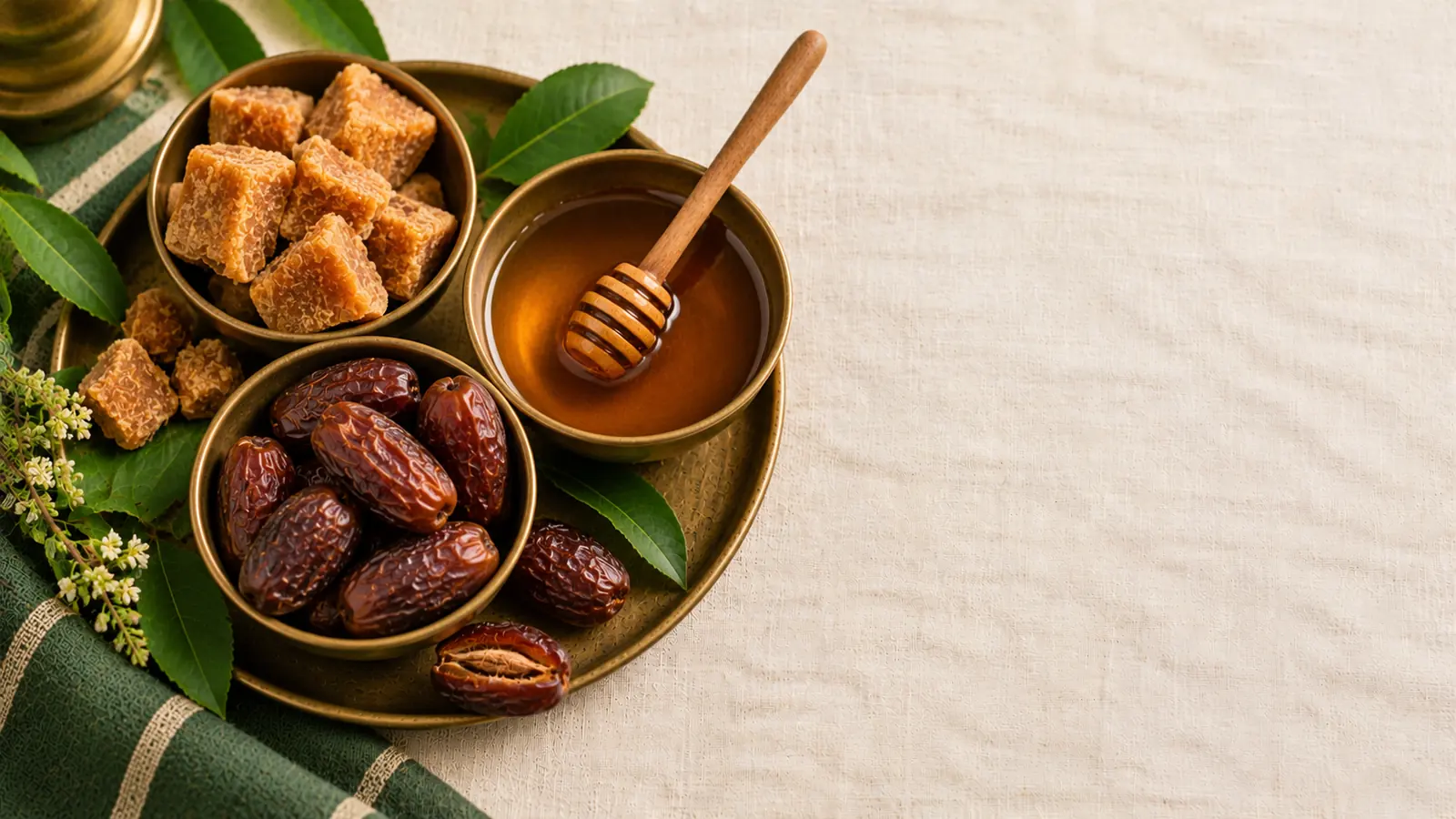
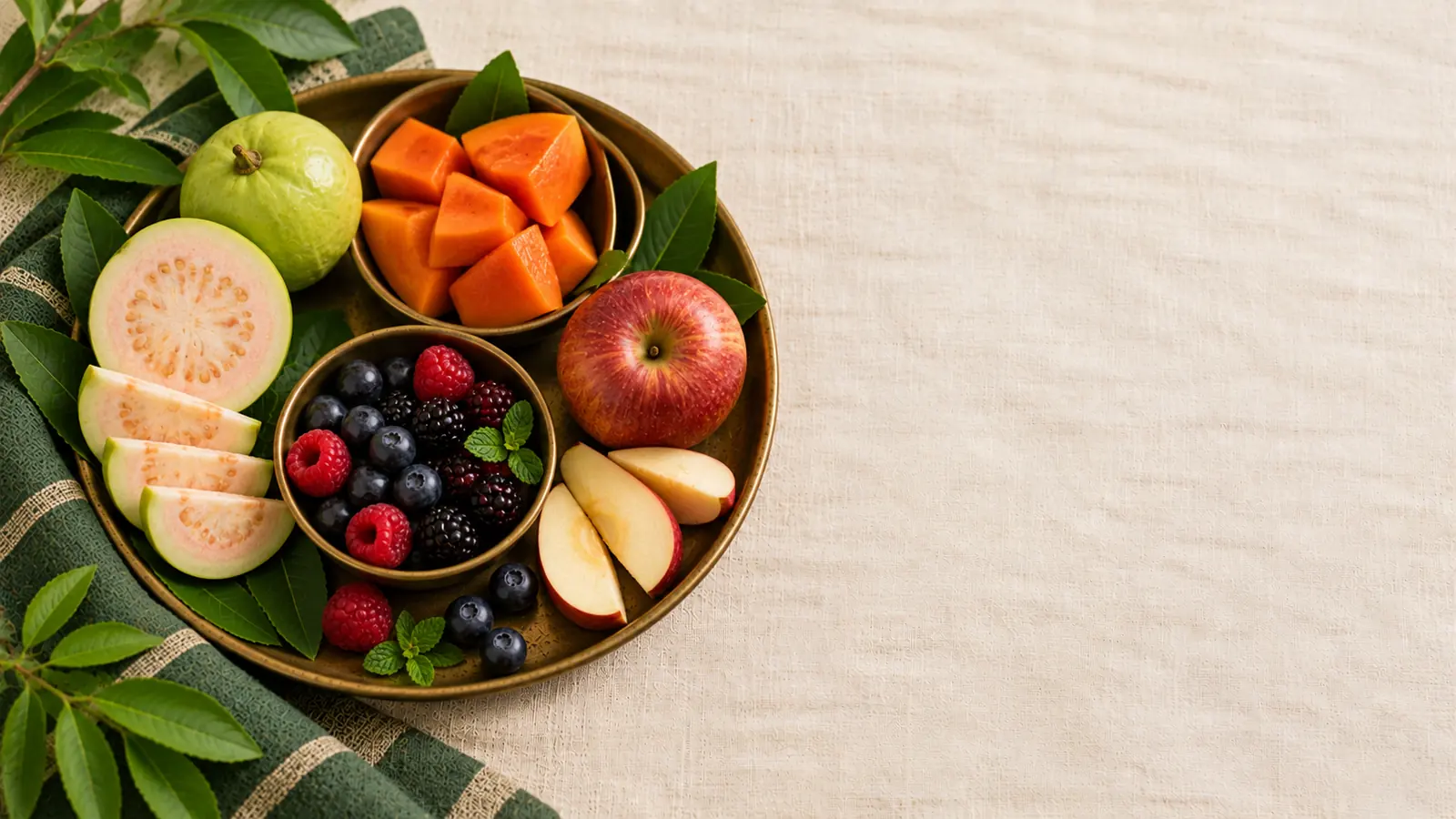
- Sweet (madhura): grounding and nourishing, but in excess it is understood to increase Kapha and heaviness. Think grains, milk, ripe fruit — wholesome in moderation.
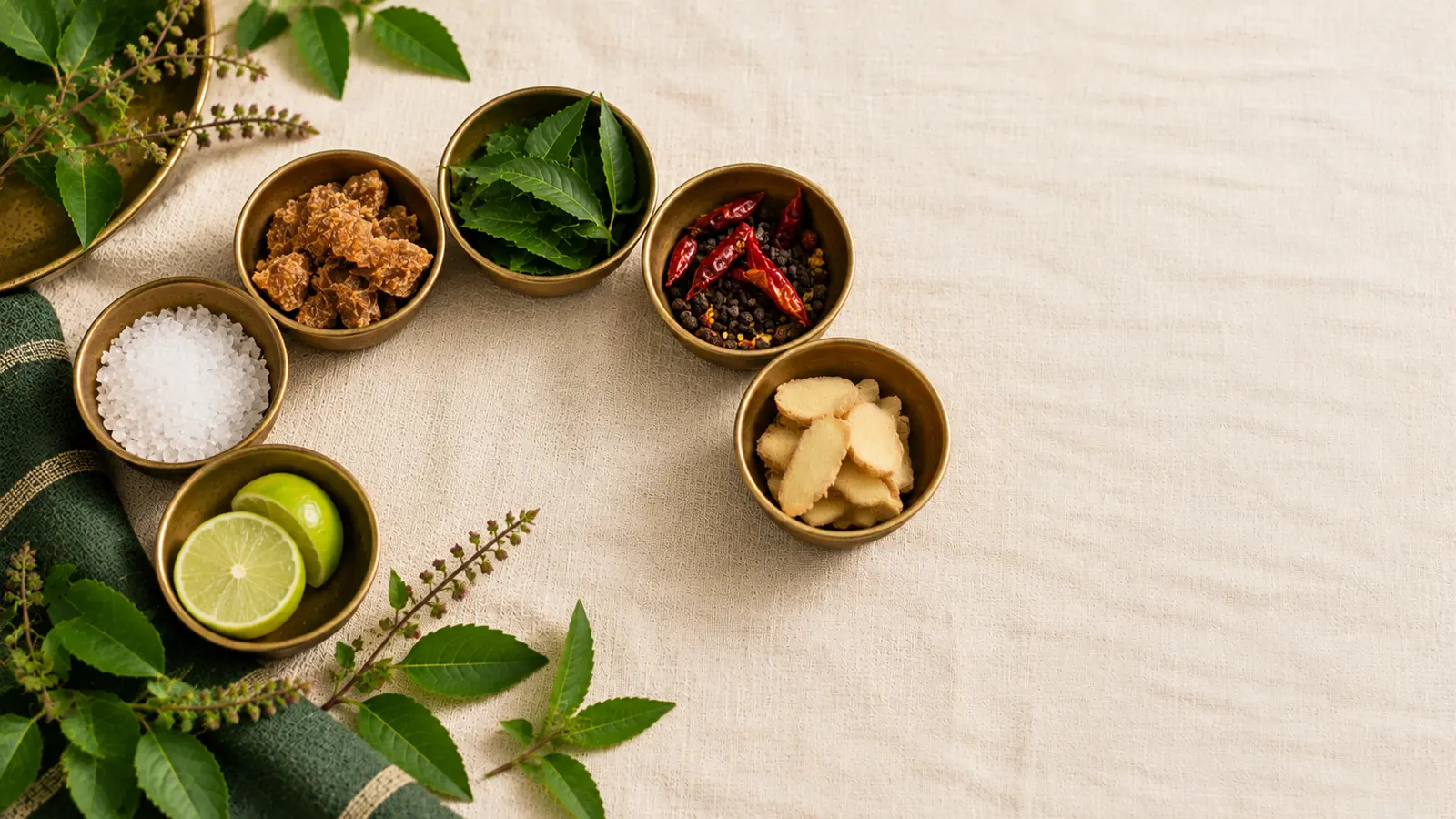
- Sour (amla): stimulating to digestion; found in citrus, fermented foods, tamarind.
- Salty (lavana): enhances flavour and digestion; easy to overdo in modern diets.
- Pungent (katu): warming and kindling to agni; found in ginger, black pepper, chillies.
- Bitter (tikta): light and cleansing; found in bitter gourd, methi (fenugreek) leaves, neem, leafy greens.
- Astringent (kashaya): drying and toning; found in lentils, beans, turmeric, many vegetables.
In Ayurvedic thinking, bitter and astringent tastes are traditionally valued for those working on metabolic balance, while an excess of sweet, sour and salty is eased back.
Why balance matters more than restriction
A blood-sugar-friendly plate, the Ayurvedic way, is not about banishing the sweet taste entirely — the sweet taste is nourishing and part of a complete meal. It is about proportion. When a plate is dominated by refined sweet and salty foods, it can feel oddly unsatisfying, prompting more eating. When bitter and astringent foods share the plate, meals feel rounded, and the tendency to overindulge softens.
This is why an Ayurvedic plate for someone mindful of blood sugar often looks like: a generous portion of bitter and astringent vegetables and lentils, a moderate portion of whole grain or millet, a little healthy fat, and only a small presence of the concentrated sweet taste.
Want a practical way to try this approach? Get our 5-day Ayurvedic sample →
Building your plate, taste by taste
A simple, non-prescriptive way to assemble a meal:
- Fill roughly half the plate with vegetables that carry bitter and astringent tastes — leafy greens, bitter gourd, beans, gourds.
- Add a moderate serving of whole grains or millets (astringent and sweet).
- Include a source of protein such as lentils or dal (astringent).
- Season with pungent spices — ginger, cumin, black pepper, turmeric — which are traditionally valued to support agni.
- Allow a small, mindful place for the sweet and sour tastes rather than letting them dominate.
Eating warm, freshly cooked food at regular times, and chewing slowly, are equally important in Ayurveda — the how of eating supports digestion as much as the what.
A word on individual constitution
The six-taste framework is a general guide, not a fixed rule. Your ideal balance depends on your constitution (prakriti), your digestion, the season, and any medicines you take. Someone with a Vata tendency may need more warmth and grounding; someone with strong Kapha may benefit from more pungent and bitter tastes. This is where personalised, doctor-guided advice makes a real difference.
Key takeaways
- Ayurveda's six tastes — sweet, sour, salty, pungent, bitter, astringent — are a practical lens for building balanced meals.
- Bitter and astringent tastes are traditionally valued for those mindful of blood sugar; excess sweet and salty is gently eased back.
- Balance and proportion matter more than strict restriction.
- The framework is a general guide and works best personalised to your constitution and alongside your medical care.
Frequently asked questions
Q. Does eating the six tastes lower blood sugar? A. The six-taste framework is a traditional way to build balanced, satisfying meals and support healthy eating habits. It is not a treatment and does not replace your medicines or monitoring. Think of it as supportive guidance for your overall routine.
Q. Do I have to give up all sweet foods? A. No. The sweet taste is a natural and nourishing part of a complete meal in Ayurveda. The idea is moderation and proportion — keeping concentrated, refined sweets small while favouring bitter and astringent foods.
Q. Can this plate replace my diabetes medication? A. No. This is supportive lifestyle guidance only. Never stop or change prescribed medication without your treating doctor. Ayurveda works alongside, not in place of, your medical care.
Next steps with Guduchi
Terms in this article
Explore the Ayurveda glossary or try our free diabetes risk score.
Ayurvedic diabetes care near you
Guduchi Ayurveda runs BAMS-led clinics in eight Indian cities. Reading is a start — a physician who sees your reports can tailor it to you.
- Ayurvedic Diabetes Clinic, AhmedabadSola, Ahmedabad
- Ayurvedic Diabetes Clinic, BangaloreBanaswadi, Bangalore
- Ayurvedic Diabetes Clinic, ChennaiAnna Nagar West, Chennai
- Ayurvedic Diabetes Clinic, DavangereDavangere
- Ayurvedic Diabetes Clinic, HubballiVidya Nagar, Hubballi
- Ayurvedic Diabetes Clinic, HyderabadJubilee Hills, Hyderabad
- Ayurvedic Diabetes Clinic, KalaburagiShastri Nagar, Kalaburagi
- Ayurvedic Diabetes Clinic, KolkataNewtown, Kolkata
- Ayurvedic Diabetes Clinic, MangaluruUrwa, Mangaluru
- Ayurvedic Diabetes Clinic, MysuruKuvempunagar, Mysuru
- Ayurvedic Diabetes Clinic, UdupiBrahmagiri, Udupi
See all Guduchi diabetes clinics · Book an online consultation
DY
Written by
Dr. Yamuna B SBAMS — Senior Ayurvedic Physician · Bengaluru, Karnataka · Reg. No. 22157
Dr. Yamuna B S is a Senior Ayurvedic Physician at Guduchi Ayurveda in Bengaluru, with a deep focus on Madhumeha (the Ayurvedic understanding of diabetes) and lifestyle-led metabolic care. She works closely with each patient to combine classical Ayurvedic principles with practical, day-to-day guidance on diet, routine and stress — always alongside, not in place of, their regular medical care.
Medical disclaimer: This article is for general education and is not a substitute for professional medical advice, diagnosis, or treatment. Ayurveda is described here as a supportive, complementary system. Do not stop or change any prescribed medication without consulting your treating physician. Always speak with a qualified doctor about your individual health, especially if you are pregnant, elderly, or managing other conditions.