

In short
Dry, itchy skin is common in winter, and people living with diabetes often feel it more. Gentle habits help: lukewarm baths, a short warm-oil massage (abhyanga) before bathing, a fragrance-free moisturiser after, enough water and soft cotton layers. Show your doctor any persistent itching, rash, cracks or wounds, especially on the feet.
Introduction
As the air turns cool and dry, many people notice their skin tightening, flaking and itching — on the shins, arms, back and especially the heels. For someone living with diabetes, dry skin deserves a little more attention, because cracks can become entry points for infection and may heal more slowly.
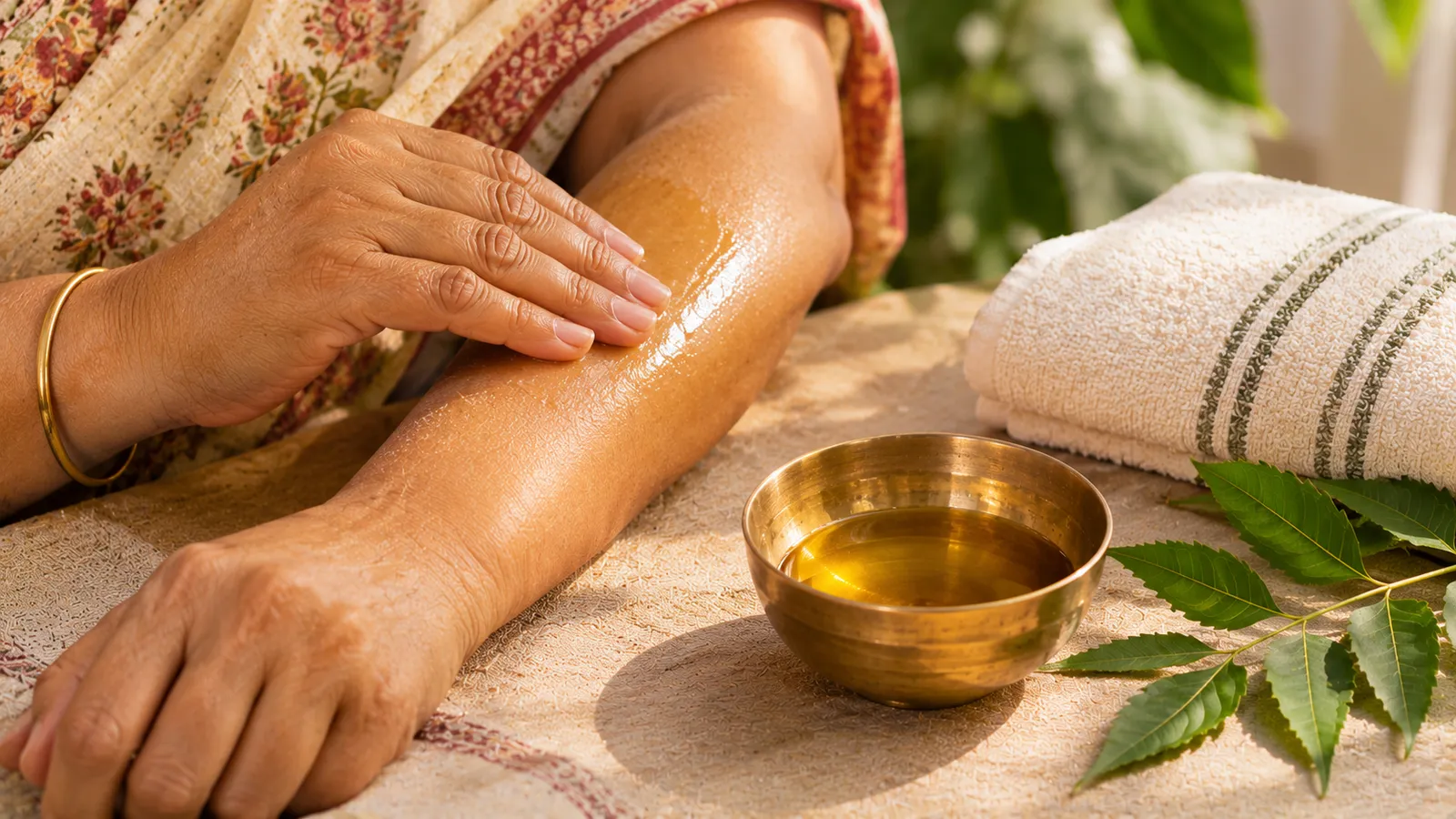
Ayurveda describes winter dryness as an increase in the dry, rough, cold qualities associated with Vata. Its traditional answer — warmth and gentle oiling — fits well with modern skin-care advice. These habits support your skin; they work alongside, not in place of, your doctor's care.
Persistent itching or skin changes? Book a consultation with our Ayurvedic doctor →
Why does skin get drier in winter with diabetes?
- Cold, dry air and indoor heating draw moisture from the skin.
- Hot showers strip the skin's natural oils.
- Less water intake in cold weather.
- Blood sugar that runs high may contribute to dehydration and dry skin.
- Reduced sweating in some people with diabetes can leave skin of the feet and legs especially dry.
Gentle Ayurvedic habits for winter skin
| Habit | How to do it | Why it helps |
|---|---|---|
| Warm-oil massage (abhyanga) | 5–10 minutes with warm sesame or coconut oil before bathing | Traditionally used to counter winter dryness |
| Lukewarm bath | Short bath with lukewarm water and a mild soap or gram-flour paste | Avoids stripping natural oils |
| Moisturise after bathing | Fragrance-free cream on slightly damp skin | Helps seal in moisture |
| Warm water through the day | Keep a flask of warm water nearby | Easier to drink enough in winter |
| Soft cotton layers | Cotton next to the skin, wool on top | Reduces friction and itching from wool |
| Healthy fats in food | A little ghee or cold-pressed oil, nuts and seeds in modest amounts | Ayurveda's inside-out approach to dryness |
Our abhyanga guide explains the self-massage step by step.
Want to try a structured Ayurvedic routine at home? Get the 5-day Ayurvedic sample →
Special care for the feet
Feet need extra attention in winter:
- Moisturise the heels and soles, but not between the toes, where moisture can encourage fungal infection.
- Check your feet every day for cracks, redness, blisters or cuts.
- Never use a blade to remove hard skin; ask a professional instead.
- Avoid heaters, hot-water bottles or very hot foot soaks if sensation may be reduced.
- Wear clean cotton socks and well-fitting closed footwear.
Read more in our guide to diabetic foot-care habits.
Itching that doesn't settle
Ongoing itching is not always just dry skin. It can sometimes be linked to fungal infections, allergies, thyroid or kidney conditions, or blood-sugar levels that need review. Rather than trying one cream after another, ask your doctor to take a look. Don't apply strong home remedies or herbal pastes to broken skin.
Key takeaways
- Winter dryness is common and can feel worse with diabetes; cracks deserve attention.
- Warm-oil massage, lukewarm baths, moisturising and warm water through the day are gentle habits.
- Moisturise the feet but not between the toes, and check your feet daily.
- Persistent itching, rashes, cracks or wounds should be seen by a doctor.
Frequently asked questions
Q. Why is my skin so itchy in winter with diabetes? A. Cold, dry air, hot baths and drinking less water all dry the skin, and blood sugar that runs high can add to dryness. Persistent itching should be reviewed by your doctor.
Q. Is sesame oil massage good for dry skin in winter? A. Warm sesame-oil massage before bathing is a traditional Ayurvedic winter habit for dryness. Patch-test first, and avoid oil on broken skin or between the toes.
Q. Can I use coconut oil on diabetic feet? A. Many people use it on the heels and soles. Keep it off the spaces between the toes and stop if you notice irritation.
Q. Can skin care replace managing my blood sugar? A. No. Good skin care is supportive. Keep up your prescribed treatment and monitoring, and see your doctor for any skin change that worries you.
Next steps with Guduchi
Terms in this article
Explore the Ayurveda glossary or try our free diabetes risk score.
Ayurvedic diabetes care near you
Guduchi Ayurveda runs BAMS-led clinics in eight Indian cities. Reading is a start — a physician who sees your reports can tailor it to you.
- Ayurvedic Diabetes Clinic, AhmedabadSola, Ahmedabad
- Ayurvedic Diabetes Clinic, BangaloreBanaswadi, Bangalore
- Ayurvedic Diabetes Clinic, ChennaiAnna Nagar West, Chennai
- Ayurvedic Diabetes Clinic, DavangereDavangere
- Ayurvedic Diabetes Clinic, HubballiVidya Nagar, Hubballi
- Ayurvedic Diabetes Clinic, HyderabadJubilee Hills, Hyderabad
- Ayurvedic Diabetes Clinic, KalaburagiShastri Nagar, Kalaburagi
- Ayurvedic Diabetes Clinic, KolkataNewtown, Kolkata
- Ayurvedic Diabetes Clinic, MangaluruUrwa, Mangaluru
- Ayurvedic Diabetes Clinic, MysuruKuvempunagar, Mysuru
- Ayurvedic Diabetes Clinic, UdupiBrahmagiri, Udupi
See all Guduchi diabetes clinics · Book an online consultation
DY
Written by
Dr. Yamuna B SBAMS — Senior Ayurvedic Physician · Bengaluru, Karnataka · Reg. No. 22157
Dr. Yamuna B S is a Senior Ayurvedic Physician at Guduchi Ayurveda in Bengaluru, with a deep focus on Madhumeha (the Ayurvedic understanding of diabetes) and lifestyle-led metabolic care. She works closely with each patient to combine classical Ayurvedic principles with practical, day-to-day guidance on diet, routine and stress — always alongside, not in place of, their regular medical care.
Medical disclaimer: This article is for general education and is not a substitute for professional medical advice, diagnosis, or treatment. Ayurveda is described here as a supportive, complementary system. Do not stop or change any prescribed medication without consulting your treating physician. Always speak with a qualified doctor about your individual health, especially if you are pregnant, elderly, or managing other conditions.