
In short
Most people living with diabetes can still share in Diwali sweets with planning rather than restriction. Ayurveda's approach: choose one small, good-quality sweet, eat it after a balanced meal rather than on an empty stomach, keep the rest of the day light and stay active. Agree your own limits with your treating doctor.
Introduction
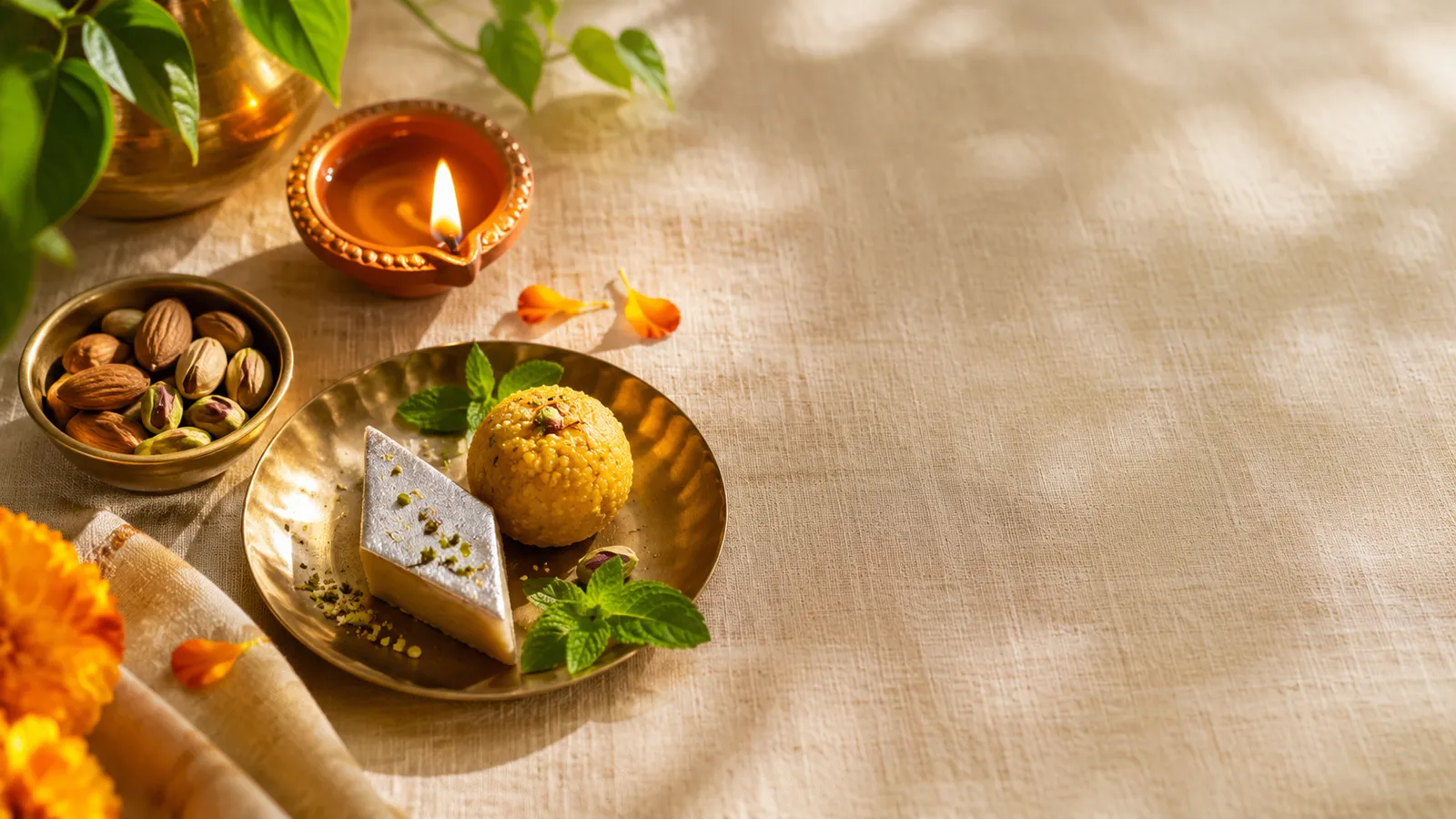
Diwali 2026 falls on Sunday, 8 November, with Dhanteras on 6 November and Bhai Dooj on 10 November. That is five days of gifting boxes of kaju katli, laddoos, barfi and gulab jamun, and many visits where refusing a sweet can feel rude. If you live with diabetes, it is natural to approach the season with a mix of joy and worry.
Ayurveda does not ask you to give up the festival. It asks you to bring awareness to how much, when and what with — the same principles it applies to every meal. Used alongside, not in place of, your prescribed treatment and blood-sugar monitoring, these habits can help you enjoy the lights without losing your rhythm.
Want a festive-season plan built around your own readings? Book a consultation with our Ayurvedic doctor →
Can people with diabetes eat sweets during Diwali?
For many people, a small portion of a sweet, eaten thoughtfully, can fit within an overall balanced day. What tends to cause trouble is not one piece of mithai but the pattern around it: sweets on an empty stomach, sweets at every visit, late heavy dinners, and very little movement over several days.
Ayurveda describes sweet (madhura) as one of the six tastes, nourishing in the right amount but heavy and Kapha-increasing in excess. Since Kapha accumulation and sluggish digestion (agni) sit at the heart of how Ayurveda understands Madhumeha, the guidance is moderation and timing — not fear.
Your treating doctor knows your medicines and numbers, so agree on what "a small portion" means for you before the festival begins.
Which Diwali sweets are lighter choices?
No sweet is "diabetes-safe", and "sugar-free" on a label does not mean free of calories, fat or refined flour. Still, some choices tend to be heavier than others. A simple comparison:
| Sweet type | Why it is heavier or lighter | Ayurvedic-minded tip |
|---|---|---|
| Syrup-soaked (gulab jamun, rasgulla, jalebi) | Fried or soaked in sugar syrup; quick to eat a lot | Best kept to a taste, if at all |
| Dense milk sweets (barfi, peda, kalakand) | Rich, heavy, very sweet | Half a piece after a meal, not between meals |
| Dry-fruit based (kaju katli, dry-fruit rolls) | Some fat and protein, but often high in sugar | One small piece; check how it is sweetened |
| Home-made laddoos with nuts, seeds or millet | You control the sugar, ghee and portion | Make them small and share them |
| Fresh fruit, roasted nuts, makhana | Lighter on digestion, no added sugar | A good default to offer and accept |
"Sugar-free" sweets made with artificial sweeteners can still be rich in khoa, ghee and maida. Treat them as a sweet, not as a free pass.
How should you time a festive sweet?
Timing matters in Ayurveda because agni is understood to be strongest around midday and weakest late at night.
- After a balanced meal, not on an empty stomach. A sweet eaten after a plate with vegetables, dal and some protein is gentler than one eaten alone mid-afternoon.
- Earlier in the day where possible. A small sweet after lunch is easier to digest than one after a late, heavy Diwali dinner.
- One sweet moment a day. Pick the occasion that matters most — the Lakshmi Puja prasad, or a visit to your parents — and say a polite "just a little" at the others.
- Keep your medicine and meal timings steady. Festive days often push meals late. Ask your doctor how to handle late or skipped meals if you take blood-sugar-lowering medicines.
Planning sweets for the whole family this year? Try our 5-day Ayurvedic sample to experience our approach →
Balancing the rest of the festive day
What you eat around the sweet often matters more than the sweet itself.
- Keep breakfast and dinner light on the days you know you will be visiting. Warm vegetable soups, moong dal khichdi or a simple roti-sabzi plate are traditional "lightening" meals.
- Add bitter and astringent tastes. A side of methi, karela or leafy greens balances the heaviness of sweet foods. Our guide to the six tastes on a blood-sugar-friendly plate explains why.
- Sip warm water through the day. Ayurveda favours warm water to support digestion, and it helps you avoid sweetened drinks.
- Walk after meals. A gentle 10–15 minute walk after lunch and dinner is one of the simplest supportive habits during any festival.
- Mind the fried snacks too. Chaklis, mathri and namkeen add up quickly; roasted options are lighter.
What about checking your sugar during Diwali?
Festivals are exactly when monitoring helps most. If your doctor has advised home glucose checks, keep to that schedule — or check a little more often, as they suggest — through the five days. Write down what you ate on days with unusual readings; it turns the festival into useful information for your next consultation.
If you feel shaky, sweaty, confused or unusually weak — especially after a missed meal while on medicines — treat it as a possible low and follow your doctor's instructions. If you notice persistent high readings, excessive thirst or unusual tiredness, contact your treating doctor rather than adjusting medicines yourself.
Key takeaways
- You don't have to skip Diwali — plan one small, good-quality sweet rather than many casual ones.
- Eat sweets after a balanced meal and earlier in the day, when Ayurveda considers digestion strongest.
- "Sugar-free" mithai is still a rich sweet; read the ingredients and keep portions small.
- Keep other meals light, add bitter greens, walk after meals and keep up the monitoring your doctor advises.
Frequently asked questions
Q. Can I eat sweets on Diwali if I have diabetes? A. Many people can enjoy a small portion as part of a balanced day, but what is suitable depends on your readings and medicines. Agree on a sensible limit with your treating doctor before the festival.
Q. Are sugar-free Diwali sweets safe for diabetics? A. Not automatically. They may still contain khoa, ghee, maida and plenty of calories. Treat them as a sweet, check the ingredients and keep the portion small.
Q. Which is better: a sweet after lunch or after dinner? A. Ayurveda considers digestion strongest around midday, so a small sweet after a balanced lunch is generally gentler than one after a late, heavy dinner.
Q. Can I skip my diabetes medicine on the day I eat sweets and fast later? A. No. Never skip, stop or change prescribed medicines on your own. If festive meal timings will change, ask your doctor how to manage your medicines safely.
Q. What is a good sweet to offer guests who have diabetes? A. Fresh seasonal fruit, roasted nuts or makhana, or small home-made laddoos with less added sugar are thoughtful options. Our guide to natural sweeteners and sugar alternatives explains why jaggery and honey are still sweets.
Next steps with Guduchi
Terms in this article
Explore the Ayurveda glossary or try our free diabetes risk score.
Ayurvedic diabetes care near you
Guduchi Ayurveda runs BAMS-led clinics in eight Indian cities. Reading is a start — a physician who sees your reports can tailor it to you.
- Ayurvedic Diabetes Clinic, AhmedabadSola, Ahmedabad
- Ayurvedic Diabetes Clinic, BangaloreBanaswadi, Bangalore
- Ayurvedic Diabetes Clinic, ChennaiAnna Nagar West, Chennai
- Ayurvedic Diabetes Clinic, DavangereDavangere
- Ayurvedic Diabetes Clinic, HubballiVidya Nagar, Hubballi
- Ayurvedic Diabetes Clinic, HyderabadJubilee Hills, Hyderabad
- Ayurvedic Diabetes Clinic, KalaburagiShastri Nagar, Kalaburagi
- Ayurvedic Diabetes Clinic, KolkataNewtown, Kolkata
- Ayurvedic Diabetes Clinic, MangaluruUrwa, Mangaluru
- Ayurvedic Diabetes Clinic, MysuruKuvempunagar, Mysuru
- Ayurvedic Diabetes Clinic, UdupiBrahmagiri, Udupi
See all Guduchi diabetes clinics · Book an online consultation
DY
Written by
Dr. Yamuna B SBAMS — Senior Ayurvedic Physician · Bengaluru, Karnataka · Reg. No. 22157
Dr. Yamuna B S is a Senior Ayurvedic Physician at Guduchi Ayurveda in Bengaluru, with a deep focus on Madhumeha (the Ayurvedic understanding of diabetes) and lifestyle-led metabolic care. She works closely with each patient to combine classical Ayurvedic principles with practical, day-to-day guidance on diet, routine and stress — always alongside, not in place of, their regular medical care.
Medical disclaimer: This article is for general education and is not a substitute for professional medical advice, diagnosis, or treatment. Ayurveda is described here as a supportive, complementary system. Do not stop or change any prescribed medication without consulting your treating physician. Always speak with a qualified doctor about your individual health, especially if you are pregnant, elderly, or managing other conditions.


