

In short
Navratri fasting is meaningful and often gentle, but it changes your eating rhythm — which matters a great deal if you live with diabetes. Ayurveda has a thoughtful view of fasting (langhana), yet safety comes first. This guide shares careful, supportive principles that must be planned with your treating doctor, especially if you take blood-sugar medicines.
Introduction
For many families, Navratri fasting is a cherished ritual of lightness and devotion. Ayurveda respects fasting as langhana — a practice that can rest and lighten the system. But fasting also means longer gaps between meals and different foods, and for anyone managing diabetes, that shift needs planning rather than improvisation.
This article offers a calm, general framework. It is not a personalised plan, and it does not decide whether fasting is right for you — that decision belongs with your treating physician, who knows your medicines and your numbers.
Thinking about fasting this Navratri? Book a consultation with our Ayurvedic doctor first →
Speak to your doctor before you fast
This comes first for a reason. If you take medicines that lower blood sugar, longer fasting gaps can make your levels drop too low, which can be dangerous. Before Navratri begins, ask your treating doctor:
- Whether fasting is safe for you at all this year.
- Whether your medicine timing or doses need adjusting for fasting days.
- What warning signs to watch for, and what to do if they appear.
Only proceed with a plan your physician has approved. Nothing in this guide overrides that conversation.
The Ayurvedic view of gentle fasting
Ayurveda does not see fasting as deprivation but as langhana — a lightening that can give tired digestion a rest and help balance heavier Kapha tendencies. The tradition also emphasises moderation: fasting is meant to feel supportive, not depleting. For someone with a delicate metabolic balance, that principle of gentleness is especially important.
Choosing fasting foods thoughtfully
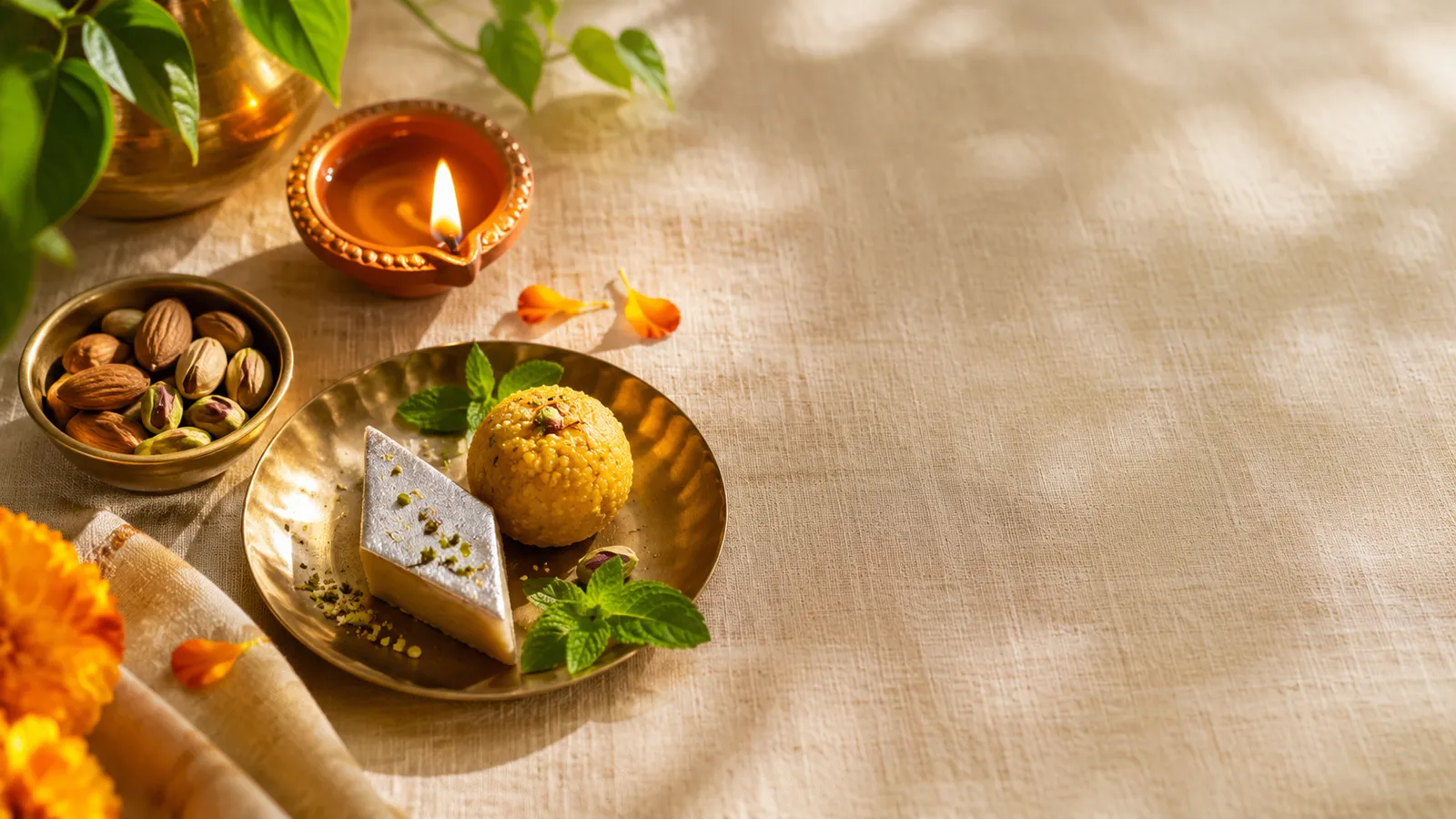
Navratri fasting foods vary by region, but a few Ayurvedic-minded choices tend to be steadier:
- Favour lighter, warm options — vegetable soups, a modest portion of samak (barnyard millet), or lauki (bottle gourd) preparations.
- Include some protein and good fats — a little curd, paneer in moderation, or a small handful of nuts — to keep energy steadier between meals.
- Go easy on the fried and very sweet fasting treats. Deep-fried potato dishes and sugary sweets can swing energy sharply and sit heavily on digestion.
- Stay well hydrated with water, buttermilk (chaas) or unsweetened herbal teas.
The aim is nourishment and steadiness, not a day of heavy, oily "fasting" indulgences.
Want a gentle, guided template to follow? Get the 5-day Ayurvedic sample →
Timing, movement and rest
Rather than one long gap followed by a large evening meal, smaller, spaced-out portions across the day are usually gentler on blood sugar — again, within whatever plan your doctor approves. Keep activity light on fasting days, avoid the harsh midday sun, and prioritise rest. Listen closely to your body: fatigue, dizziness or feeling faint are signals to pause and check in, not to push through.
Know the warning signs
Keep a source of fast-acting sugar with you, as your doctor advises, and stop fasting and seek help if you notice signs of blood sugar dropping too low — shakiness, cold sweats, confusion, palpitations or extreme weakness. Breaking a fast for your safety is always the right choice.
Key takeaways
- Fasting during Navratri needs a doctor-approved plan first if you live with diabetes, especially on blood-sugar medicines.
- Ayurveda views fasting as gentle langhana — supportive, never depleting.
- Favour light, warm, balanced fasting foods and stay well hydrated; go easy on fried and very sweet treats.
- Know the warning signs of low blood sugar, and always prioritise safety over completing a fast.
Frequently asked questions
Q. Is it safe to fast for Navratri if I have diabetes? A. It depends entirely on your individual situation and medicines, so this is a decision to make with your treating doctor before Navratri. Some people can fast gently with adjustments; for others it may not be advisable this year.
Q. Can Ayurvedic fasting replace my diabetes medicines during Navratri? A. No. Fasting is a lifestyle practice, not a substitute for medication, and you should never skip or stop prescribed medicines to fast. Any medicine adjustment for fasting days must be decided by your treating physician.
Q. What should I do if I feel dizzy or shaky while fasting? A. Treat it as a warning sign of low blood sugar. Follow your doctor's advice, take fast-acting sugar if instructed, break the fast, and seek medical help if it does not settle. Your safety comes before completing the fast.
Next steps with Guduchi
Terms in this article
Explore the Ayurveda glossary or try our free diabetes risk score.
Ayurvedic diabetes care near you
Guduchi Ayurveda runs BAMS-led clinics in eight Indian cities. Reading is a start — a physician who sees your reports can tailor it to you.
- Ayurvedic Diabetes Clinic, AhmedabadSola, Ahmedabad
- Ayurvedic Diabetes Clinic, BangaloreBanaswadi, Bangalore
- Ayurvedic Diabetes Clinic, ChennaiAnna Nagar West, Chennai
- Ayurvedic Diabetes Clinic, DavangereDavangere
- Ayurvedic Diabetes Clinic, HubballiVidya Nagar, Hubballi
- Ayurvedic Diabetes Clinic, HyderabadJubilee Hills, Hyderabad
- Ayurvedic Diabetes Clinic, KalaburagiShastri Nagar, Kalaburagi
- Ayurvedic Diabetes Clinic, KolkataNewtown, Kolkata
- Ayurvedic Diabetes Clinic, MangaluruUrwa, Mangaluru
- Ayurvedic Diabetes Clinic, MysuruKuvempunagar, Mysuru
- Ayurvedic Diabetes Clinic, UdupiBrahmagiri, Udupi
See all Guduchi diabetes clinics · Book an online consultation
DY
Written by
Dr. Yamuna B SBAMS — Senior Ayurvedic Physician · Bengaluru, Karnataka · Reg. No. 22157
Dr. Yamuna B S is a Senior Ayurvedic Physician at Guduchi Ayurveda in Bengaluru, with a deep focus on Madhumeha (the Ayurvedic understanding of diabetes) and lifestyle-led metabolic care. She works closely with each patient to combine classical Ayurvedic principles with practical, day-to-day guidance on diet, routine and stress — always alongside, not in place of, their regular medical care.
Medical disclaimer: This article is for general education and is not a substitute for professional medical advice, diagnosis, or treatment. Ayurveda is described here as a supportive, complementary system. Do not stop or change any prescribed medication without consulting your treating physician. Always speak with a qualified doctor about your individual health, especially if you are pregnant, elderly, or managing other conditions.