
In short
You can enjoy Indian wedding season with diabetes by planning around timing, plate order and movement. Have a light snack before late dinners, fill half your plate with salad, tandoori and vegetables before rich gravies and breads, share one dessert, and dance or walk. Ask your doctor how to handle late meals with your medicines.
Introduction
From November to February, many Indian families have a calendar full of weddings: mehendi, sangeet, reception, often with dinner served after 10 pm. The food is lavish — chaat counters, paneer and mutton gravies, biryani, naan, jalebi with rabdi, ice cream — and saying no can feel impossible.
Ayurveda would say the challenge is less any single dish and more the disruption to rhythm: late, heavy meals eaten when digestion (agni) is at its weakest. With a little planning, you can celebrate fully and still look after yourself, alongside your prescribed care.
Many weddings coming up? Book a consultation for a wedding-season plan →
Before you leave home
- Don't arrive starving. If dinner will be very late, a small, balanced snack at your usual dinner time — a bowl of dal soup, a moong cheela, or curd with cucumber — helps prevent overeating later.
- Ask your doctor about late meals. If you take medicines that lower blood sugar, a delayed dinner may need planning. Agree an approach before the season begins.
- Carry what you need. Your medicines, a glucometer if you use one, and a source of fast-acting sugar if your doctor has advised it.
- Wear comfortable shoes. You'll be on your feet, and it makes dancing and walking easier.
At the buffet: plate order matters
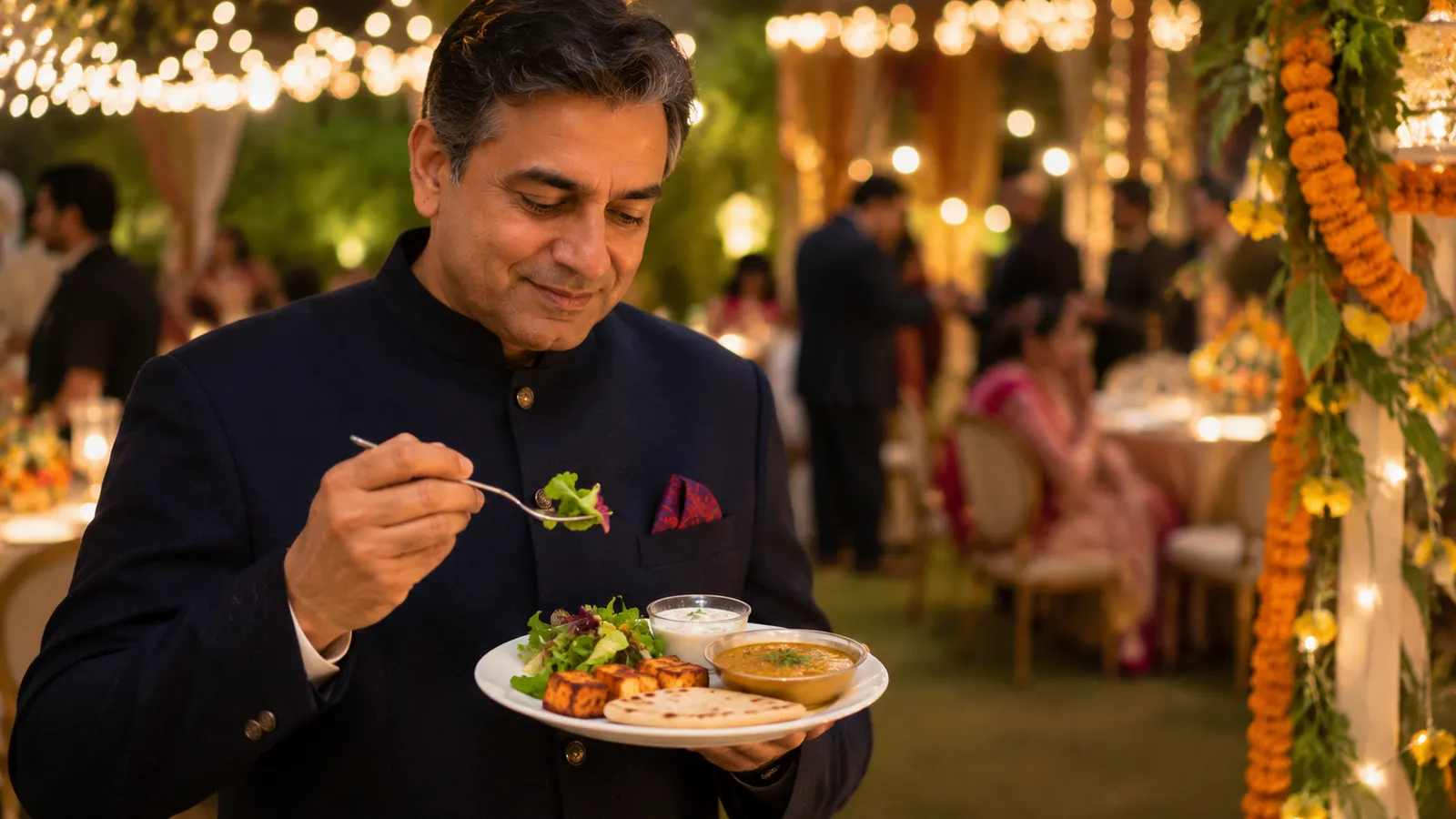
Walk the whole buffet once before picking up a plate. Then build it in this order:
| Order | What to take | Why |
|---|---|---|
| 1 | Salad, raita, clear soup | Volume and fibre first |
| 2 | Tandoori or grilled paneer, chicken, fish, or dal | Protein to make the meal satisfying |
| 3 | A vegetable sabzi | More fibre and balance |
| 4 | One roti or a small portion of rice or biryani | Measured carbohydrate |
| 5 | Rich gravies and fried items | A taste, not a plateful |
What about the sweets?
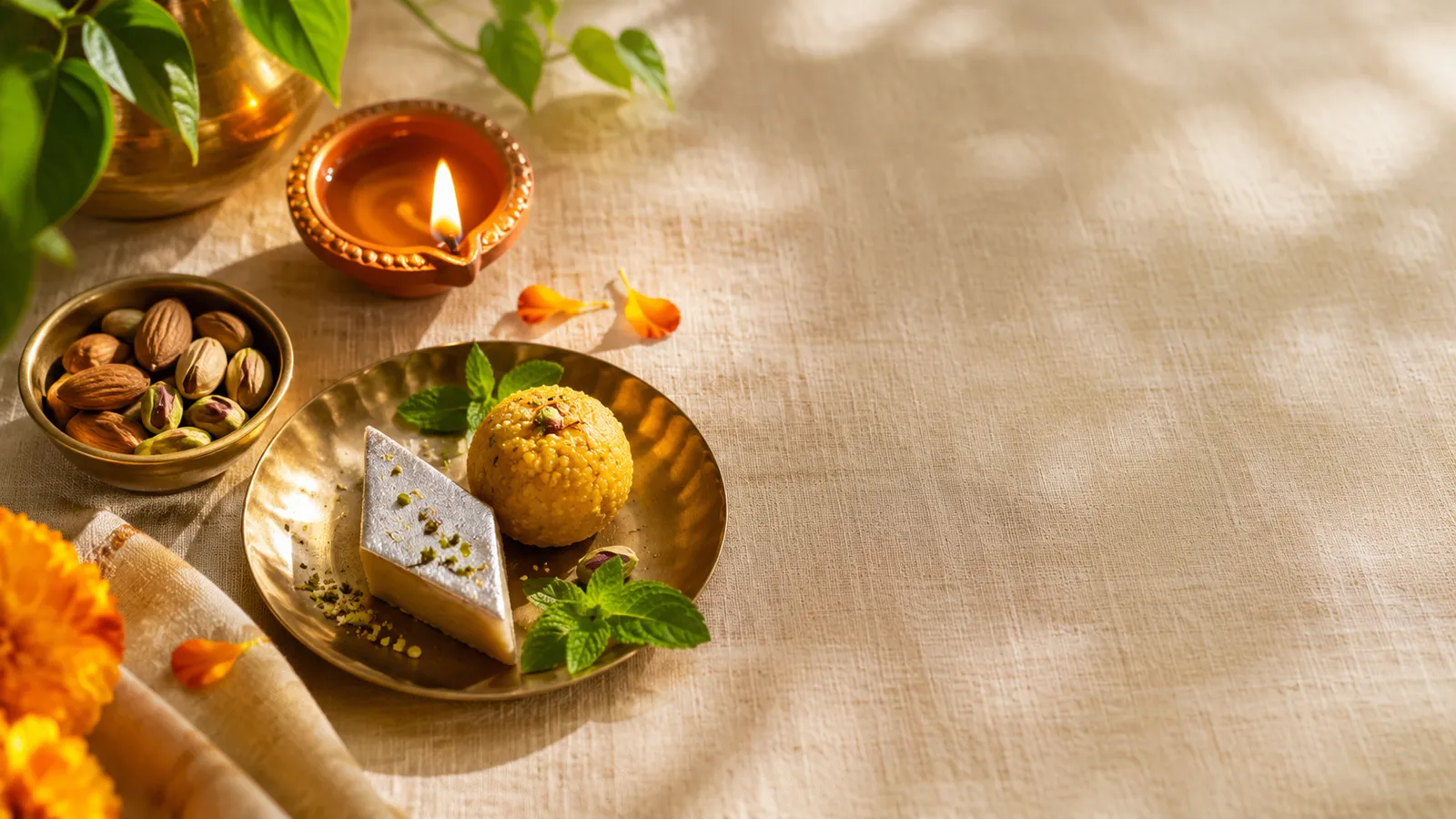
Wedding desserts are often the heaviest part of the meal: jalebi with rabdi, gulab jamun, halwa, ice cream. Choose one you genuinely love, take a small portion, share it if you can, and skip the rest. Eat it slowly at the end of the meal, not on an empty stomach. Our festive sweets guide has more on choosing and timing sweets.
Want a gentle, structured routine for the busy season? Try our 5-day Ayurvedic sample →
Drinks and chaat counters
- Drinks: sweetened mocktails, colas and fruit punches add sugar quickly. Choose water, plain soda with lime, or unsweetened buttermilk. If you drink alcohol, discuss it with your doctor first, as it can affect blood sugar.
- Chaat: pani puri and papdi chaat are fried and often sweetened with chutney. Choose one plate, or opt for a sprout or fruit chaat if available.
Move, rest and recover
- Dance and walk. A turn on the dance floor or a walk around the venue after eating is a pleasant way to stay active.
- Sleep in rhythm where you can. Several late nights in a row unsettle hunger, energy and readings.
- Have a light day after. Follow a late wedding dinner with a simple breakfast and a light lunch such as khichdi, as described in our post-Diwali reset routine.
- Check your readings as your doctor advises, especially during a busy week.
Key takeaways
- Wedding season disrupts rhythm more than any single dish does; plan around late dinners.
- Have a small, balanced snack beforehand so you don't arrive starving.
- Fill your plate in order: salad, protein, vegetables, then a measured portion of roti or rice.
- Pick one dessert, share it, dance or walk, and keep the next day light.
Frequently asked questions
Q. What should a diabetic eat at an Indian wedding? A. Start with salad, raita and soup, add tandoori or grilled protein and a vegetable dish, then a measured portion of roti or rice. Keep rich gravies, fried snacks and desserts to a small taste.
Q. How do I manage a very late wedding dinner with diabetes? A. Many people have a small, balanced snack at their usual dinner time and a lighter plate later. If you take medicines that lower blood sugar, ask your doctor how to handle late meals.
Q. Can I have wedding sweets if I have diabetes? A. A small portion of one dessert at the end of the meal can fit into many people's plans. Share it, eat it slowly and skip the second helping.
Q. Should I skip my medicine if I know I'll eat late? A. No. Never skip or change medicines on your own. Ask your treating doctor how to plan medicine timing around late meals.
Next steps with Guduchi
Terms in this article
Explore the Ayurveda glossary or try our free diabetes risk score.
Ayurvedic diabetes care near you
Guduchi Ayurveda runs BAMS-led clinics in eight Indian cities. Reading is a start — a physician who sees your reports can tailor it to you.
- Ayurvedic Diabetes Clinic, AhmedabadSola, Ahmedabad
- Ayurvedic Diabetes Clinic, BangaloreBanaswadi, Bangalore
- Ayurvedic Diabetes Clinic, ChennaiAnna Nagar West, Chennai
- Ayurvedic Diabetes Clinic, DavangereDavangere
- Ayurvedic Diabetes Clinic, HubballiVidya Nagar, Hubballi
- Ayurvedic Diabetes Clinic, HyderabadJubilee Hills, Hyderabad
- Ayurvedic Diabetes Clinic, KalaburagiShastri Nagar, Kalaburagi
- Ayurvedic Diabetes Clinic, KolkataNewtown, Kolkata
- Ayurvedic Diabetes Clinic, MangaluruUrwa, Mangaluru
- Ayurvedic Diabetes Clinic, MysuruKuvempunagar, Mysuru
- Ayurvedic Diabetes Clinic, UdupiBrahmagiri, Udupi
See all Guduchi diabetes clinics · Book an online consultation
DY
Written by
Dr. Yamuna B SBAMS — Senior Ayurvedic Physician · Bengaluru, Karnataka · Reg. No. 22157
Dr. Yamuna B S is a Senior Ayurvedic Physician at Guduchi Ayurveda in Bengaluru, with a deep focus on Madhumeha (the Ayurvedic understanding of diabetes) and lifestyle-led metabolic care. She works closely with each patient to combine classical Ayurvedic principles with practical, day-to-day guidance on diet, routine and stress — always alongside, not in place of, their regular medical care.
Medical disclaimer: This article is for general education and is not a substitute for professional medical advice, diagnosis, or treatment. Ayurveda is described here as a supportive, complementary system. Do not stop or change any prescribed medication without consulting your treating physician. Always speak with a qualified doctor about your individual health, especially if you are pregnant, elderly, or managing other conditions.