
In short
Many people find blood sugar harder to manage in winter because they move less, eat heavier food, drink less water and sleep later. Ayurveda calls early winter Hemant ritu, a season of strong appetite. Its advice: warm, freshly cooked meals in sensible portions, daily indoor movement, warm water, foot care and regular monitoring.
Introduction
From November onwards, much of India settles into cooler mornings and longer nights. In the north it can be properly cold; in the south it is milder, but routines still change. Mornings start later, walks get skipped, and the kitchen fills with parathas, laddoos and hot fried snacks.
For anyone living with diabetes, that change in routine can show up in their readings. Ayurveda has always paid close attention to the seasons through ritucharya, the seasonal routine. Its winter guidance fits remarkably well with modern advice, and it works alongside, not in place of, your prescribed care.
Noticed your readings shifting as the weather cools? Book a consultation with our Ayurvedic doctor →
Why can blood sugar be harder to manage in winter?
The reasons are mostly practical, and most of them are within your control:
- Less movement. Cold mornings and early darkness make it easy to skip walks.
- Heavier, richer food. Winter treats, wedding season and festivals add up.
- Less water. People feel less thirsty in the cold and drink less through the day.
- Changed sleep. Later mornings and late nights unsettle meal and medicine timings.
- Minor illnesses. Colds, coughs and fevers are more common, and illness can unsettle blood sugar; ask your doctor for a "sick-day" plan.
How does Ayurveda view the winter season?
Ayurveda divides the year into six seasons. Early winter (Hemant, roughly mid-November to mid-January) and late winter (Shishir) are described as times when the cold draws the body's heat inward, so appetite and digestive strength (agni) are naturally higher.
That strong appetite is a double-edged sword. Ayurveda says it can handle nourishing, warm food well, but it is also easy to overeat heavy, sweet, Kapha-increasing foods. Towards late winter and spring, accumulated Kapha is traditionally said to build up, which is why the classical texts emphasise exercise and warmth in the cold months. For someone with Madhumeha, the Ayurvedic idea of Kapha and agni as the root pattern makes this especially relevant.
Ayurvedic winter habits that support blood-sugar balance
| Habit | Ayurvedic reason | Practical tip |
|---|---|---|
| Warm, freshly cooked meals | Supports steady agni; avoids cold, heavy leftovers | Soups, dal, vegetable sabzi, millet rotis |
| Daily movement, even indoors | Counters Kapha build-up and sluggishness | 20–30 minutes of walking, stairs or yoga at home |
| Warm water through the day | Supports digestion; you drink more when it is warm | Keep a flask of warm water at your desk |
| Bitter and pungent tastes | Balance sweet, heavy winter food | Methi, mustard greens, ginger, pepper |
| Morning oil massage (abhyanga) | Counters winter dryness | A short warm sesame-oil massage before bathing |
| Regular sleep and wake times | Keeps meal and medicine timings steady | Avoid very late dinners and late mornings |
Seasonal greens such as methi, sarson and bathua, millets like bajra and ragi, and warming spices are natural winter staples. For keeping active, see our walking and gentle movement guide for keeping active.
Want a seasonal plan that fits your constitution? Try our 5-day Ayurvedic sample to experience our approach →
Don't forget your feet and skin
Cold weather and dry air are hard on skin. People with diabetes are often advised to take extra care of their feet, because cuts or cracks may heal slowly and reduced sensation can hide injuries.
- Check your feet daily, including between the toes.
- Keep skin moisturised, but not between the toes.
- Never use hot-water bottles or heaters directly on feet whose sensation may be reduced.
- Wear warm, well-fitting socks and closed shoes.
Our diabetic foot-care guide covers this in more detail.
Keep up monitoring through the season
Winter is a good time to keep to the check-up schedule your doctor has advised — home readings, HbA1c and routine eye, foot and kidney checks. If your numbers drift during the season, talk to your treating doctor rather than changing medicines yourself. Bring a short note of your winter routine; it makes the conversation more useful.
Key takeaways
- Blood sugar often feels harder to manage in winter because of less movement, heavier food, less water and irregular sleep.
- Ayurveda describes early winter (Hemant ritu) as a season of strong appetite, best met with warm, balanced meals rather than excess.
- Keep moving indoors, sip warm water, add bitter greens and protect dry skin and feet.
- Keep up your doctor's monitoring schedule and never adjust medicines on your own.
Frequently asked questions
Q. Does blood sugar go up in winter? A. Many people notice higher readings in winter, often because of less activity, heavier eating and changed routines. Your own pattern is best reviewed with your treating doctor using your readings.
Q. What is Hemant ritu in Ayurveda? A. Hemant is the early winter season in Ayurveda's six-season calendar, roughly mid-November to mid-January, when appetite and digestive strength are traditionally considered high.
Q. Should diabetics avoid winter foods like laddoos and parathas? A. Not entirely, but portions and frequency matter. Choose millet or whole-wheat versions, keep sweets small and occasional, and balance them with vegetables and movement.
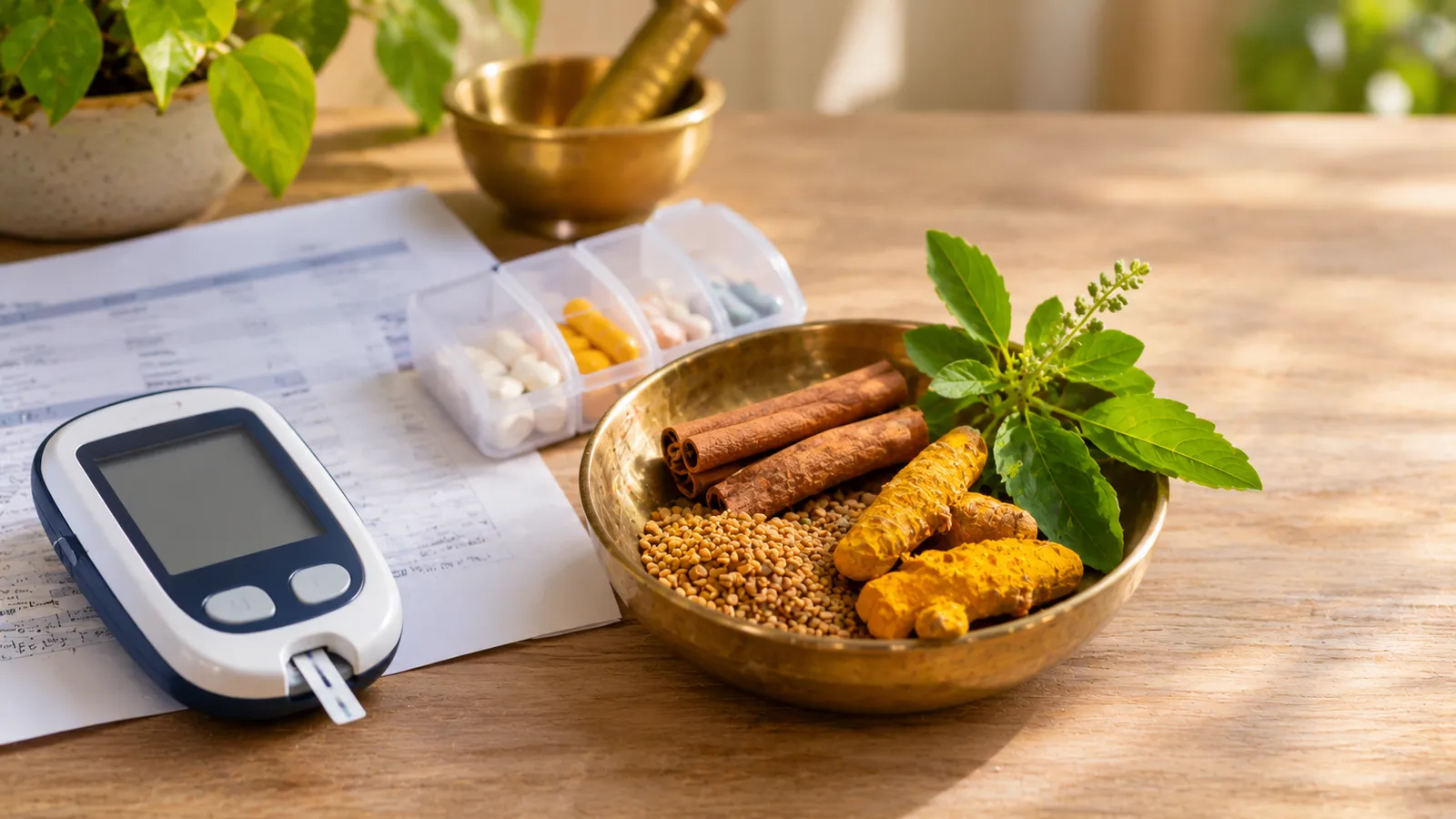
Q. Can I take herbs to manage my sugar better in winter? A. Only under a qualified physician's guidance. Herbs can interact with diabetes medicines, and they never replace prescribed treatment or monitoring.
Q. Is it safe to exercise in the cold with diabetes? A. For most people, yes, with warm clothing and good footwear. If you have heart, joint or foot concerns, ask your doctor which activity suits you, and consider indoor options on very cold days.
Next steps with Guduchi
Terms in this article
Explore the Ayurveda glossary or try our free diabetes risk score.
Ayurvedic diabetes care near you
Guduchi Ayurveda runs BAMS-led clinics in eight Indian cities. Reading is a start — a physician who sees your reports can tailor it to you.
- Ayurvedic Diabetes Clinic, AhmedabadSola, Ahmedabad
- Ayurvedic Diabetes Clinic, BangaloreBanaswadi, Bangalore
- Ayurvedic Diabetes Clinic, ChennaiAnna Nagar West, Chennai
- Ayurvedic Diabetes Clinic, DavangereDavangere
- Ayurvedic Diabetes Clinic, HubballiVidya Nagar, Hubballi
- Ayurvedic Diabetes Clinic, HyderabadJubilee Hills, Hyderabad
- Ayurvedic Diabetes Clinic, KalaburagiShastri Nagar, Kalaburagi
- Ayurvedic Diabetes Clinic, KolkataNewtown, Kolkata
- Ayurvedic Diabetes Clinic, MangaluruUrwa, Mangaluru
- Ayurvedic Diabetes Clinic, MysuruKuvempunagar, Mysuru
- Ayurvedic Diabetes Clinic, UdupiBrahmagiri, Udupi
See all Guduchi diabetes clinics · Book an online consultation
DY
Written by
Dr. Yamuna B SBAMS — Senior Ayurvedic Physician · Bengaluru, Karnataka · Reg. No. 22157
Dr. Yamuna B S is a Senior Ayurvedic Physician at Guduchi Ayurveda in Bengaluru, with a deep focus on Madhumeha (the Ayurvedic understanding of diabetes) and lifestyle-led metabolic care. She works closely with each patient to combine classical Ayurvedic principles with practical, day-to-day guidance on diet, routine and stress — always alongside, not in place of, their regular medical care.
Medical disclaimer: This article is for general education and is not a substitute for professional medical advice, diagnosis, or treatment. Ayurveda is described here as a supportive, complementary system. Do not stop or change any prescribed medication without consulting your treating physician. Always speak with a qualified doctor about your individual health, especially if you are pregnant, elderly, or managing other conditions.