
In short
An Ayurvedic diet chart for diabetes is less about strict lists and more about how and when you eat. It centres your day on warm, freshly cooked meals, the six tastes, and steady meal timing to support healthy digestion (agni). This is a general educational template that works alongside — never in place of — your doctor's dietary advice and blood-sugar monitoring.
Introduction
When people are first diagnosed with diabetes, food can suddenly feel like a minefield. Ayurveda offers a gentler lens. Rather than counting only calories or carbohydrates, it asks how balanced, warm, and well-digested each meal is — because in the Ayurvedic view, steady digestion is the foundation of healthy metabolism.
The sample day below is a general framework, not a prescription. Your ideal plate depends on your constitution (prakriti), your medicines, and your current blood-sugar picture, so treat this as a starting point to discuss with a physician.
Want a plan shaped around your own body? Book a consultation with our Ayurvedic doctor →
The principles behind the plate
Before the timings, a few Ayurvedic ideas guide every meal:
- Favour the six tastes. Ayurveda values all six — sweet, sour, salty, pungent, bitter and astringent. For metabolic balance, the bitter and astringent tastes (leafy greens, methi, karela, pulses) are traditionally emphasised, while heavy sweet and sour foods are eased back.
- Eat warm and freshly cooked. Warm, lightly spiced food is considered easier on agni than cold, heavy, or leftover meals.
- Make lunch the main meal. Digestive fire is thought to be strongest at midday, so the largest meal sits at noon.
- Keep timings steady. Regular meal times support a regular metabolism.
Early morning
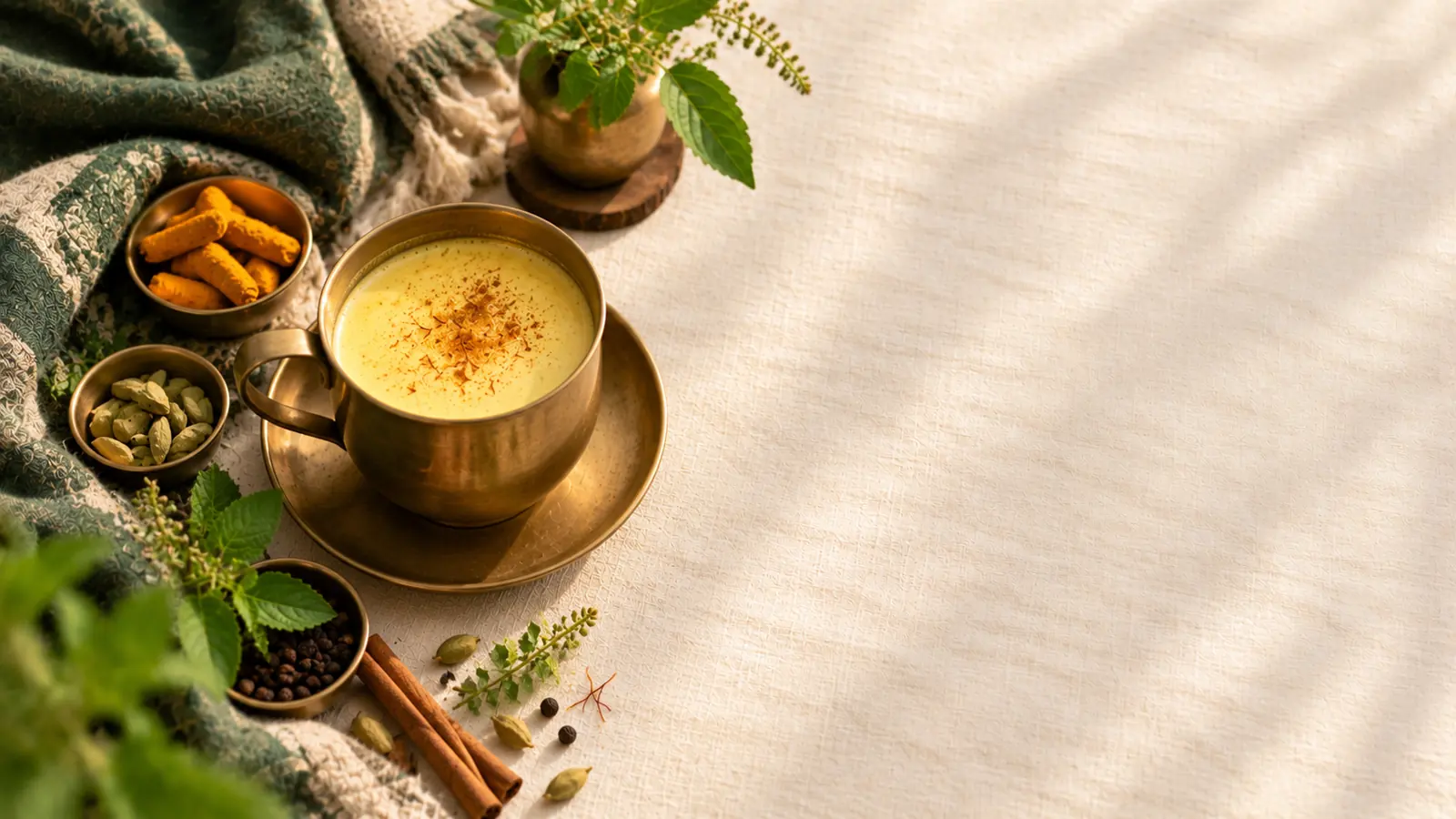
Start with a glass of warm water, perhaps with a squeeze of lemon. Some people traditionally sip warm water infused with soaked methi (fenugreek) seeds — a common household practice, best checked with your doctor if you are on medication. Follow with a gentle walk rather than reaching straight for a heavy breakfast.
Breakfast
Aim for something warm, light and lightly spiced. Traditional options include:
- A vegetable dalia (broken wheat) or millet porridge, lightly seasoned.
- Moong dal chilla with plenty of vegetables.
- A small portion of vegetable upma made with a coarse grain.
Pair it with unsweetened herbal tea. The idea is a breakfast that settles well and does not leave you heavy or sleepy.
Mid-morning
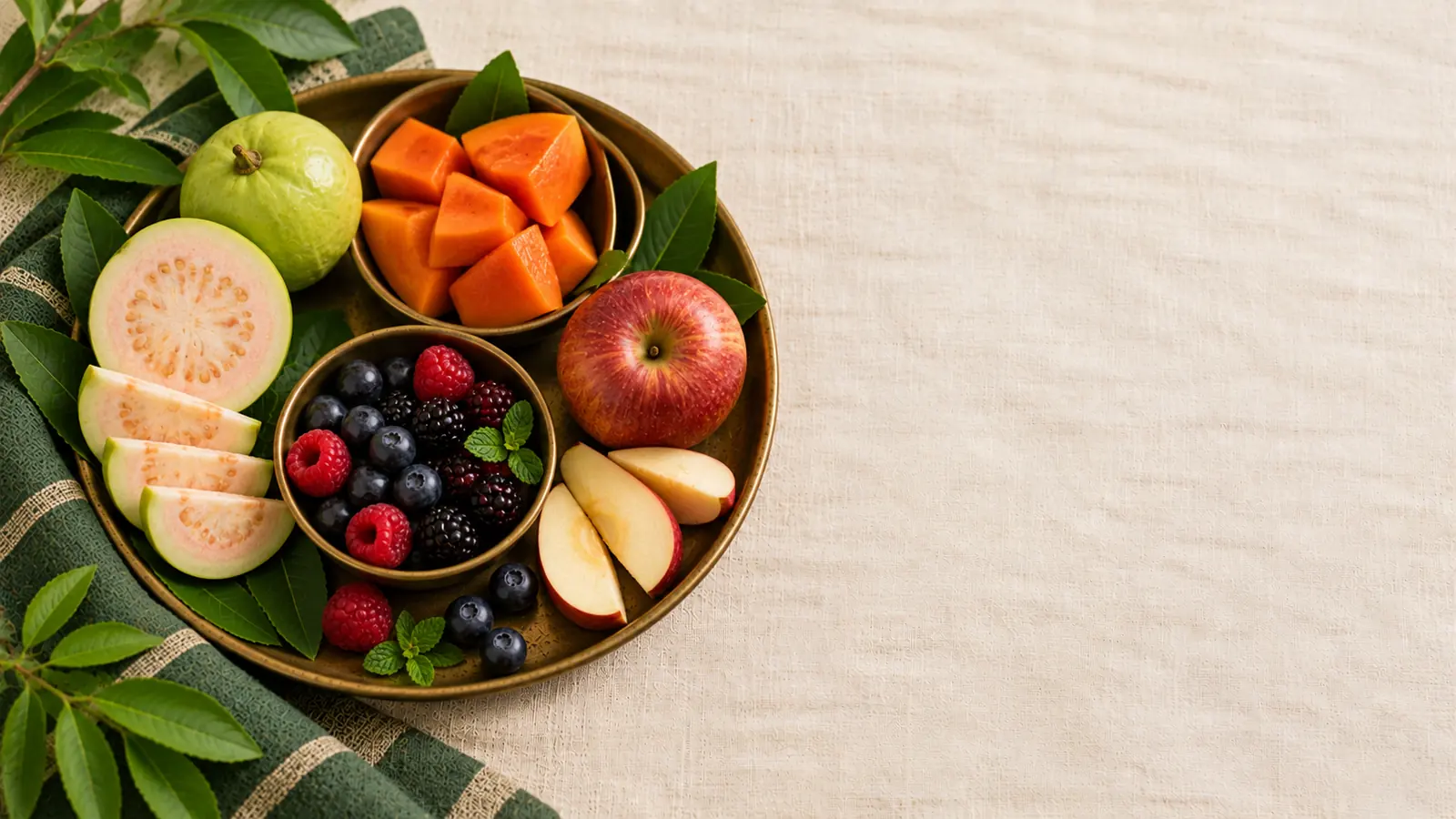
If you feel hungry between meals, a small handful of soaked almonds or a piece of a lower-sweetness fruit such as guava or a small apple can bridge the gap. Ayurveda generally suggests eating fruit on its own rather than mixed into a heavy meal.
Prefer a ready-made way to try this approach? Get the 5-day Ayurvedic sample →
Lunch — the main meal
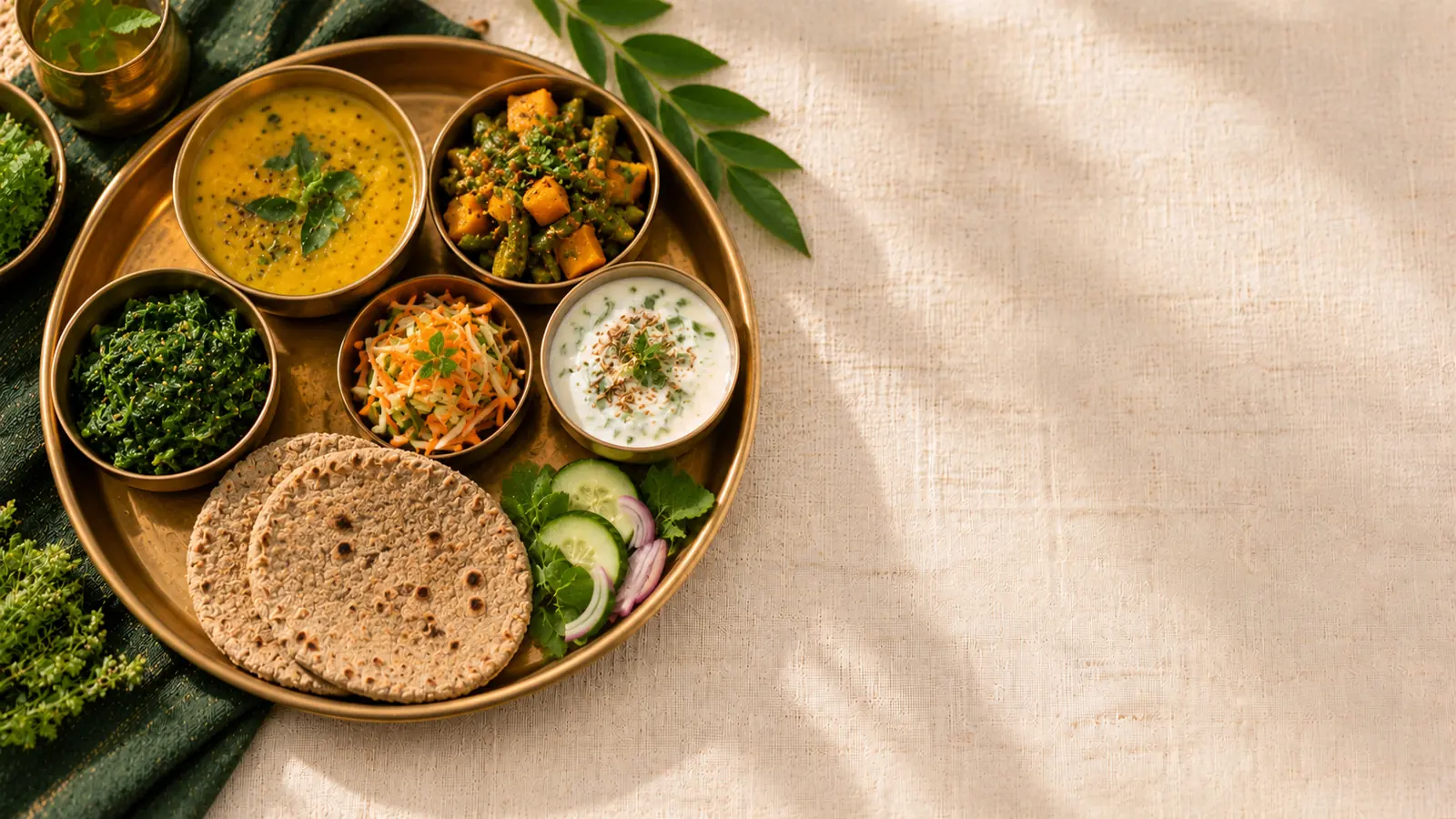
Midday is where the day's largest, most complete plate belongs. A balanced Ayurvedic thali-style lunch might include:
- One or two rotis of a mixed or millet flour, or a modest portion of a whole grain.
- A generous serving of a cooked green vegetable and a bitter vegetable such as karela or methi leaves.
- A bowl of dal or a legume preparation for protein.
- A small portion of plain curd or buttermilk (chaas), which is traditionally valued as easier to digest than plain milk.
- A simple salad of cucumber, carrot or radish for the astringent, crunchy element.
Eat slowly, in a calm setting, and stop a little before you feel completely full — Ayurveda suggests leaving roughly a quarter of the stomach empty for comfortable digestion.
Afternoon
A cup of warm herbal tea — cinnamon, tulsi or ginger — makes a comforting afternoon ritual. If hunger strikes, roasted chana or a few soaked walnuts are gentle choices.
Dinner — light and early
Dinner is deliberately lighter and earlier, ideally finished a few hours before bed so digestion completes before sleep. Think:
- A vegetable soup or a light khichdi of moong dal and a small grain.
- Sautéed seasonal vegetables with a roti.
A warm, simple dinner supports better sleep and steadier mornings.
Key takeaways
- An Ayurvedic diabetic diet chart emphasises warm, freshly cooked meals, the six tastes, and steady timing over rigid restriction.
- Lunch is the main meal; dinner stays light and early.
- Bitter and astringent foods — greens, methi, karela, pulses — are traditionally favoured for metabolic balance.
- This is general guidance and does not replace your doctor's dietary plan or blood-sugar monitoring.
Frequently asked questions
Q. Can I still eat rice and rotis with diabetes? A. In Ayurveda it is often about portion, preparation and pairing rather than complete removal. Whole and mixed grains in modest amounts, eaten with vegetables and dal, are generally preferred. Your treating doctor and dietitian should confirm the right quantities for you.
Q. Will following this diet chart mean I can reduce my medicines? A. No. A diet chart is supportive lifestyle care, not a replacement for medication. Never change or stop prescribed medicines without your treating physician's guidance and monitoring.
Q. How strict do meal timings need to be? A. You do not need perfection. Aiming for reasonably regular meal times, a larger lunch and a lighter dinner is enough to support steadier digestion for most people.
Next steps with Guduchi
Terms in this article
Explore the Ayurveda glossary or try our free diabetes risk score.
Ayurvedic diabetes care near you
Guduchi Ayurveda runs BAMS-led clinics in eight Indian cities. Reading is a start — a physician who sees your reports can tailor it to you.
- Ayurvedic Diabetes Clinic, AhmedabadSola, Ahmedabad
- Ayurvedic Diabetes Clinic, BangaloreBanaswadi, Bangalore
- Ayurvedic Diabetes Clinic, ChennaiAnna Nagar West, Chennai
- Ayurvedic Diabetes Clinic, DavangereDavangere
- Ayurvedic Diabetes Clinic, HubballiVidya Nagar, Hubballi
- Ayurvedic Diabetes Clinic, HyderabadJubilee Hills, Hyderabad
- Ayurvedic Diabetes Clinic, KalaburagiShastri Nagar, Kalaburagi
- Ayurvedic Diabetes Clinic, KolkataNewtown, Kolkata
- Ayurvedic Diabetes Clinic, MangaluruUrwa, Mangaluru
- Ayurvedic Diabetes Clinic, MysuruKuvempunagar, Mysuru
- Ayurvedic Diabetes Clinic, UdupiBrahmagiri, Udupi
See all Guduchi diabetes clinics · Book an online consultation
DY
Written by
Dr. Yamuna B SBAMS — Senior Ayurvedic Physician · Bengaluru, Karnataka · Reg. No. 22157
Dr. Yamuna B S is a Senior Ayurvedic Physician at Guduchi Ayurveda in Bengaluru, with a deep focus on Madhumeha (the Ayurvedic understanding of diabetes) and lifestyle-led metabolic care. She works closely with each patient to combine classical Ayurvedic principles with practical, day-to-day guidance on diet, routine and stress — always alongside, not in place of, their regular medical care.
Medical disclaimer: This article is for general education and is not a substitute for professional medical advice, diagnosis, or treatment. Ayurveda is described here as a supportive, complementary system. Do not stop or change any prescribed medication without consulting your treating physician. Always speak with a qualified doctor about your individual health, especially if you are pregnant, elderly, or managing other conditions.