
In short
Millets like ragi, jowar and bajra are traditional Indian grains valued in Ayurveda for their light, grounding and wholesome qualities. Eaten mindfully and prepared well, they are a satisfying part of an everyday diet that supports metabolic balance. Millets are supportive nourishing foods, not a treatment — they work alongside, never in place of, your prescribed care and monitoring.
Introduction
Long before "superfood" became a marketing word, Indian kitchens knew millets well. Ragi (finger millet), jowar (sorghum) and bajra (pearl millet) fed generations across the country's drylands, ground into rotis, porridges and warming winter breads. In recent years they have returned to attention, and for good reason — they are humble, wholesome grains with a long place in traditional eating.
In Ayurveda, food is medicine in the everyday sense: what you eat, how it is prepared, and how it suits your constitution all matter. Millets are valued for being light and grounding, qualities traditionally associated with balancing heavy, sluggish Kapha metabolism. This article looks at ragi, jowar and bajra through that Ayurvedic lens, and how to include them thoughtfully.
Wondering how to build millets into your own plate? Book a consultation with our Ayurvedic doctor →
Why Ayurveda values millets
Ayurveda judges foods by their qualities (guna) and tastes (rasa), not just calories. Most millets are considered light and drying, with a warming or neutral character — qualities traditionally used to balance the heaviness and dampness Ayurveda links to slow metabolism. Because they are less refined than polished grains, they are also more filling and satisfying, which supports steady, mindful eating.
- Light and grounding: less heavy than many refined grains, they sit well with a balanced routine.
- Drying qualities: traditionally valued for balancing damp, Kapha-type tendencies.
- Wholesome and fibrous: their natural fibre supports healthy digestion (agni).
Ragi, jowar and bajra — a quick guide
Each grain has its own character, and Ayurveda would match them to season and constitution:
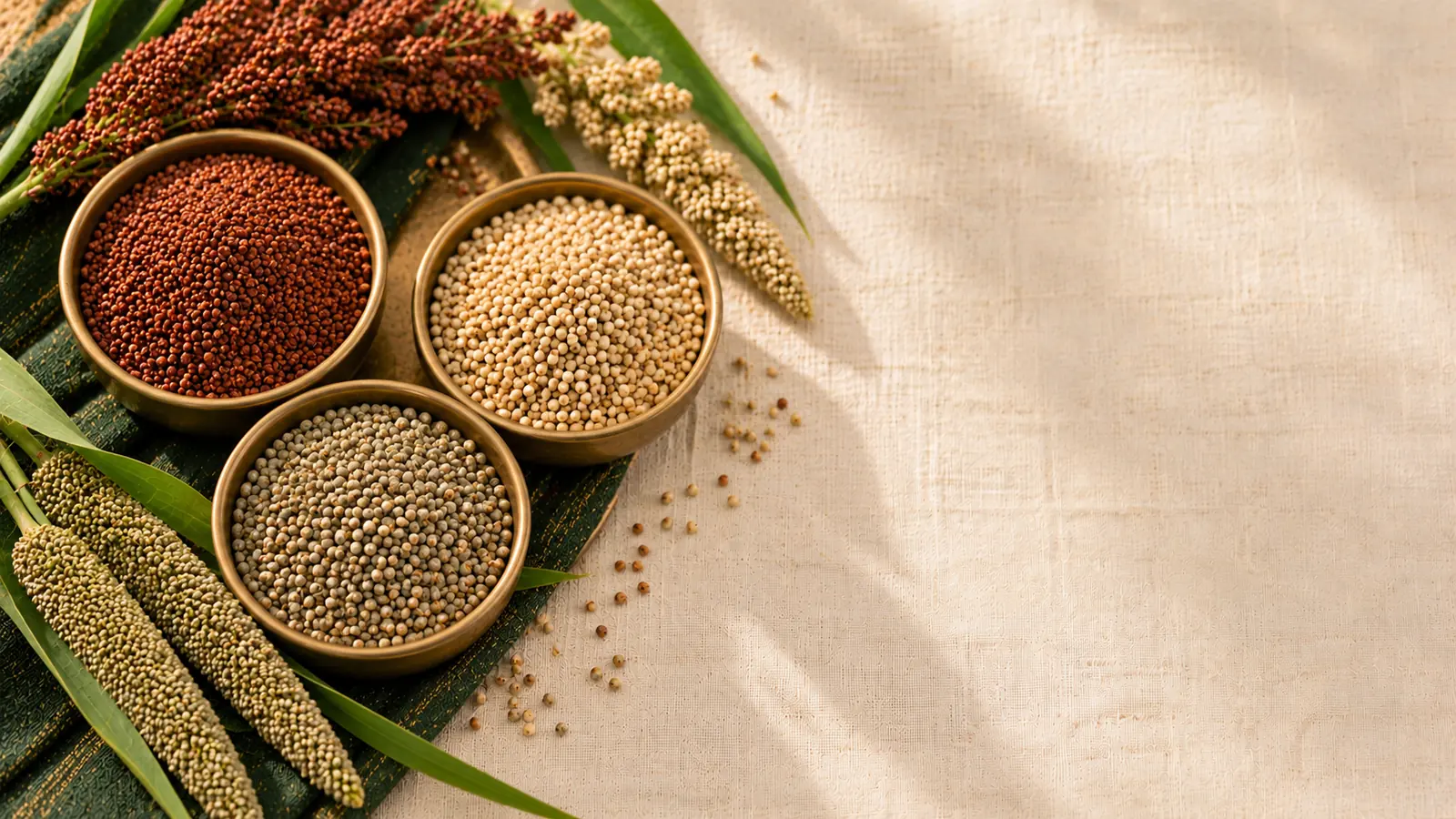
- Ragi (finger millet): cooling and grounding, often made into porridge, dosa or roti. A comforting choice, valued for being nourishing and satisfying.
- Jowar (sorghum): light and neutral, popular as bhakri or roti. Easy to digest for many, and a versatile everyday grain.
- Bajra (pearl millet): warming and hearty, traditionally a winter grain. Its warmth suits colder months and cooler constitutions.
Rotating grains through the week, and choosing them with the season, is very much the Ayurvedic way — variety keeps the diet balanced.
The Ayurvedic way to prepare and eat millets
How you cook and eat millets matters as much as choosing them:
- Soak and cook well. Soaking and thorough cooking make millets easier to digest, in keeping with Ayurveda's emphasis on protecting agni.
- Eat warm and freshly made. Warm, freshly prepared food is favoured over cold or stale leftovers.
- Pair thoughtfully. Combining millets with vegetables, a little good fat like ghee, and warming spices supports digestion and balance.
- Eat mindfully. Sitting down, eating at regular times and not overfilling the stomach are simple Ayurvedic habits that matter more than any single grain.
Want a plate matched to your constitution and season? Book a consultation with our doctor →
A few sensible cautions
Millets are wholesome, but "healthy" does not mean "unlimited" or "right for everyone":
- Portion and balance still matter. Even a good grain, eaten in excess, is not helpful; balance across the plate is the point.
- Constitution counts. Some millets are drying and may not suit very Vata-type or very thin individuals in large amounts; variety helps.
- Introduce gradually. A sudden large switch to coarse grains can unsettle sensitive digestion — ease them in.
- If you take medication, significant diet changes are best made with your treating physician and an Ayurvedic doctor aware, so your overall care stays coordinated.
Key takeaways
- Ragi, jowar and bajra are traditional millets valued in Ayurveda for light, grounding, wholesome qualities.
- Each grain has its own character; rotating them and choosing by season is the Ayurvedic way.
- Preparation matters — soak, cook well, eat warm and freshly made, and eat mindfully.
- Millets are supportive nourishing foods, not a treatment, and work alongside, never instead of, your medical care.
Frequently asked questions
Q. Are millets better than rice and wheat for blood sugar? A. Ayurveda values millets for their light, wholesome, fibrous qualities and often includes them as part of a balanced diet. Whether they suit you and in what proportion depends on your constitution and health, which is best discussed with a physician rather than assumed.
Q. Can eating millets replace my diabetes medicine? A. No. Millets are nourishing foods that support a balanced diet; they are not a replacement for medication. Never stop or change prescribed medicines without your treating doctor's guidance.
Q. Can I eat millets every day? A. Many people include them regularly, but variety and balance matter, and some millets are drying. Rotating grains and getting individual guidance — especially if you take medicines or manage other conditions — is the sensible approach.
Next steps with Guduchi
Terms in this article
Explore the Ayurveda glossary or try our free diabetes risk score.
Ayurvedic diabetes care near you
Guduchi Ayurveda runs BAMS-led clinics in eight Indian cities. Reading is a start — a physician who sees your reports can tailor it to you.
- Ayurvedic Diabetes Clinic, AhmedabadSola, Ahmedabad
- Ayurvedic Diabetes Clinic, BangaloreBanaswadi, Bangalore
- Ayurvedic Diabetes Clinic, ChennaiAnna Nagar West, Chennai
- Ayurvedic Diabetes Clinic, DavangereDavangere
- Ayurvedic Diabetes Clinic, HubballiVidya Nagar, Hubballi
- Ayurvedic Diabetes Clinic, HyderabadJubilee Hills, Hyderabad
- Ayurvedic Diabetes Clinic, KalaburagiShastri Nagar, Kalaburagi
- Ayurvedic Diabetes Clinic, KolkataNewtown, Kolkata
- Ayurvedic Diabetes Clinic, MangaluruUrwa, Mangaluru
- Ayurvedic Diabetes Clinic, MysuruKuvempunagar, Mysuru
- Ayurvedic Diabetes Clinic, UdupiBrahmagiri, Udupi
See all Guduchi diabetes clinics · Book an online consultation
DY
Written by
Dr. Yamuna B SBAMS — Senior Ayurvedic Physician · Bengaluru, Karnataka · Reg. No. 22157
Dr. Yamuna B S is a Senior Ayurvedic Physician at Guduchi Ayurveda in Bengaluru, with a deep focus on Madhumeha (the Ayurvedic understanding of diabetes) and lifestyle-led metabolic care. She works closely with each patient to combine classical Ayurvedic principles with practical, day-to-day guidance on diet, routine and stress — always alongside, not in place of, their regular medical care.
Medical disclaimer: This article is for general education and is not a substitute for professional medical advice, diagnosis, or treatment. Ayurveda is described here as a supportive, complementary system. Do not stop or change any prescribed medication without consulting your treating physician. Always speak with a qualified doctor about your individual health, especially if you are pregnant, elderly, or managing other conditions.