
In short
Fruit is not off-limits in Ayurveda — but which fruit, and how you eat it, matter. Ayurveda favours fruits that lean astringent or lightly sweet, such as jamun, guava and apple, and suggests moderation with very sweet, heavy fruits. Eating fruit fresh, whole and at the right time supports digestion. This is supportive guidance, not a replacement for your medical care.
Introduction
Few food questions cause as much worry as "Can I eat fruit?" Fruit is natural and full of goodness, yet it also carries the sweet taste — and that leaves many people mindful of blood sugar feeling unsure. Ayurveda offers a reassuring, nuanced answer: fruit has a place, but the choice and the manner of eating deserve thought.
Rather than sorting fruit only by sugar content, Ayurveda considers its taste (rasa), its heaviness or lightness, and its effect on digestion (agni). This gives a practical way to enjoy fruit that supports steady, balanced eating rather than swinging between avoidance and indulgence.
Wondering which fruits suit your own constitution? Book a consultation with our Ayurvedic doctor →
How Ayurveda looks at fruit
In Ayurvedic thinking, foods are understood by their qualities. For fruit, a few matter most:
- Taste (rasa): fruits that carry an astringent (kashaya) note alongside sweetness are generally favoured for metabolic balance.
- Heaviness vs lightness: lighter, less watery-sweet fruits are considered easier on sluggish digestion.
- Ripeness: very ripe, over-sweet fruit is heavier; slightly under-ripe or naturally tart fruit leans astringent.
This is a traditional framework to guide choices — not a laboratory measure of any specific fruit.
Fruits Ayurveda tends to favour
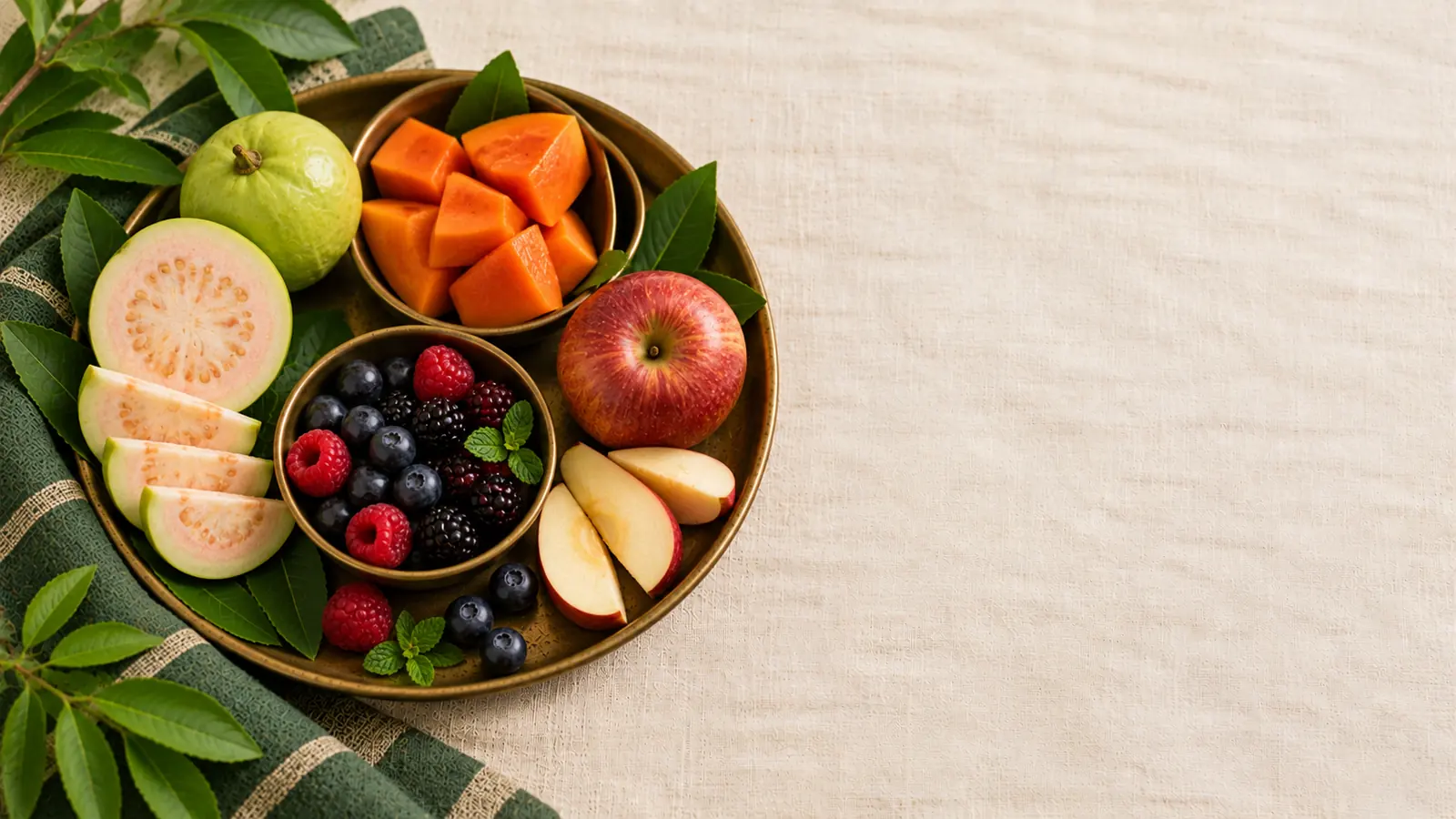
Fruits that lean astringent or moderately sweet are traditionally valued for those mindful of blood sugar:
- Jamun (Indian black plum): long valued in Ayurveda for metabolic balance; astringent and cooling.
- Guava: fibre-rich with an astringent quality.
- Apple and pear: moderate sweetness, good fibre, best eaten with the skin.
- Berries and pomegranate: astringent-sour notes.
- Papaya (in moderation): light and digestion-friendly.
These are enjoyed as whole fruit, in sensible portions, as part of a balanced day — not as a remedy.
Fruits to enjoy more sparingly
Some fruits carry a heavier, very sweet quality and are traditionally taken in smaller amounts by those watching blood sugar:
- Very ripe mango, banana, chikoo (sapota) and custard apple.
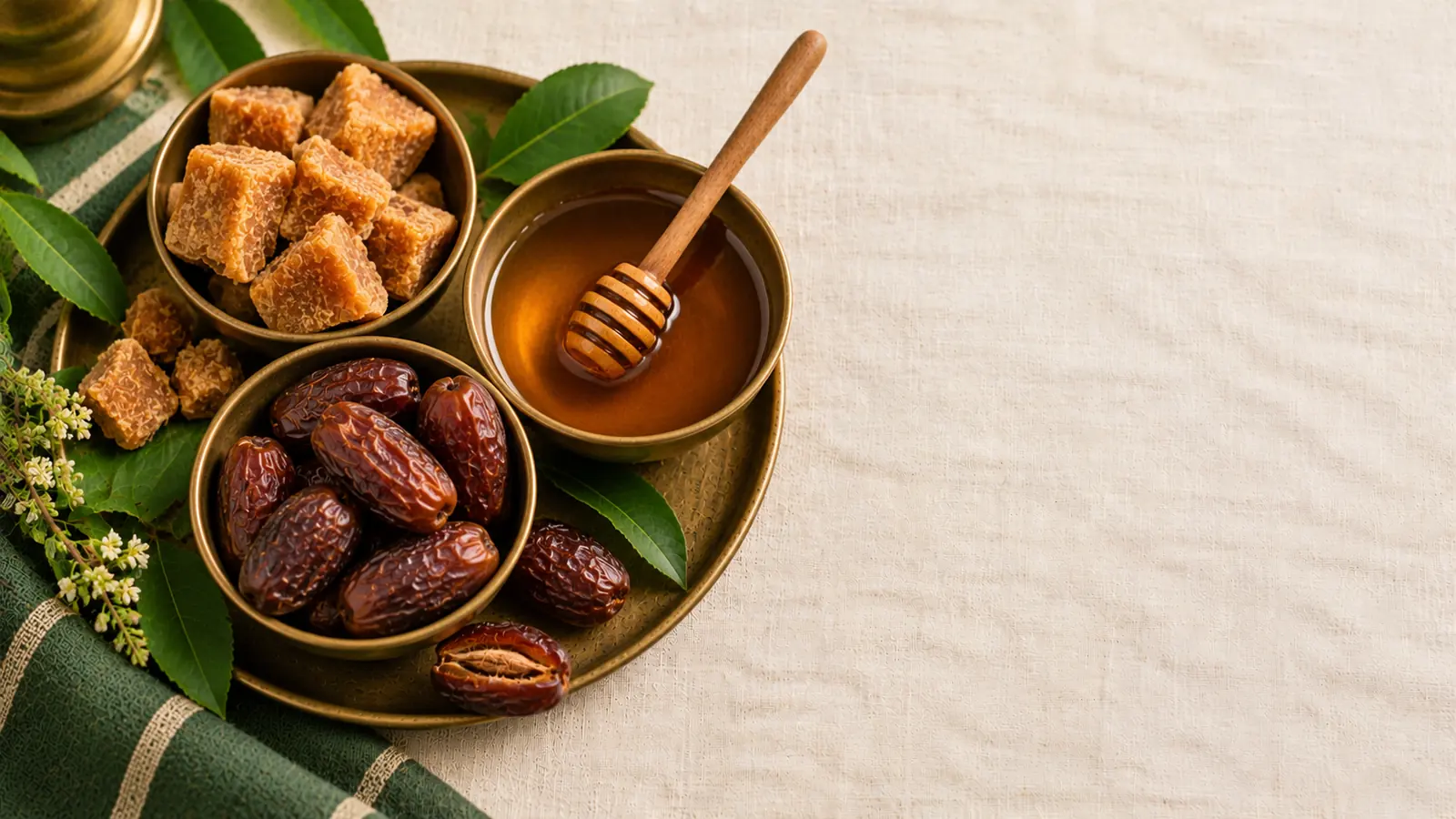
- Dried fruits like dates and raisins, where sweetness is concentrated.
- Fruit juices of any kind — juicing removes fibre and concentrates the sweet taste.
Sparingly does not mean "never." It means smaller portions, less often, and ideally paired with mindful timing.
Want a simple, guided way to build fruit into your day? Get our 5-day Ayurvedic sample →
How to eat fruit, the Ayurvedic way
The how is as important as the which:
- Eat fruit whole, not juiced — the natural fibre matters.
- Favour fruit as a standalone snack, ideally between meals rather than piled on top of a heavy meal, which Ayurveda considers harder to digest.
- Avoid combining fruit with milk — a classical incompatible combination (viruddha ahara).
- Choose fresh, seasonal and local fruit where you can.
- Keep portions modest and notice how your body responds.
These habits support digestion and steady eating, which is the real aim.
A note on individuality
There is no single "best fruit" list for everyone. Your constitution (prakriti), digestion, the season and your medicines all shape what suits you. Someone with a Pitta tendency may do well with cooling fruits; a Kapha-dominant person may prefer lighter, astringent ones. Personalised, doctor-guided advice turns general principles into a plan that fits your life.
Key takeaways
- Fruit has a place in a blood-sugar-friendly routine; choice and manner of eating matter most.
- Ayurveda favours astringent or moderately sweet fruits such as jamun, guava, apple and berries.
- Very sweet, heavy fruits, dried fruit and all fruit juices are best enjoyed sparingly.
- Eat fruit whole, fresh, in modest portions, and not mixed with milk.
Frequently asked questions
Q. Which fruit is best for diabetes? A. Ayurveda favours fruits with an astringent or moderately sweet quality — jamun, guava, apple, pear and berries — enjoyed whole and in modest portions. No single fruit treats blood sugar; this is supportive guidance for balanced eating, and your monitoring should stay with your doctor.
Q. Can I drink fresh fruit juice instead of eating fruit? A. It is better to eat fruit whole. Juicing removes the fibre and concentrates the sweet taste, which Ayurveda considers heavier. Whole fruit supports steadier digestion.
Q. Can eating the right fruits replace my medicines? A. No. Fruit choices are supportive lifestyle guidance only. Never stop or change prescribed medication without your treating doctor. Ayurveda works alongside, not in place of, your medical care.
Next steps with Guduchi
Terms in this article
Explore the Ayurveda glossary or try our free diabetes risk score.
Ayurvedic diabetes care near you
Guduchi Ayurveda runs BAMS-led clinics in eight Indian cities. Reading is a start — a physician who sees your reports can tailor it to you.
- Ayurvedic Diabetes Clinic, AhmedabadSola, Ahmedabad
- Ayurvedic Diabetes Clinic, BangaloreBanaswadi, Bangalore
- Ayurvedic Diabetes Clinic, ChennaiAnna Nagar West, Chennai
- Ayurvedic Diabetes Clinic, DavangereDavangere
- Ayurvedic Diabetes Clinic, HubballiVidya Nagar, Hubballi
- Ayurvedic Diabetes Clinic, HyderabadJubilee Hills, Hyderabad
- Ayurvedic Diabetes Clinic, KalaburagiShastri Nagar, Kalaburagi
- Ayurvedic Diabetes Clinic, KolkataNewtown, Kolkata
- Ayurvedic Diabetes Clinic, MangaluruUrwa, Mangaluru
- Ayurvedic Diabetes Clinic, MysuruKuvempunagar, Mysuru
- Ayurvedic Diabetes Clinic, UdupiBrahmagiri, Udupi
See all Guduchi diabetes clinics · Book an online consultation
DY
Written by
Dr. Yamuna B SBAMS — Senior Ayurvedic Physician · Bengaluru, Karnataka · Reg. No. 22157
Dr. Yamuna B S is a Senior Ayurvedic Physician at Guduchi Ayurveda in Bengaluru, with a deep focus on Madhumeha (the Ayurvedic understanding of diabetes) and lifestyle-led metabolic care. She works closely with each patient to combine classical Ayurvedic principles with practical, day-to-day guidance on diet, routine and stress — always alongside, not in place of, their regular medical care.
Medical disclaimer: This article is for general education and is not a substitute for professional medical advice, diagnosis, or treatment. Ayurveda is described here as a supportive, complementary system. Do not stop or change any prescribed medication without consulting your treating physician. Always speak with a qualified doctor about your individual health, especially if you are pregnant, elderly, or managing other conditions.