
In short
No sweetener is a free pass — but Ayurveda does view them differently by quality. It traditionally values the astringent-sweet note of certain herbs and the lightness of some natural options over refined white sugar, while cautioning that all concentrated sweeteners deserve moderation. Sweetener swaps are supportive guidance, not a treatment, and they work best alongside your medical care.
Introduction
Cutting back on refined sugar is one of the first steps many people take when they become mindful of blood sugar. Naturally, the next question follows: what should I use instead? The market offers honey, jaggery, coconut sugar, stevia and more — each promising to be the "better" choice.
Ayurveda approaches sweeteners not with a single verdict but through the lens of quality and effect on the body. Some are heavier, some lighter; some carry additional tastes; some are traditionally valued in specific ways. Understanding these differences helps you make calmer, more informed choices — while remembering that moderation is the golden thread through all of them.
Not sure which approach fits your routine? Book a consultation with our Ayurvedic doctor →
How Ayurveda thinks about the sweet taste
The sweet taste (madhura rasa) is nourishing and grounding, but in excess it is understood to increase Kapha and heaviness — the very qualities Ayurveda associates with sluggish metabolism. So the aim is never to demonise sweetness, but to keep it modest and to choose forms that are lighter or that carry balancing qualities. This is why the amount of any sweetener usually matters more than the type.
A closer look at common sweeteners
- Refined white sugar: considered the heaviest and least desirable in Ayurveda — highly processed, purely sweet, with none of the balancing qualities of whole foods. Best minimised by everyone.
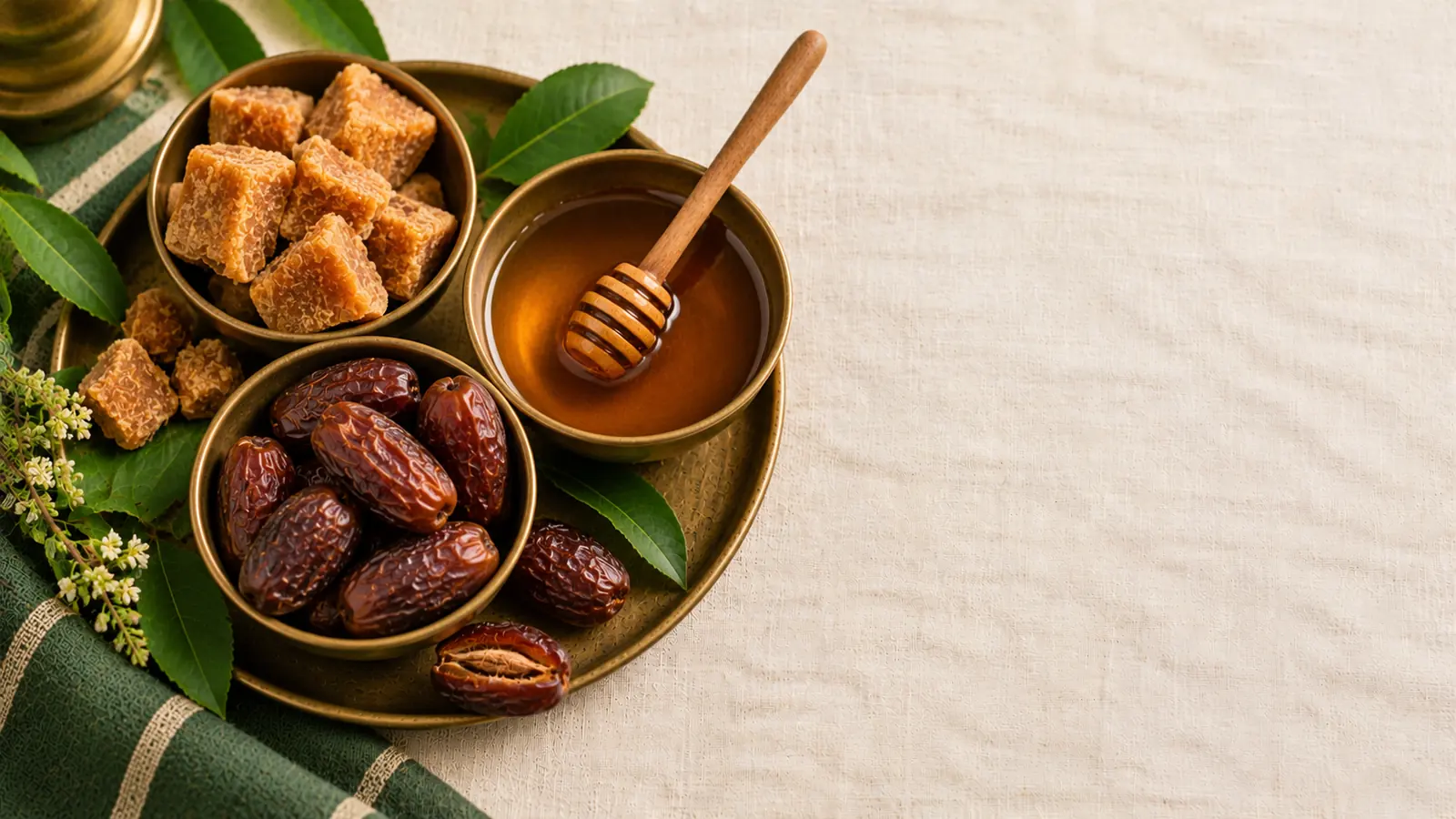
- Jaggery (gur): less refined than white sugar and traditionally used in Indian kitchens, but still a concentrated sweetener. It is a small step in quality, not a licence for large amounts.
- Honey (madhu): uniquely regarded in Ayurveda for its light, scraping (lekhana) quality. Importantly, classical texts are firm that honey should never be heated or cooked — heated honey is considered harmful (viruddha). Use only raw, in small amounts, and with a physician's guidance.
- Stevia: a naturally sweet-leaved plant with a negligible sweet load; increasingly used as an alternative. Its intense sweetness means a very little goes a long way.
- Coconut and date sugar: whole-food sweeteners, still concentrated, still to be used sparingly.
None of these is a remedy. They are simply choices along a spectrum of quality.
Want a gentle, guided way to reset your sweet habits? Get our 5-day Ayurvedic sample →
Traditionally valued for a naturally sweet touch
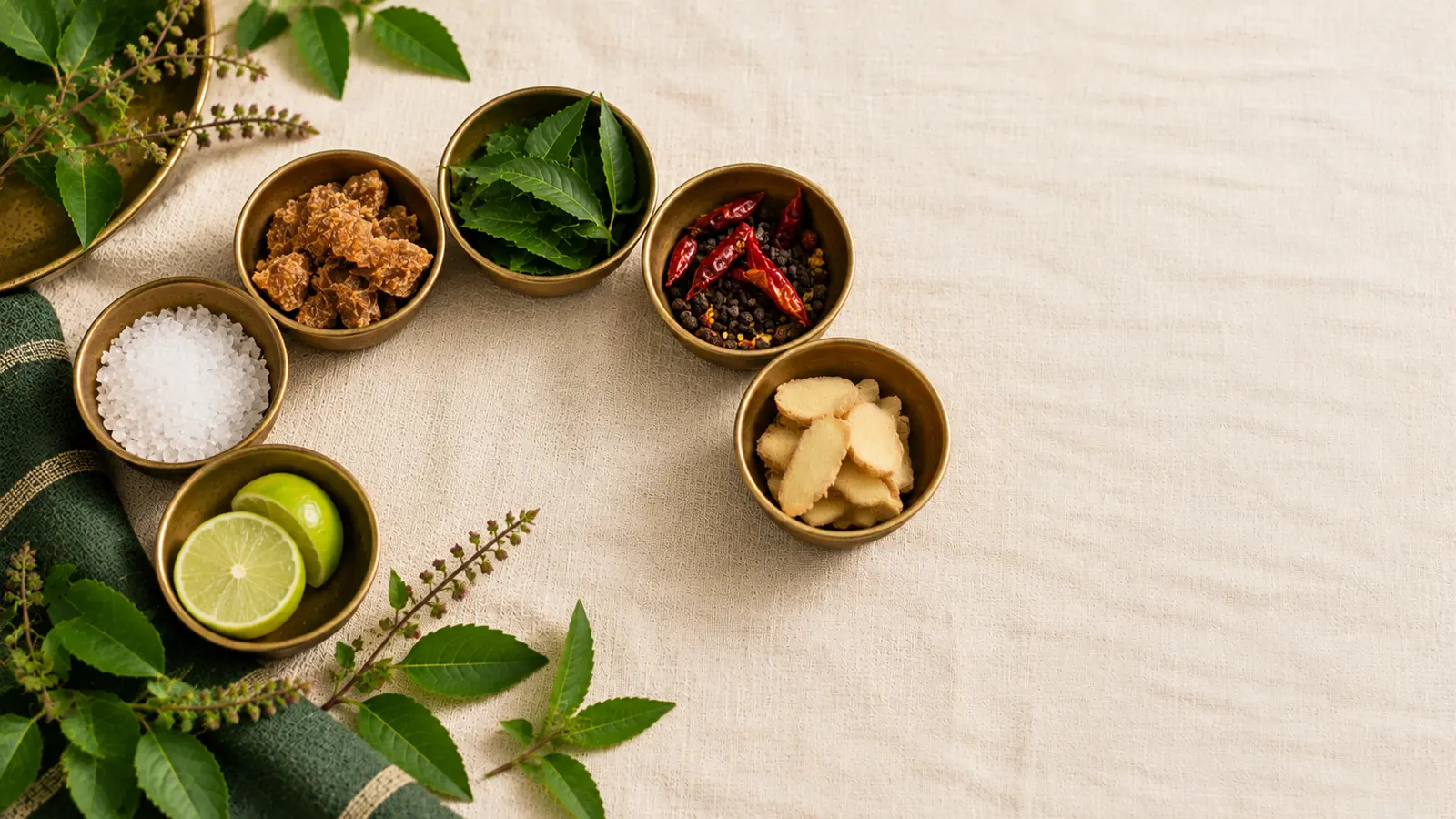
Beyond sweeteners, Ayurveda values certain spices and herbs that lend warmth and a rounded flavour, so less added sweetness is needed:
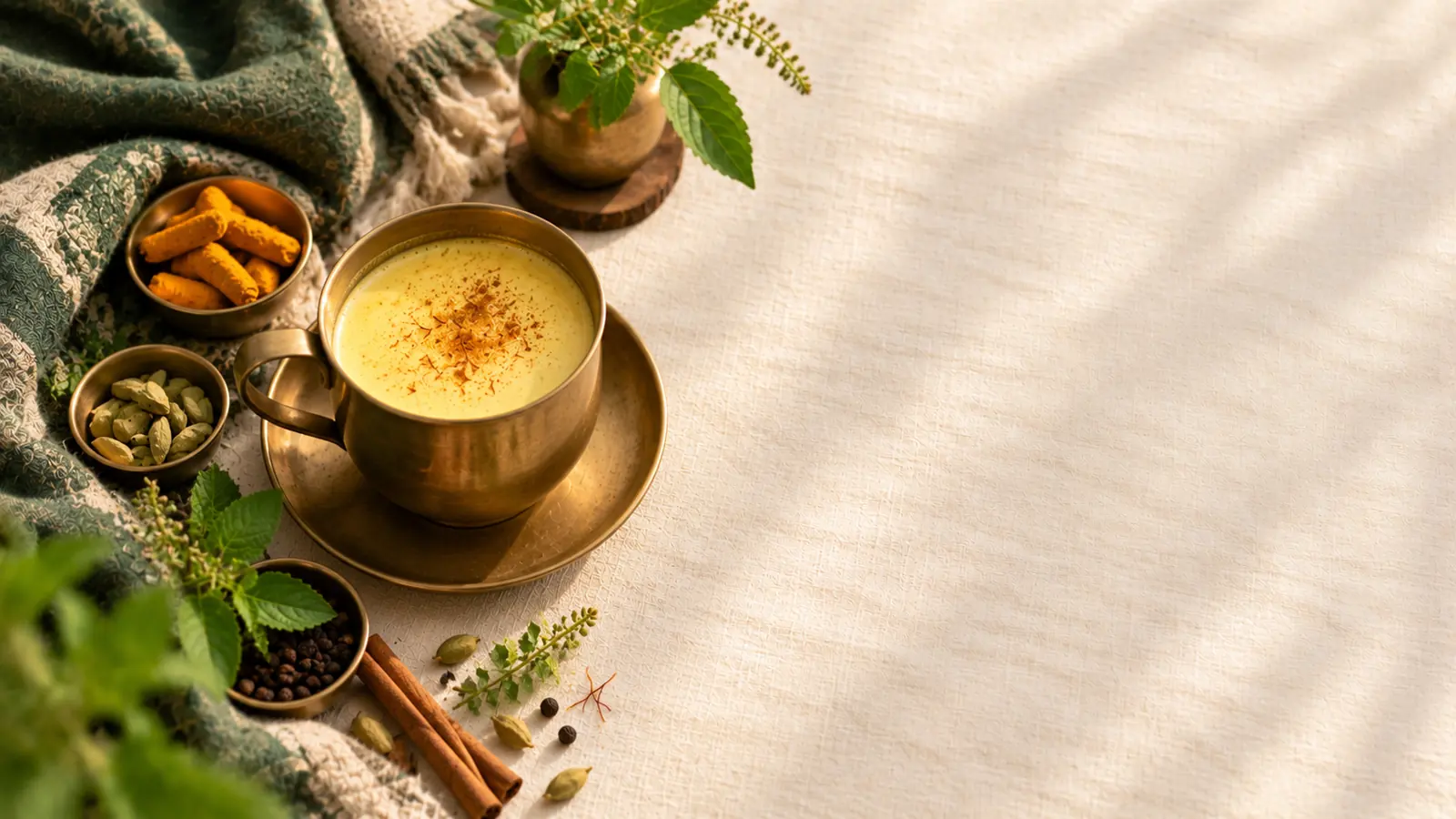
- Cinnamon (dalchini): warming and aromatic, traditionally valued for metabolic balance.
- Cardamom (elaichi): fragrant and digestion-friendly.
- Gymnema (gurmar): its name means "sugar destroyer"; the leaf is traditionally valued in Ayurveda and famously dulls the perception of sweetness on the tongue.
Remember: natural is not automatically safe. Herbs can interact with medicines, so use them only under a physician's guidance and never as a replacement for your prescribed treatment.
Practical, mindful habits
- Reduce the total sweet load first — the single most useful step, whatever sweetener you choose.
- Retrain your palate gradually; sweetness preference softens with time.
- Never heat honey, and keep all sweeteners in small quantities.
- Read labels — many "sugar-free" products simply swap in other concentrated sweeteners.
- Favour whole foods whose natural sweetness needs no addition.
Key takeaways
- No sweetener is a free pass; the amount usually matters more than the type.
- Ayurveda considers refined white sugar the heaviest; honey has a lighter quality but must never be heated.
- Stevia and gymnema (gurmar) are traditionally valued natural options, used sparingly.
- "Natural" is not automatically safe — use herbs only with a physician's guidance, never as a medication replacement.
Frequently asked questions
Q. Which sweetener is safe for diabetes? A. Ayurveda views sweeteners by quality, favouring lighter, less-refined options and, above all, moderation. No sweetener treats or controls blood sugar, and any concentrated sweetener needs care. Discuss your individual choices with your treating doctor, who monitors your levels.
Q. Is jaggery better than sugar for me? A. Jaggery is less refined and traditionally used, but it is still a concentrated sweetener. It is a modest step in quality, not a green light for larger amounts. Moderation remains key.
Q. Can switching sweeteners replace my diabetes medicines? A. No. Sweetener choices are supportive lifestyle guidance only. Never stop or change prescribed medication without your treating doctor. Ayurveda works alongside, not in place of, your medical care.
Next steps with Guduchi
Terms in this article
Explore the Ayurveda glossary or try our free diabetes risk score.
Ayurvedic diabetes care near you
Guduchi Ayurveda runs BAMS-led clinics in eight Indian cities. Reading is a start — a physician who sees your reports can tailor it to you.
- Ayurvedic Diabetes Clinic, AhmedabadSola, Ahmedabad
- Ayurvedic Diabetes Clinic, BangaloreBanaswadi, Bangalore
- Ayurvedic Diabetes Clinic, ChennaiAnna Nagar West, Chennai
- Ayurvedic Diabetes Clinic, DavangereDavangere
- Ayurvedic Diabetes Clinic, HubballiVidya Nagar, Hubballi
- Ayurvedic Diabetes Clinic, HyderabadJubilee Hills, Hyderabad
- Ayurvedic Diabetes Clinic, KalaburagiShastri Nagar, Kalaburagi
- Ayurvedic Diabetes Clinic, KolkataNewtown, Kolkata
- Ayurvedic Diabetes Clinic, MangaluruUrwa, Mangaluru
- Ayurvedic Diabetes Clinic, MysuruKuvempunagar, Mysuru
- Ayurvedic Diabetes Clinic, UdupiBrahmagiri, Udupi
See all Guduchi diabetes clinics · Book an online consultation
DY
Written by
Dr. Yamuna B SBAMS — Senior Ayurvedic Physician · Bengaluru, Karnataka · Reg. No. 22157
Dr. Yamuna B S is a Senior Ayurvedic Physician at Guduchi Ayurveda in Bengaluru, with a deep focus on Madhumeha (the Ayurvedic understanding of diabetes) and lifestyle-led metabolic care. She works closely with each patient to combine classical Ayurvedic principles with practical, day-to-day guidance on diet, routine and stress — always alongside, not in place of, their regular medical care.
Medical disclaimer: This article is for general education and is not a substitute for professional medical advice, diagnosis, or treatment. Ayurveda is described here as a supportive, complementary system. Do not stop or change any prescribed medication without consulting your treating physician. Always speak with a qualified doctor about your individual health, especially if you are pregnant, elderly, or managing other conditions.