
In short
Neem (Azadirachta indica) is one of Ayurveda's best-known bitter herbs, traditionally valued for metabolic balance and healthy digestion. It is used in classical preparations and everyday home routines, but "natural" does not automatically mean safe or suitable for everyone. Neem works best as supportive care alongside — never in place of — your prescribed treatment and blood-sugar monitoring.
Introduction
Few plants are as woven into Indian daily life as neem. Its bitter leaves, twigs and bark have been part of household and Ayurvedic practice for centuries, and it appears again and again in classical texts as a herb that supports balance in the body. For anyone thinking about their blood sugar, neem is a name that comes up often — and it is worth understanding calmly and accurately.
In Ayurveda, neem is prized for its bitter (tikta) taste and its cooling, cleansing qualities. Bitter herbs are traditionally associated with kindling digestion and helping the body clear excess Kapha — the quality Ayurveda links to sluggish metabolism. This article explains how neem has traditionally been used and, just as importantly, how to think about it safely.
Curious how neem might fit your own routine? Book a consultation with our Ayurvedic doctor →
Why Ayurveda values neem's bitterness
In Ayurvedic thinking, the six tastes each have an effect on the body. The bitter taste is considered light, drying and cleansing — qualities traditionally used to balance the heaviness and dampness of aggravated Kapha. Because Ayurveda associates Kapha imbalance with sluggish metabolism, bitter herbs like neem have long been valued in supporting healthy metabolic function.
Neem is not valued for one single action. Classical practice describes it as supportive of clear skin, healthy digestion and overall internal balance. This whole-body, balancing view is very different from expecting a herb to act on a single number — and it is the more honest way to understand what neem traditionally offers.
How neem is traditionally used
Across Ayurvedic and home traditions, neem appears in several familiar forms:
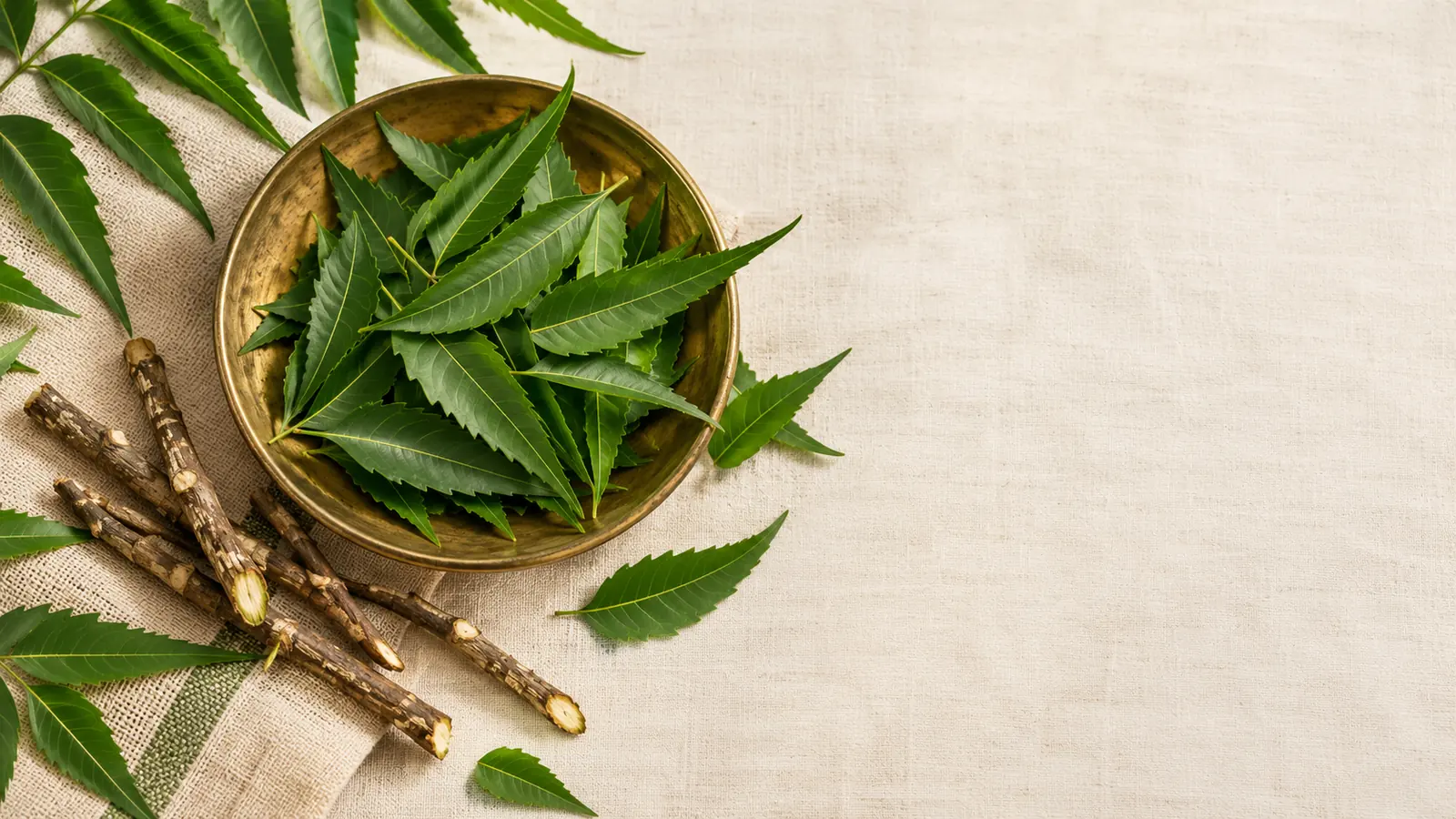
- Fresh or dried leaves, sometimes taken as an early-morning bitter, or brewed into a light infusion.
- Neem tablets or churna (powder) prepared in classical formulations, often combined with other herbs.
- Neem twigs historically used for oral hygiene.
- Neem in combination, blended by physicians with herbs like giloy or turmeric for a broader supportive effect.
The key point is that traditional use is gentle and routine-based, not a heroic dose. Ayurveda emphasises the right herb, in the right form, for the right person — which is exactly why individual guidance matters.
How to use it safely
Neem is powerful precisely because it is strongly bitter and cooling, and that means it does not suit everyone. A few sensible principles:
- "Natural" is not the same as "safe for everyone." Herbs can interact with medicines, including diabetes and blood-pressure medications, and can affect how you feel.
- Neem can be strongly lowering and cooling. People who are already thin, weak, very cold by nature, or trying to conceive should be especially cautious.
- Avoid in pregnancy and be careful in early childhood and old age unless a physician advises otherwise.
- Watch for interactions. If you take medication that already lowers blood sugar, adding a strong bitter herb without guidance is not wise.
- Use only under a qualified physician's guidance, and never as a replacement for your prescribed medicines or monitoring.
Want a herb plan matched to your constitution, not a generic one? Book a consultation with our doctor →
Neem as part of a bigger picture
It is tempting to hope that one bitter herb can do the heavy lifting, but Ayurveda has never worked that way. Neem is traditionally used within a wider approach: steady meals, daily movement, good sleep and stress management. In that setting, a herb becomes one supportive thread rather than a solution on its own. At Guduchi, our physicians consider neem — if it suits you at all — as part of a personalised routine that sits alongside your existing medical care.
Key takeaways
- Neem is a bitter, cooling herb traditionally valued in Ayurveda for metabolic balance and healthy digestion.
- Its bitterness is linked in classical thinking to balancing sluggish, Kapha-type metabolism.
- "Natural" does not mean risk-free — neem is strong, can interact with medicines, and does not suit everyone.
- It should be used only under a physician's guidance and always alongside, never instead of, your medical care.
Frequently asked questions
Q. Does neem lower blood sugar? A. Ayurveda values neem as a bitter herb traditionally used for metabolic balance, but it is not a treatment and should not be expected to act like medication. Any effect on your body is individual, which is why guidance and monitoring matter.
Q. Can I stop my diabetes medicines if I take neem? A. No. You should never stop or change prescribed medication because you are taking a herb. Neem is used here as supportive care alongside your medical treatment, not as a replacement for it.
Q. Can I just chew neem leaves every morning? A. Some people follow this tradition, but neem is strongly bitter and cooling and does not suit everyone. It is best to check with an Ayurvedic physician first, especially if you take medicines or have other conditions.
Next steps with Guduchi
Terms in this article
Explore the Ayurveda glossary or try our free diabetes risk score.
Ayurvedic diabetes care near you
Guduchi Ayurveda runs BAMS-led clinics in eight Indian cities. Reading is a start — a physician who sees your reports can tailor it to you.
- Ayurvedic Diabetes Clinic, AhmedabadSola, Ahmedabad
- Ayurvedic Diabetes Clinic, BangaloreBanaswadi, Bangalore
- Ayurvedic Diabetes Clinic, ChennaiAnna Nagar West, Chennai
- Ayurvedic Diabetes Clinic, DavangereDavangere
- Ayurvedic Diabetes Clinic, HubballiVidya Nagar, Hubballi
- Ayurvedic Diabetes Clinic, HyderabadJubilee Hills, Hyderabad
- Ayurvedic Diabetes Clinic, KalaburagiShastri Nagar, Kalaburagi
- Ayurvedic Diabetes Clinic, KolkataNewtown, Kolkata
- Ayurvedic Diabetes Clinic, MangaluruUrwa, Mangaluru
- Ayurvedic Diabetes Clinic, MysuruKuvempunagar, Mysuru
- Ayurvedic Diabetes Clinic, UdupiBrahmagiri, Udupi
See all Guduchi diabetes clinics · Book an online consultation
DY
Written by
Dr. Yamuna B SBAMS — Senior Ayurvedic Physician · Bengaluru, Karnataka · Reg. No. 22157
Dr. Yamuna B S is a Senior Ayurvedic Physician at Guduchi Ayurveda in Bengaluru, with a deep focus on Madhumeha (the Ayurvedic understanding of diabetes) and lifestyle-led metabolic care. She works closely with each patient to combine classical Ayurvedic principles with practical, day-to-day guidance on diet, routine and stress — always alongside, not in place of, their regular medical care.
Medical disclaimer: This article is for general education and is not a substitute for professional medical advice, diagnosis, or treatment. Ayurveda is described here as a supportive, complementary system. Do not stop or change any prescribed medication without consulting your treating physician. Always speak with a qualified doctor about your individual health, especially if you are pregnant, elderly, or managing other conditions.