

In short
When cold, fog or smog makes outdoor walks hard, a simple 25-minute indoor routine keeps you active: a warm-up, marching or stair walking, gentle yoga postures such as Tadasana, Vrikshasana and Setu Bandhasana, then slow breathing. Short walks around the house after meals help too. Check with your doctor before starting.
Introduction
In much of North India, November brings chilly mornings, fog and poor air quality; even in the south, cooler, darker mornings make it harder to step out. The daily walk is often the first habit to go, and many people notice their energy and readings change with it.
Ayurveda describes winter as a season when Kapha can accumulate, and its classical texts recommend regular exercise (vyayama) in the cold months. The good news is that you don't need a gym or good weather to move. This routine is designed for a living room, and it supports, not replaces, your prescribed care.
Want an activity plan matched to your health? Book a consultation with our Ayurvedic doctor →
Why keep moving in winter?
- Regular movement supports healthy blood-sugar balance, weight and mood.
- A short walk after meals is one of the simplest supportive habits for after-meal readings.
- Ayurveda considers movement essential for keeping agni bright and Kapha in balance.
- Staying active helps counter winter stiffness in joints.
A simple 25-minute indoor routine
| Part | Movement | Time |
|---|---|---|
| Warm-up | Neck rolls, shoulder circles, ankle and wrist rotations, gentle side bends | 4 minutes |
| Cardio | Marching on the spot, or walking up and down a flight of stairs at an easy pace | 8 minutes |
| Standing yoga | Tadasana (mountain), Vrikshasana (tree, holding a wall), Trikonasana (triangle) | 5 minutes |
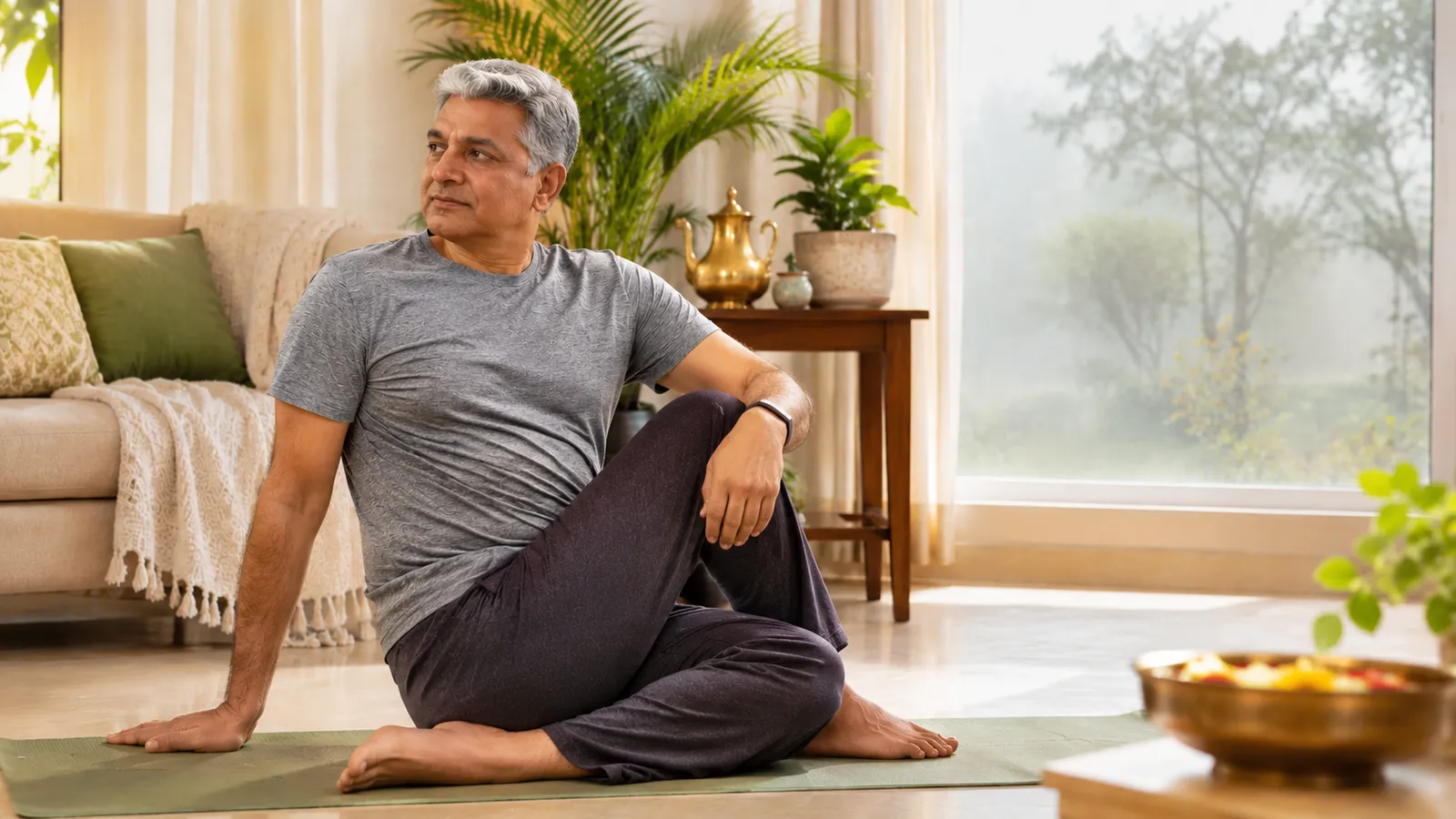
| Floor yoga | Vajrasana (after meals is traditional), seated twist (Ardha Matsyendrasana, gentle), Setu Bandhasana (bridge) | 5 minutes |
| Cool-down | Shavasana and slow breathing or Anulom Vilom | 3 minutes |
Move slowly, breathe steadily and stop any posture that causes pain. Our gentle movement guide and pranayama guide describe more options.
What about Surya Namaskar?
Surya Namaskar (sun salutation) is a popular complete sequence. It is more vigorous than the routine above and involves forward bends and weight on the hands. Many people enjoy a few slow rounds, but if you have high blood pressure, heart disease, eye complications such as retinopathy, back or knee problems, ask your doctor first, and learn it from a qualified teacher.
Want a gentle, structured Ayurvedic routine to follow at home? Try our 5-day Ayurvedic sample →
Safety tips for exercising with diabetes
- Know the signs of low blood sugar — shakiness, sweating, sudden hunger, confusion — and stop if they appear. Keep fast-acting sugar nearby if your doctor has advised it.
- Wear supportive footwear, even indoors, if you have reduced sensation in your feet, and check your feet afterwards.
- Avoid exercising on an empty stomach if you take blood-sugar-lowering medicines, unless your doctor advises otherwise.
- Warm up properly in cold weather to protect stiff joints.
- Mind the air. On high-pollution days, indoor activity is the more comfortable choice.
- Hydrate, even though you may not feel thirsty in winter.
Making it a habit
Pick a fixed time, such as after your morning tea or before dinner. Lay the mat out the night before. Exercise with a family member, or follow along with a simple routine card. Small, regular sessions matter more than occasional long ones.
Key takeaways
- Cold, fog and smog don't have to stop your activity; a 20–30 minute indoor routine is enough to keep moving.
- Combine marching or stair walking with gentle yoga postures and slow breathing.
- Short walks around the house after meals are a simple, supportive habit.
- Check with your doctor first, especially with heart, eye, joint or foot concerns, and know the signs of a low.
Frequently asked questions
Q. What are the best indoor exercises for diabetics in winter? A. Marching on the spot, easy stair walking, gentle yoga postures and short walks around the house after meals are simple options for many people. Your doctor can advise what suits your health.
Q. Which yoga asanas are good for diabetes at home? A. Gentle postures such as Tadasana, Vrikshasana, Trikonasana, Vajrasana, seated twists and Setu Bandhasana are commonly included in home routines. Learn them from a qualified teacher and avoid any that cause pain.
Q. Is it safe to exercise in the morning before breakfast with diabetes? A. It depends on your medicines. If you take blood-sugar-lowering medicines, exercising on an empty stomach may cause low readings. Ask your doctor what timing suits you.
Q. Can yoga replace my diabetes medicine? A. No. Yoga and exercise are supportive habits. Never stop or change prescribed medicines without your treating doctor's advice.
Next steps with Guduchi
Terms in this article
Explore the Ayurveda glossary or try our free diabetes risk score.
Ayurvedic diabetes care near you
Guduchi Ayurveda runs BAMS-led clinics in eight Indian cities. Reading is a start — a physician who sees your reports can tailor it to you.
- Ayurvedic Diabetes Clinic, AhmedabadSola, Ahmedabad
- Ayurvedic Diabetes Clinic, BangaloreBanaswadi, Bangalore
- Ayurvedic Diabetes Clinic, ChennaiAnna Nagar West, Chennai
- Ayurvedic Diabetes Clinic, DavangereDavangere
- Ayurvedic Diabetes Clinic, HubballiVidya Nagar, Hubballi
- Ayurvedic Diabetes Clinic, HyderabadJubilee Hills, Hyderabad
- Ayurvedic Diabetes Clinic, KalaburagiShastri Nagar, Kalaburagi
- Ayurvedic Diabetes Clinic, KolkataNewtown, Kolkata
- Ayurvedic Diabetes Clinic, MangaluruUrwa, Mangaluru
- Ayurvedic Diabetes Clinic, MysuruKuvempunagar, Mysuru
- Ayurvedic Diabetes Clinic, UdupiBrahmagiri, Udupi
See all Guduchi diabetes clinics · Book an online consultation
DY
Written by
Dr. Yamuna B SBAMS — Senior Ayurvedic Physician · Bengaluru, Karnataka · Reg. No. 22157
Dr. Yamuna B S is a Senior Ayurvedic Physician at Guduchi Ayurveda in Bengaluru, with a deep focus on Madhumeha (the Ayurvedic understanding of diabetes) and lifestyle-led metabolic care. She works closely with each patient to combine classical Ayurvedic principles with practical, day-to-day guidance on diet, routine and stress — always alongside, not in place of, their regular medical care.
Medical disclaimer: This article is for general education and is not a substitute for professional medical advice, diagnosis, or treatment. Ayurveda is described here as a supportive, complementary system. Do not stop or change any prescribed medication without consulting your treating physician. Always speak with a qualified doctor about your individual health, especially if you are pregnant, elderly, or managing other conditions.