
In short
World Diabetes Day falls on Saturday, 14 November 2026, and its theme is early action on diabetes. For Indian families that means four steps: check your risk with a simple score, get blood tests if your doctor advises, understand your fasting, after-meal and HbA1c numbers, and start supportive daily habits early.
Introduction
Every year on 14 November, the world marks World Diabetes Day. The theme for 2026, as described by the World Health Organization and the World Diabetes Day campaign, is early action on diabetes: earlier diagnosis, access to comprehensive care and reducing stigma.
In India, where diabetes often runs in families and frequently goes unnoticed for years, early action is especially meaningful. Ayurveda has always placed prevention and daily routine at the centre of health. This checklist brings the two together, as a supportive companion to your doctor's care.
Want to understand your own risk and routine? Book a consultation with our Ayurvedic doctor →
Step 1: Know your risk
A quick risk score is a good starting point for adults who have never been tested. The Indian Diabetes Risk Score (IDRS), developed by the Madras Diabetes Research Foundation, uses four simple questions: age, waist size, physical activity and family history.
You can work it out in a minute with our free Indian Diabetes Risk Score calculator. A higher score does not mean you have diabetes — it means it is worth talking to a doctor about a blood test.
Step 2: Get screened when advised
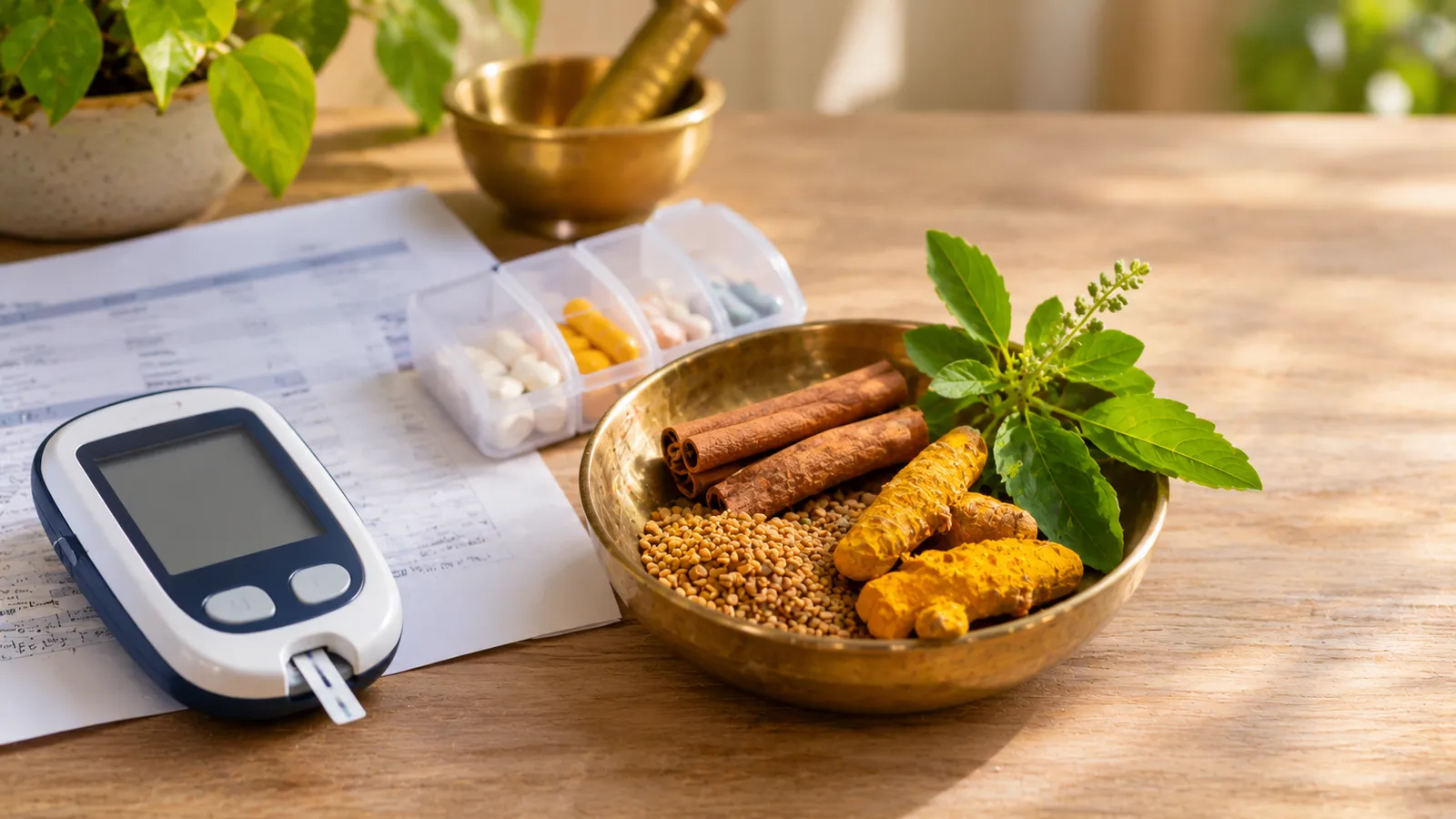
Blood tests are the only way to know your blood-sugar status. Your doctor may suggest one or more of:
| Test | What it shows | Good to know |
|---|---|---|
| Fasting blood sugar | Glucose after an overnight fast | Usually done in the morning before eating |
| Post-meal (PP) blood sugar | Glucose about two hours after a meal | Shows how the body handles a meal |
| HbA1c | Average blood sugar over roughly the past 2–3 months | No fasting needed; useful for trends |
Which tests you need, and how often, is your doctor's call. Our simple guide to blood-sugar numbers explains each one, and our HbA1c converter shows what a percentage means as average glucose.
Step 3: Act early if you are borderline
If your readings are in the "prediabetes" range, this is the most valuable moment for lifestyle change. Ayurveda would describe it as an early stage of imbalance, when agni and Kapha can still be supported through food, movement and routine. Our prediabetes guide covers this stage in detail.
Want a gentle way to start building better habits? Try our 5-day Ayurvedic sample →
Step 4: If you are already diagnosed, early action still matters
Early action is not only about prevention. For people already living with diabetes, it means catching small changes before they become bigger problems:
- Keep to the HbA1c schedule your doctor advises.
- Have regular eye, foot and kidney checks as recommended.
- Report new symptoms early — tingling in the feet, blurred vision, slow-healing cuts.
- Take medicines as prescribed and never stop them on your own.
- Build steady daily habits: regular meals, daily movement, good sleep and stress care.
A family checklist for World Diabetes Day
Use 14 November as a family check-in day:
- Work out the IDRS score for every adult over 30 in the house.
- Book blood tests for anyone with a higher score or a strong family history, as a doctor advises.
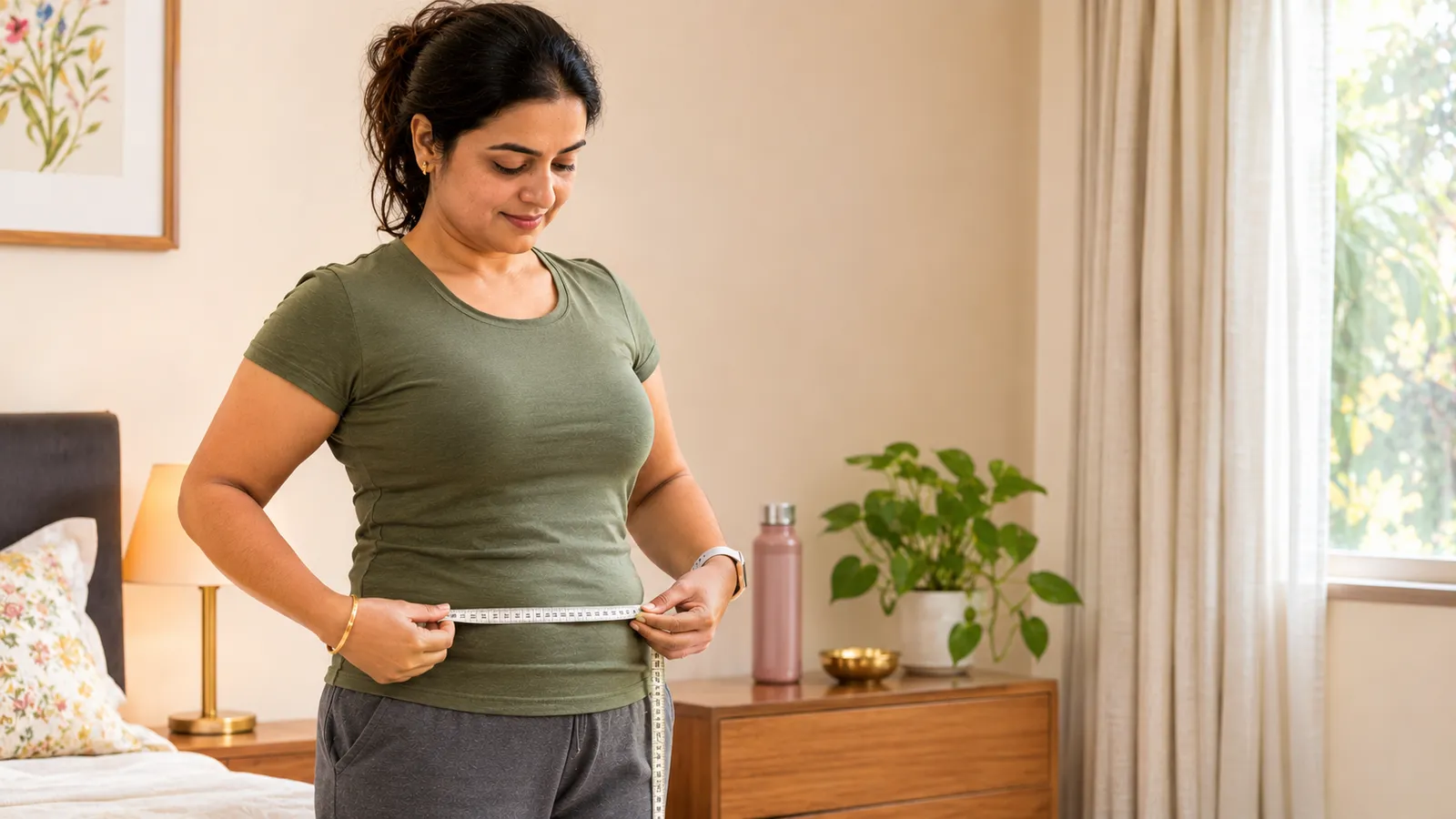
- Measure everyone's waist — waist size is part of the IDRS for good reason.
- Plan one family walk a day for the coming week.
- Swap one refined-flour item in the kitchen for a millet or whole grain.
- Talk openly about diabetes; reducing stigma is part of this year's theme.
Key takeaways
- World Diabetes Day is on 14 November 2026, and the theme is early action on diabetes.
- Start with a risk score like the IDRS, then get blood tests as your doctor advises.
- Prediabetes is the most valuable time for lifestyle change; Ayurveda's daily-routine approach supports it.
- If you are already diagnosed, early action means regular checks, reporting symptoms early and steady habits.
Frequently asked questions
Q. When is World Diabetes Day 2026 and what is the theme? A. World Diabetes Day is on Saturday, 14 November 2026. The theme is early action on diabetes, focusing on earlier diagnosis, access to care and reducing stigma.
Q. What is the Indian Diabetes Risk Score? A. It is a simple screening score developed by the Madras Diabetes Research Foundation using age, waist size, physical activity and family history. A higher score suggests you should speak to a doctor about testing.
Q. How often should I test my HbA1c? A. It depends on whether you have diabetes, prediabetes or neither, and on your treatment. Your treating doctor will advise the right interval for you.
Q. Can Ayurveda prevent diabetes? A. No approach can promise that. Ayurveda's focus on diet, movement, sleep and routine supports a healthy lifestyle, which is an important part of lowering risk, alongside regular screening by your doctor.
Next steps with Guduchi
Terms in this article
Explore the Ayurveda glossary or try our free diabetes risk score.
Ayurvedic diabetes care near you
Guduchi Ayurveda runs BAMS-led clinics in eight Indian cities. Reading is a start — a physician who sees your reports can tailor it to you.
- Ayurvedic Diabetes Clinic, AhmedabadSola, Ahmedabad
- Ayurvedic Diabetes Clinic, BangaloreBanaswadi, Bangalore
- Ayurvedic Diabetes Clinic, ChennaiAnna Nagar West, Chennai
- Ayurvedic Diabetes Clinic, DavangereDavangere
- Ayurvedic Diabetes Clinic, HubballiVidya Nagar, Hubballi
- Ayurvedic Diabetes Clinic, HyderabadJubilee Hills, Hyderabad
- Ayurvedic Diabetes Clinic, KalaburagiShastri Nagar, Kalaburagi
- Ayurvedic Diabetes Clinic, KolkataNewtown, Kolkata
- Ayurvedic Diabetes Clinic, MangaluruUrwa, Mangaluru
- Ayurvedic Diabetes Clinic, MysuruKuvempunagar, Mysuru
- Ayurvedic Diabetes Clinic, UdupiBrahmagiri, Udupi
See all Guduchi diabetes clinics · Book an online consultation
DY
Written by
Dr. Yamuna B SBAMS — Senior Ayurvedic Physician · Bengaluru, Karnataka · Reg. No. 22157
Dr. Yamuna B S is a Senior Ayurvedic Physician at Guduchi Ayurveda in Bengaluru, with a deep focus on Madhumeha (the Ayurvedic understanding of diabetes) and lifestyle-led metabolic care. She works closely with each patient to combine classical Ayurvedic principles with practical, day-to-day guidance on diet, routine and stress — always alongside, not in place of, their regular medical care.
Medical disclaimer: This article is for general education and is not a substitute for professional medical advice, diagnosis, or treatment. Ayurveda is described here as a supportive, complementary system. Do not stop or change any prescribed medication without consulting your treating physician. Always speak with a qualified doctor about your individual health, especially if you are pregnant, elderly, or managing other conditions.