
In short
Ayurvedic eating for diabetes is less about strict bans and more about balance — favouring certain tastes and qualities, eating mindfully, and keeping meals regular. This article shares simple, everyday principles you can discuss with your doctor and adapt to your own body.
Introduction
One of the most common questions we hear at Guduchi is simply: "What should I eat?" It is a fair question, and the good news is that Ayurvedic eating is practical and kitchen-friendly. It works with familiar Indian foods rather than exotic ingredients.
Rather than handing you a rigid list of "never eat this" rules, Ayurveda offers guiding principles — about tastes, qualities of food, portioning and timing. These principles are meant to support, not replace, any nutrition plan your doctor or dietitian has given you.
Want a plan shaped around your own body? Book a consultation with our Ayurvedic doctor →
The six tastes and why they matter
Ayurveda describes six tastes (rasa): sweet, sour, salty, pungent, bitter and astringent. A balanced plate includes a range of them. For people managing blood sugar, the bitter and astringent tastes — found in foods like bitter gourd, methi (fenugreek) leaves, and many green vegetables — are traditionally emphasised.
This does not mean meals should be unpleasant. It means gently rebalancing toward vegetables, whole grains and legumes, and away from very sweet or heavily refined foods.
Favour these everyday choices
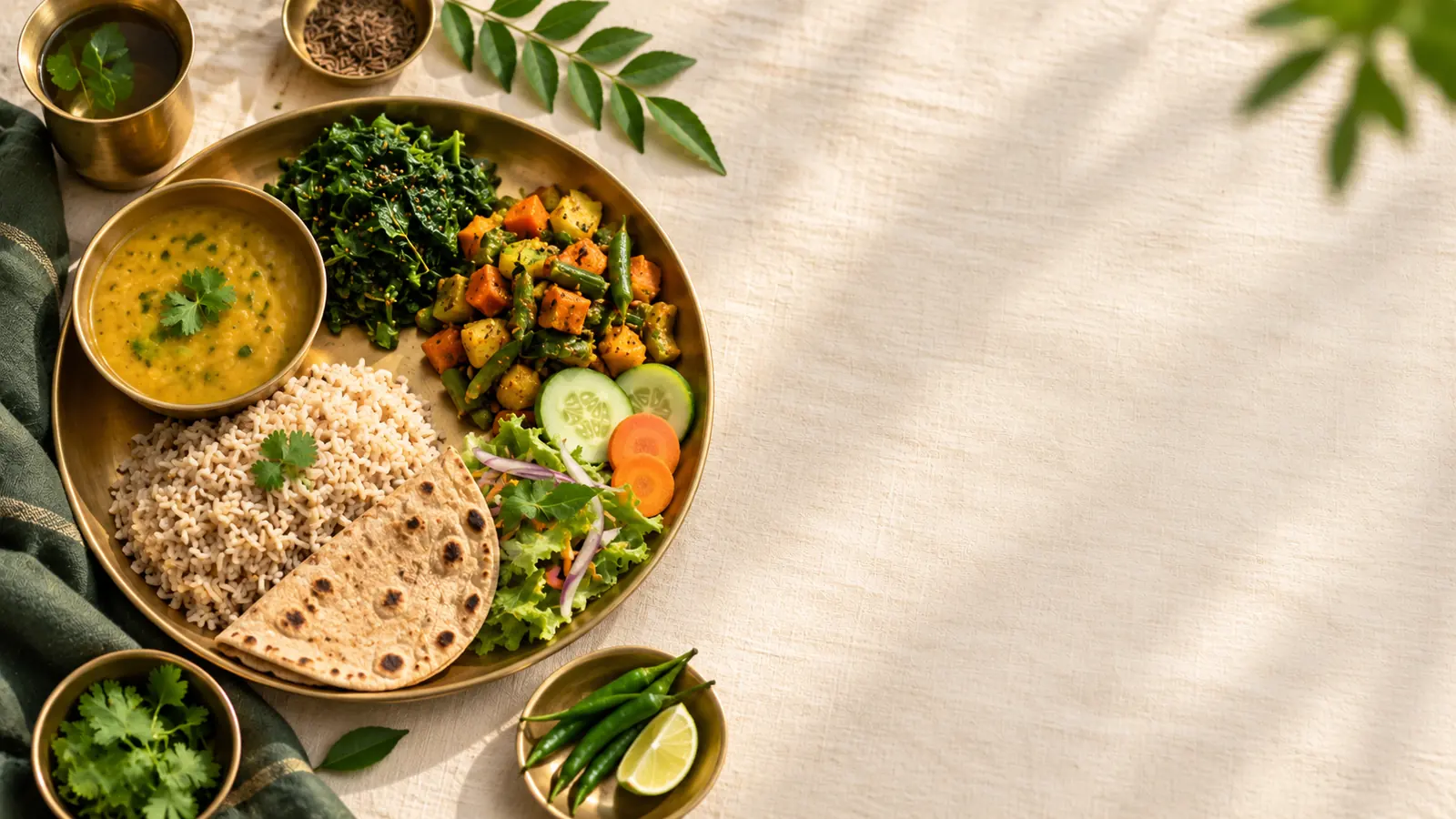
- Whole grains such as millets (ragi, jowar, bajra) and unpolished options in place of highly refined grains.
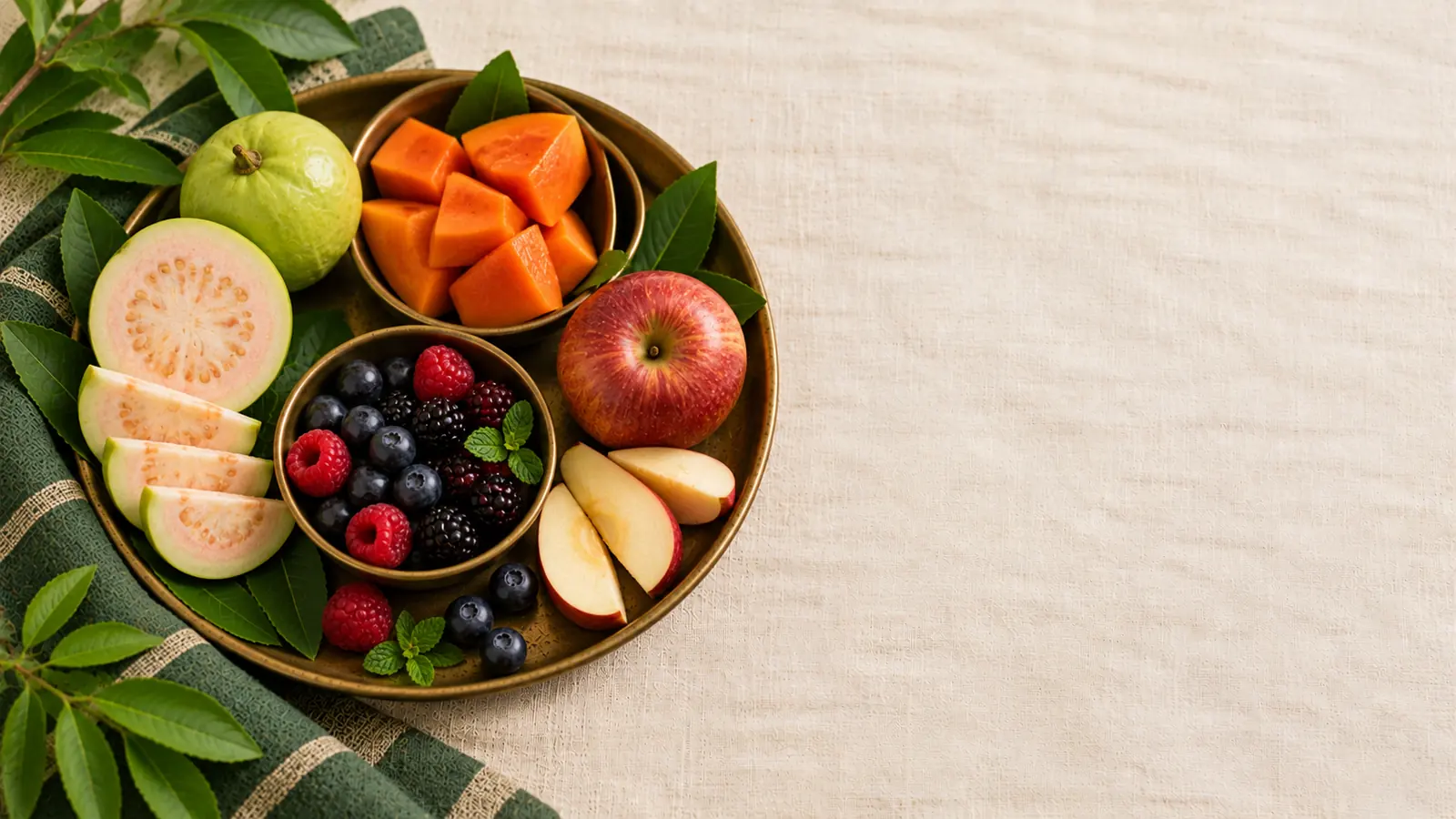
- Plenty of fibre-rich vegetables, especially bitter and green ones.
- Legumes and pulses for steady, protein-rich meals.
- Warm, freshly cooked food rather than cold or heavily processed items.
- Healthy spices such as turmeric, cumin, coriander and cinnamon used in normal cooking amounts.
Go easy on these
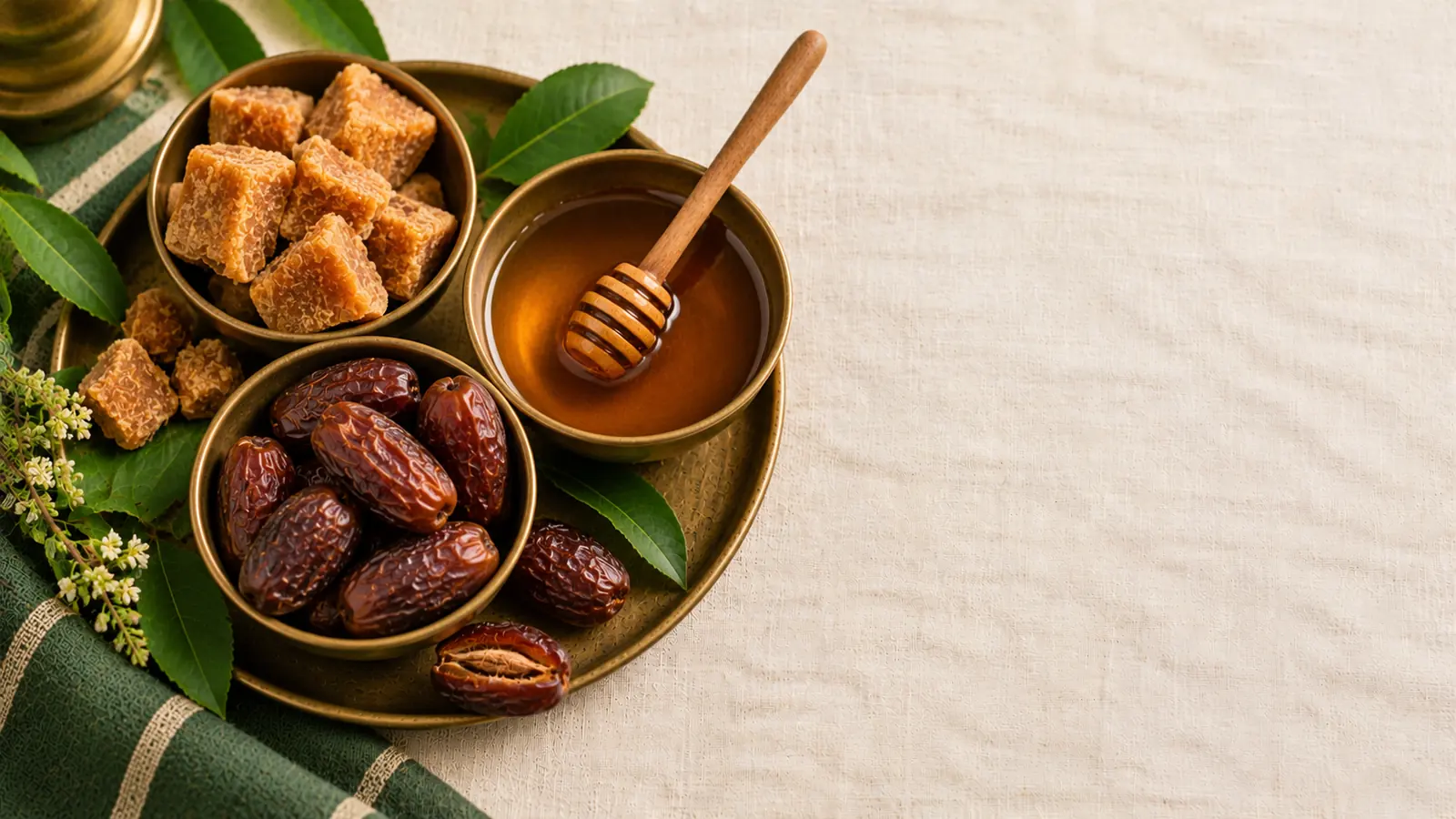
- Sugary drinks, sweets and desserts eaten frequently.
- Deep-fried and very oily foods on a regular basis.
- Highly refined flour products and packaged snacks.
The goal is a gentle shift in everyday habits, not a joyless diet. Occasional foods you enjoy can still have a place — what matters is the overall pattern.
Curious to experience our approach first-hand? Try the 5-day Ayurvedic sample →
How you eat matters as much as what you eat
- Eat at regular times rather than skipping and then overeating.
- Sit down, slow down, and chew well — mindful eating supports digestion.
- Make lunch your larger meal and keep dinner lighter and earlier.
- Stop at a comfortable fullness rather than being overly full.
Making it personal
Everyone's body, constitution and medical situation is different. What is ideal for one person may need adjusting for another — especially if you take insulin or other medicines that affect timing and quantity. This is why a personalised conversation with a physician is so valuable.
Key takeaways
- Favour bitter, astringent, high-fibre foods and whole grains; go easy on sugary and heavily refined items.
- How you eat — regular timing, mindful and warm meals — matters as much as what you eat.
- Ayurvedic eating principles are flexible and kitchen-friendly, built around familiar foods.
- Always align any diet change with your doctor or dietitian, particularly if you take medication.
Frequently asked questions
Q. Can I eat rice if I have diabetes? A. Many people can include modest portions of appropriate grains as part of a balanced plate. The right quantity depends on your individual plan — discuss portions with your doctor or dietitian.
Q. Are millets better than rice and wheat? A. Millets are fibre-rich and widely used in Ayurvedic cooking. They can be a helpful part of a varied diet, but variety and portion balance matter more than any single "best" grain.
Q. Do I have to give up sweets completely? A. Ayurveda emphasises balance rather than total prohibition for most people. The focus is on reducing frequency and portion while building an overall wholesome pattern.
Next steps with Guduchi
Terms in this article
Explore the Ayurveda glossary or try our free diabetes risk score.
Ayurvedic diabetes care near you
Guduchi Ayurveda runs BAMS-led clinics in eight Indian cities. Reading is a start — a physician who sees your reports can tailor it to you.
- Ayurvedic Diabetes Clinic, AhmedabadSola, Ahmedabad
- Ayurvedic Diabetes Clinic, BangaloreBanaswadi, Bangalore
- Ayurvedic Diabetes Clinic, ChennaiAnna Nagar West, Chennai
- Ayurvedic Diabetes Clinic, DavangereDavangere
- Ayurvedic Diabetes Clinic, HubballiVidya Nagar, Hubballi
- Ayurvedic Diabetes Clinic, HyderabadJubilee Hills, Hyderabad
- Ayurvedic Diabetes Clinic, KalaburagiShastri Nagar, Kalaburagi
- Ayurvedic Diabetes Clinic, KolkataNewtown, Kolkata
- Ayurvedic Diabetes Clinic, MangaluruUrwa, Mangaluru
- Ayurvedic Diabetes Clinic, MysuruKuvempunagar, Mysuru
- Ayurvedic Diabetes Clinic, UdupiBrahmagiri, Udupi
See all Guduchi diabetes clinics · Book an online consultation
DY
Written by
Dr. Yamuna B SBAMS — Senior Ayurvedic Physician · Bengaluru, Karnataka · Reg. No. 22157
Dr. Yamuna B S is a Senior Ayurvedic Physician at Guduchi Ayurveda in Bengaluru, with a deep focus on Madhumeha (the Ayurvedic understanding of diabetes) and lifestyle-led metabolic care. She works closely with each patient to combine classical Ayurvedic principles with practical, day-to-day guidance on diet, routine and stress — always alongside, not in place of, their regular medical care.
Medical disclaimer: This article is for general education and is not a substitute for professional medical advice, diagnosis, or treatment. Ayurveda is described here as a supportive, complementary system. Do not stop or change any prescribed medication without consulting your treating physician. Always speak with a qualified doctor about your individual health, especially if you are pregnant, elderly, or managing other conditions.