
In short
Ayurveda draws on many everyday kitchen ingredients — methi, bitter gourd, jamun, amla, turmeric, cinnamon and guduchi — that are traditionally valued for supporting metabolic balance. Here is a grounded look at each, and why herbs should always be used under a physician's guidance.
Introduction
Walk into any Indian kitchen and you will already find several ingredients that Ayurveda has valued for centuries. Part of the appeal of the Ayurvedic approach is that it works with familiar foods and spices rather than obscure ones.
A gentle but important note before we begin: herbs are supportive, not a replacement for medical care, and "natural" does not automatically mean "safe for everyone". Some herbs can interact with medication or affect blood sugar in ways that need monitoring. That is exactly why they should be used under the guidance of a qualified physician, in appropriate amounts.
Thinking about herbs for your own routine? Book a consultation before you start →
1. Methi (Fenugreek)
One of the most widely used kitchen ingredients in Ayurvedic tradition. The seeds and leaves are both used in everyday cooking and are traditionally associated with digestion and metabolic support.
2. Karela (Bitter Gourd)
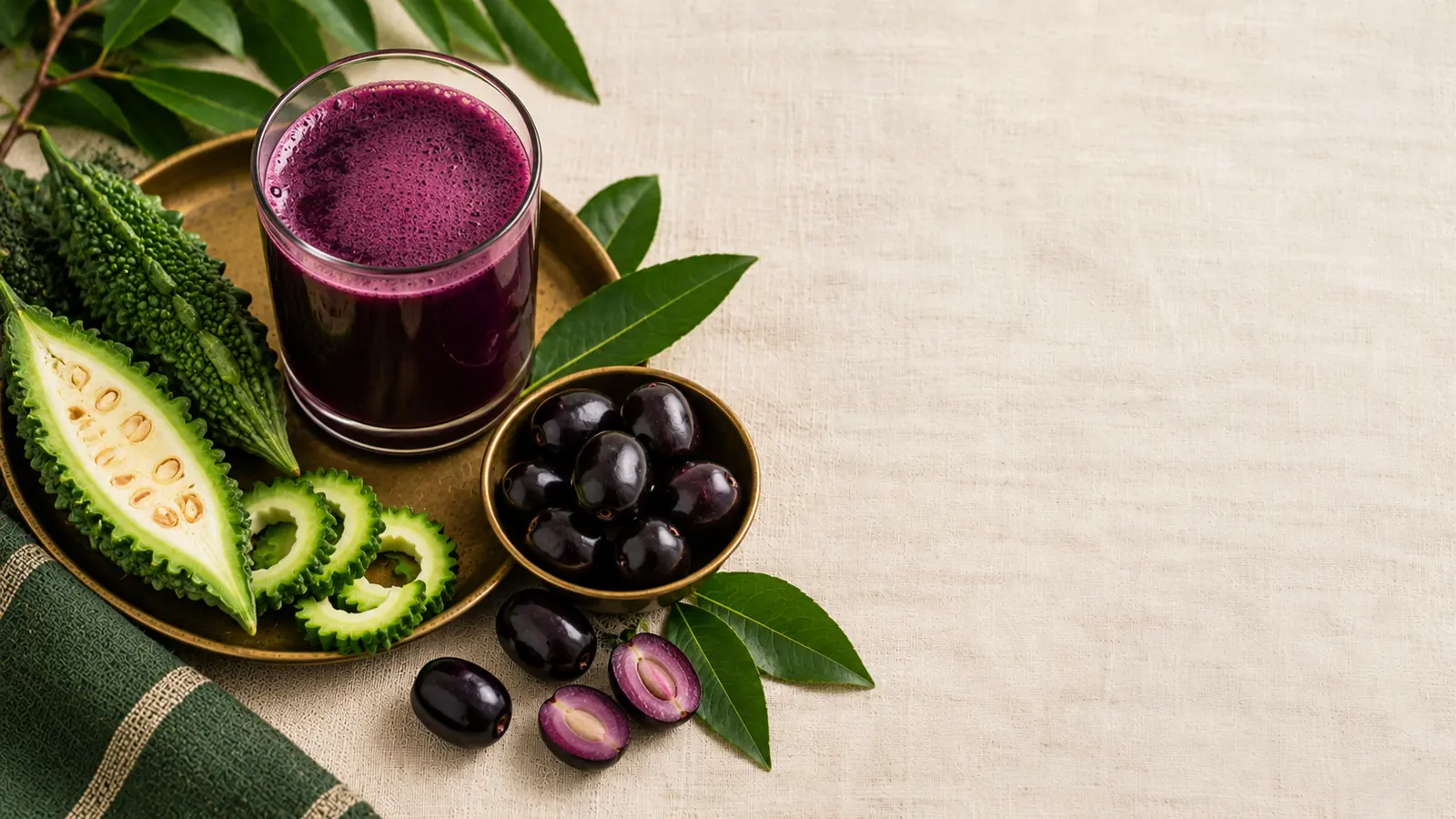
Bitter by taste and prized for it. In Ayurveda, the bitter taste is closely linked with metabolic balance, and bitter gourd is a classic vegetable in this context. It features in many traditional recipes.
3. Jamun (Indian Blackberry)
A beloved seasonal fruit, jamun and its seed have a long history in Ayurvedic use for metabolic wellbeing. It is enjoyed as a fruit and also used in traditional preparations.
4. Amla (Indian Gooseberry)
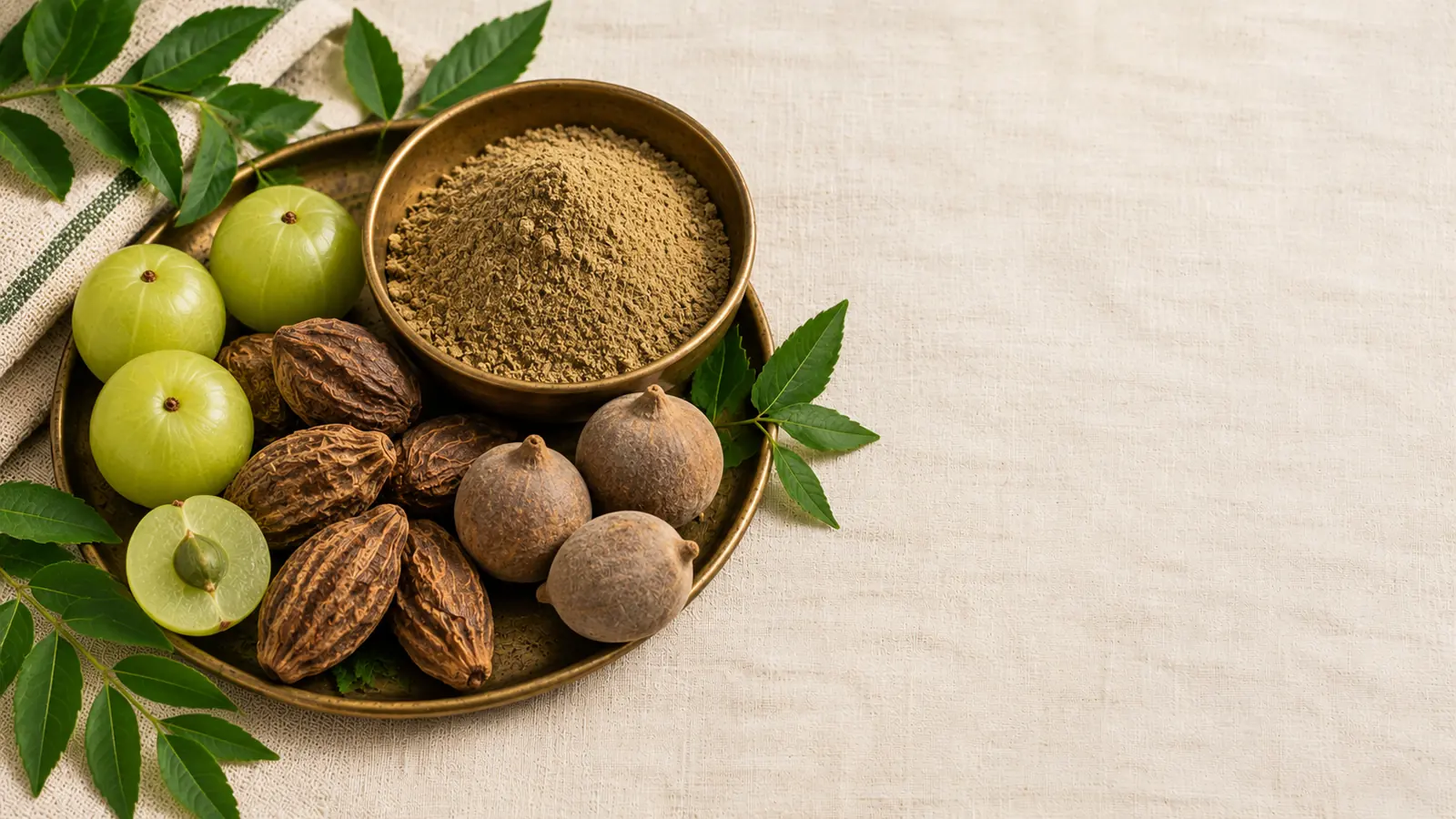
Rich in the sour and astringent tastes, amla is one of Ayurveda's most celebrated fruits, valued broadly for rejuvenation and wellbeing. It is commonly taken as juice, powder or in preserves.
Curious to experience our herbal approach? Try the 5-day Ayurvedic sample →
5. Turmeric (Haldi)
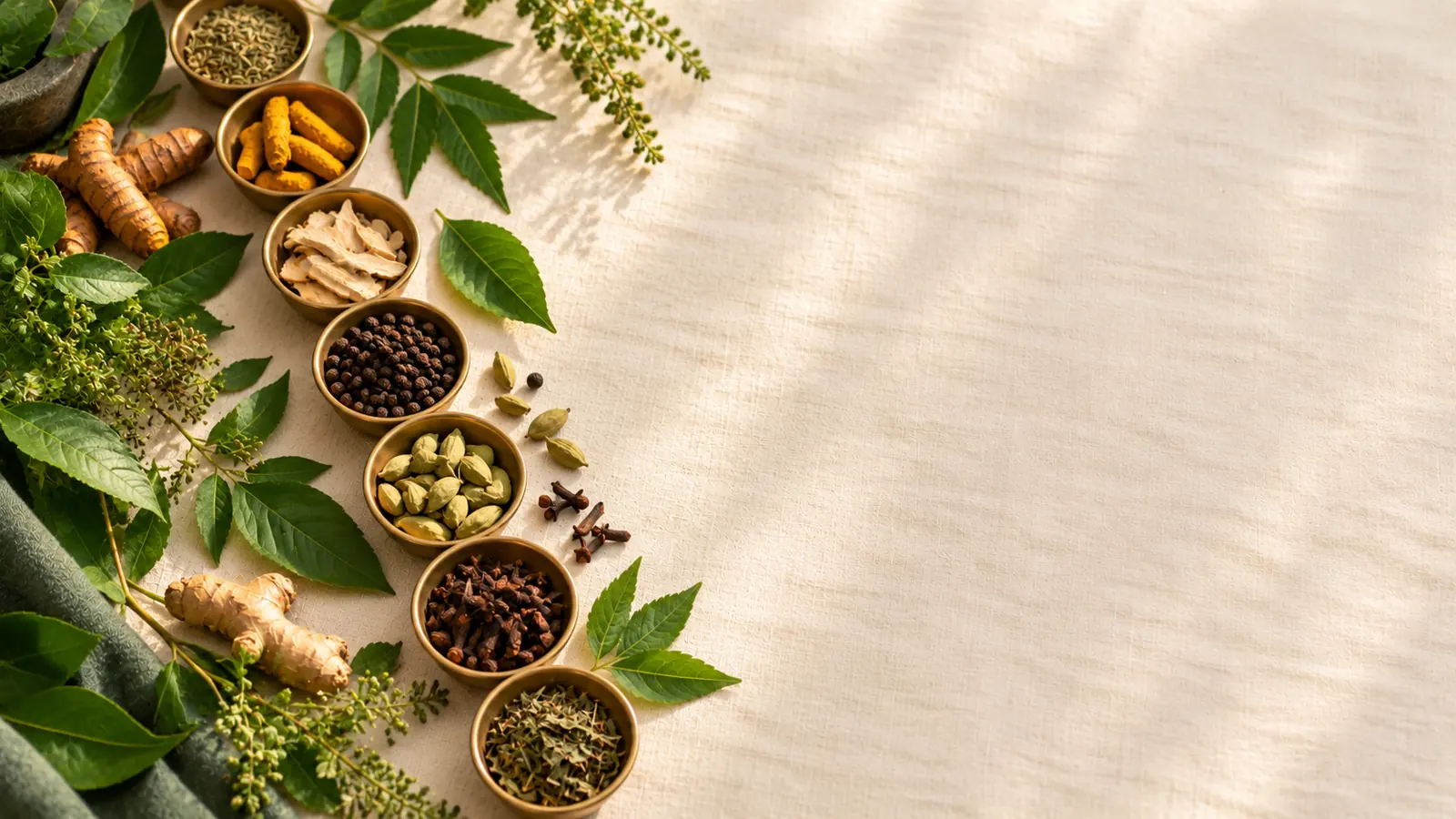
A daily staple spice, turmeric is deeply woven into Ayurvedic cooking and wellbeing traditions. Used in normal culinary amounts, it is one of the simplest ways to bring Ayurvedic principles into everyday meals.
6. Dalchini (Cinnamon)
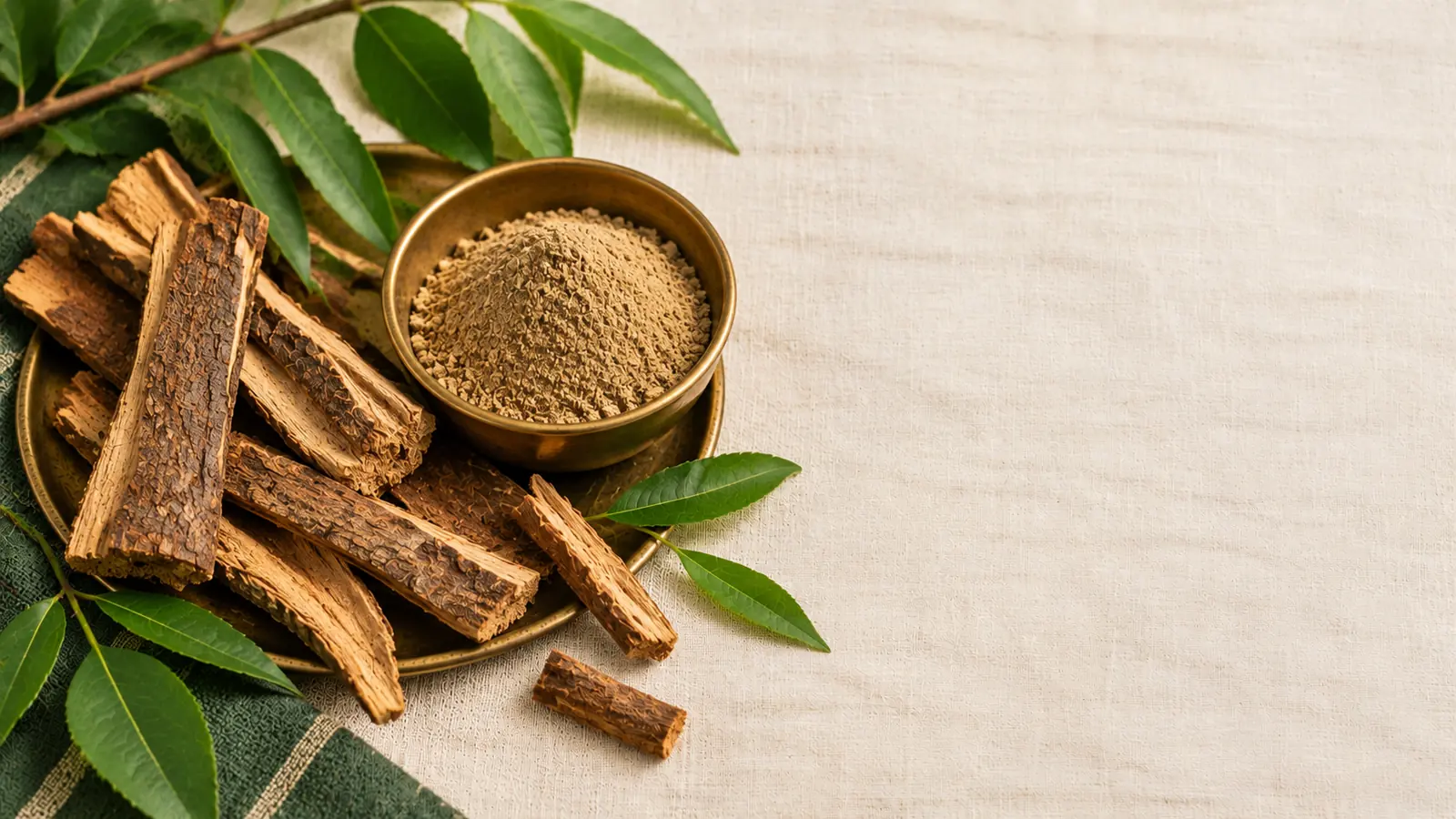
A warming, aromatic spice traditionally used to support digestion and metabolism. A small amount adds natural sweetness and flavour to food and drinks without added sugar.
7. Guduchi (Giloy)
The herb that gives our clinic its name. Guduchi is one of Ayurveda's most revered herbs, traditionally valued as a rejuvenative that supports overall balance and resilience. It is typically used in prepared formulations rather than casual self-dosing.
Using herbs the safe way
- Always tell your treating doctor about any herb or supplement you take.
- Do not use herbs to replace prescribed medicines.
- Use appropriate, guided amounts — more is not better.
- Monitor your blood sugar as advised, since some herbs may affect readings.
Key takeaways
- Many everyday kitchen ingredients are traditionally valued in Ayurveda for metabolic balance.
- Guduchi, methi, bitter gourd, jamun, amla, turmeric and cinnamon each have a long traditional history.
- "Natural" is not automatically "risk-free" — herbs can interact with medicines and blood sugar.
- Use herbs in guided amounts, under a physician, and never as a replacement for medical care.
Frequently asked questions
Q. Can I just start taking these herbs on my own? A. It is best not to self-prescribe, especially in concentrated or supplement form. Some herbs can affect blood sugar or interact with medicines. A physician can advise safe, appropriate use for you.
Q. Will these herbs replace my medication? A. No. They are supportive and should be used alongside — not instead of — your prescribed treatment. Never stop medication without your doctor's guidance.
Q. Is culinary use of these spices safe? A. Using turmeric, cinnamon, methi and similar spices in normal cooking amounts is a familiar part of everyday Indian food. Concentrated supplements are a different matter and should be guided by a physician.
Next steps with Guduchi
Terms in this article
Explore the Ayurveda glossary or try our free diabetes risk score.
Ayurvedic diabetes care near you
Guduchi Ayurveda runs BAMS-led clinics in eight Indian cities. Reading is a start — a physician who sees your reports can tailor it to you.
- Ayurvedic Diabetes Clinic, AhmedabadSola, Ahmedabad
- Ayurvedic Diabetes Clinic, BangaloreBanaswadi, Bangalore
- Ayurvedic Diabetes Clinic, ChennaiAnna Nagar West, Chennai
- Ayurvedic Diabetes Clinic, DavangereDavangere
- Ayurvedic Diabetes Clinic, HubballiVidya Nagar, Hubballi
- Ayurvedic Diabetes Clinic, HyderabadJubilee Hills, Hyderabad
- Ayurvedic Diabetes Clinic, KalaburagiShastri Nagar, Kalaburagi
- Ayurvedic Diabetes Clinic, KolkataNewtown, Kolkata
- Ayurvedic Diabetes Clinic, MangaluruUrwa, Mangaluru
- Ayurvedic Diabetes Clinic, MysuruKuvempunagar, Mysuru
- Ayurvedic Diabetes Clinic, UdupiBrahmagiri, Udupi
See all Guduchi diabetes clinics · Book an online consultation
DY
Written by
Dr. Yamuna B SBAMS — Senior Ayurvedic Physician · Bengaluru, Karnataka · Reg. No. 22157
Dr. Yamuna B S is a Senior Ayurvedic Physician at Guduchi Ayurveda in Bengaluru, with a deep focus on Madhumeha (the Ayurvedic understanding of diabetes) and lifestyle-led metabolic care. She works closely with each patient to combine classical Ayurvedic principles with practical, day-to-day guidance on diet, routine and stress — always alongside, not in place of, their regular medical care.
Medical disclaimer: This article is for general education and is not a substitute for professional medical advice, diagnosis, or treatment. Ayurveda is described here as a supportive, complementary system. Do not stop or change any prescribed medication without consulting your treating physician. Always speak with a qualified doctor about your individual health, especially if you are pregnant, elderly, or managing other conditions.